Particulate pollutants in the air are composed of solid or liquid microparticles. The particle size distribution of these particles varies widely, ranging from 0.01 μm to several hundred micrometers. Particles larger than 10 μm, being heavier, gradually settle to the ground under the influence of gravity after a period of random Brownian motion, whereas particles smaller than 10 μm, being lighter, easily float with air currents and are difficult to settle to the ground. It is estimated that over 90% of suspended particles in outdoor air have a particle size of less than 0.5 μm, accounting for less than 1% of the mass; particles larger than 1 μm account for less than 2% of the quantity but make up 97% of the mass.
Suspended particles in the air can be classified according to their activity as inert biological particles and biological particles. Non-biological particles are generated from the fragmentation, evaporation, combustion, or aggregation of solid or liquid matter. Biological particles mainly include bacteria, viruses, pollen, flower fluff, and down, and they represent a small proportion of suspended particles.
I. HVAC Air Filtration Classification
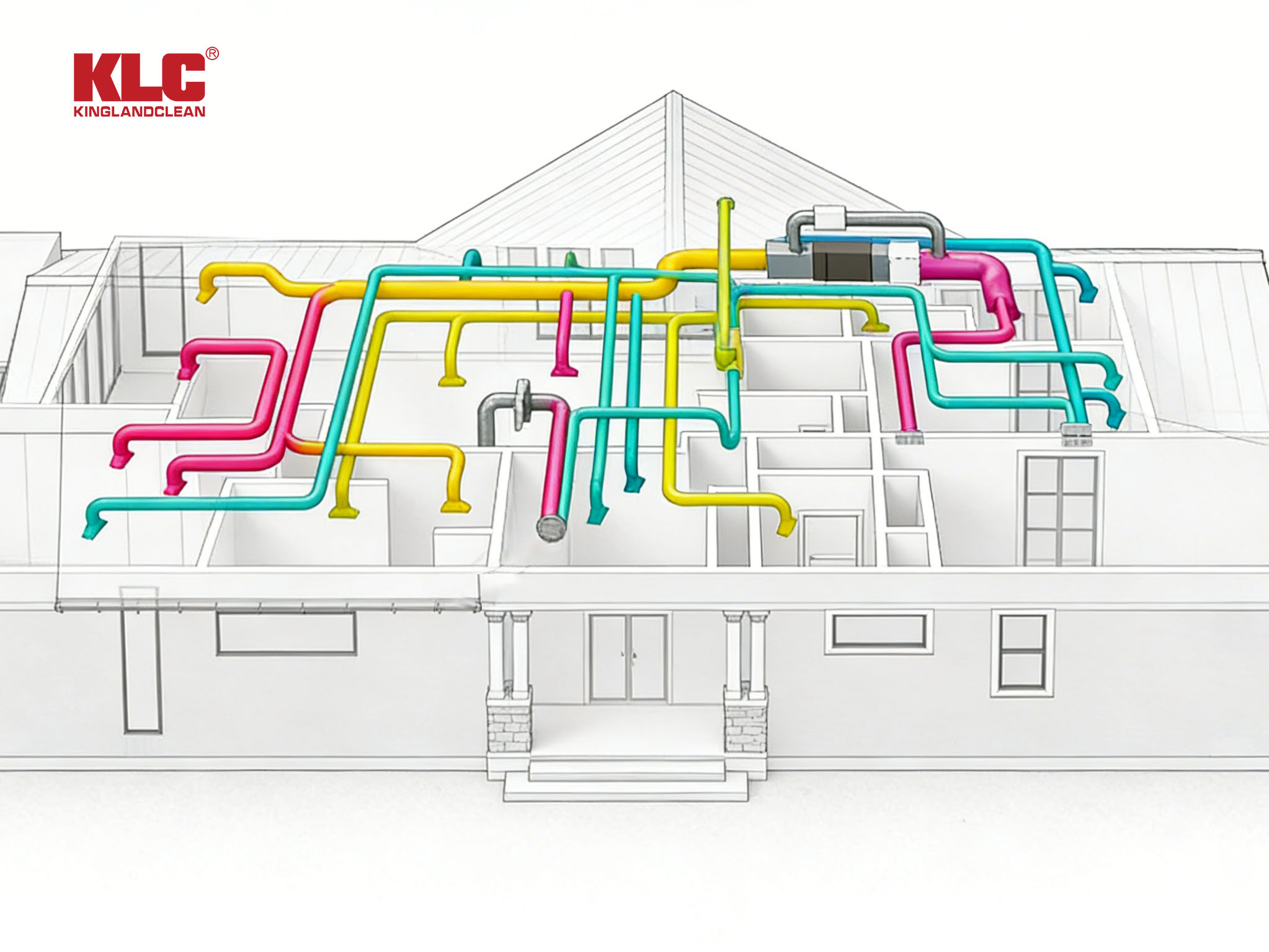
Air filtration is carried out at multiple locations within HVAC systems to ensure the required air cleanliness for the protection of production processes, users, and air handling equipment and ductwork. In HVAC systems, air filtration is generally divided into three stages: pre-filtration, intermediate filtration, and final filtration, achieved through different types of air filters.
Pre-filtration and intermediate filtration (primary and secondary filtration) are typically located at the points where outside air and recirculated air enter the air handling units. Filters should reach a certain efficiency to keep internal equipment (coils, fans) and air handling units relatively clean over an extended period, achieving the expected performance. Final filtration (tertiary filtration) is installed at the discharge section of the air handling unit or downstream (after airflow adjustment) to maintain duct cleanliness, extend the service life of terminal filters (if present), and protect personnel and workspaces from the hazards of suspended particles conveyed by the air handling unit when terminal filters are absent.
Terminal filtration devices installed around rooms, such as on ceilings or walls, can ensure the supply of the cleanest air, used to dilute or remove particles released within the room. The cleanliness of air leaving the filter depends on the filter structure and is related to the quantity and quality of the upstream air. Through proper design and correct configuration of air filters, the air quality and conditions required in pharmaceutical workshops can be achieved.
II. Working Principle of Air Filters
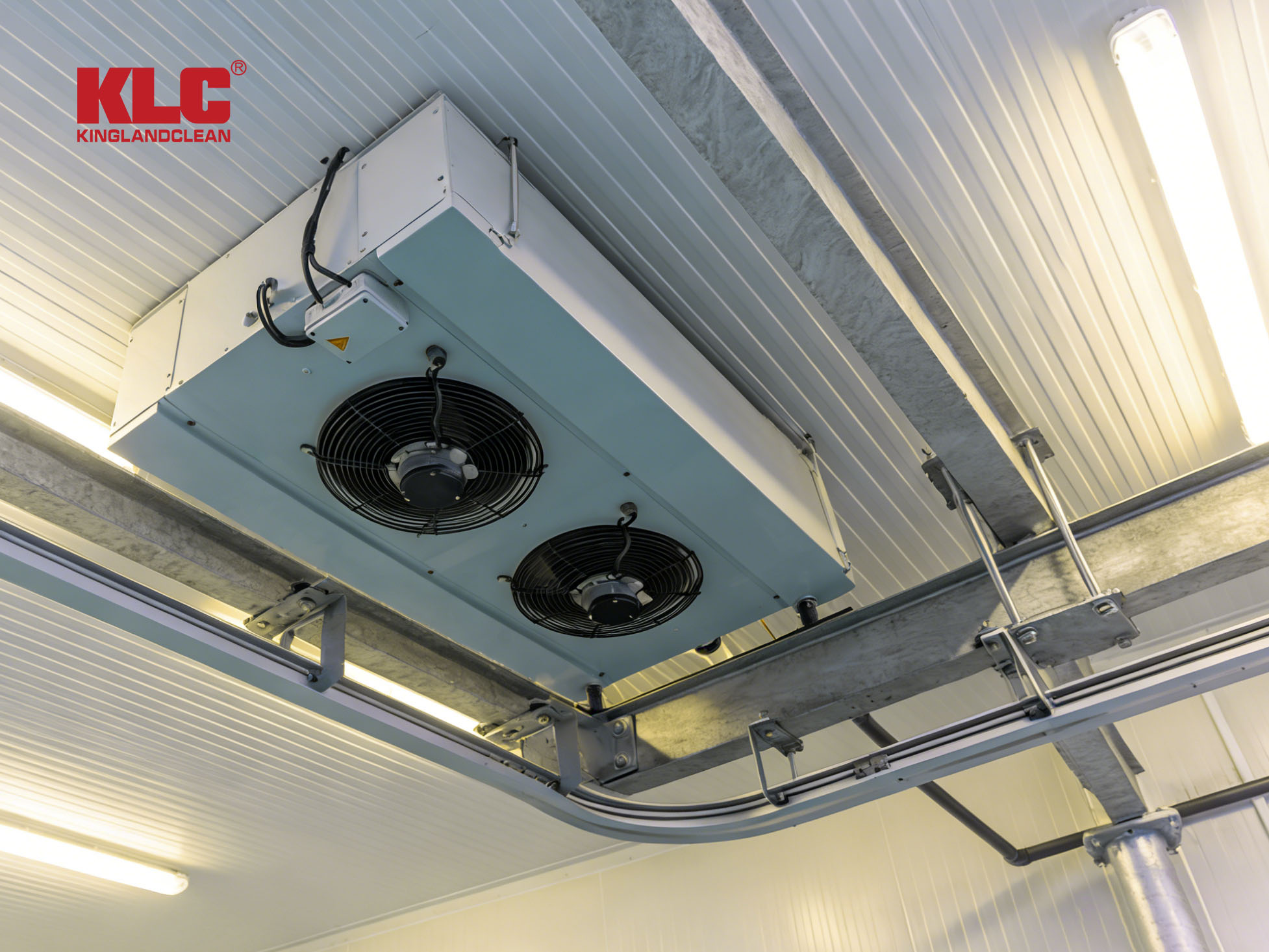
When air flows through a series of interconnected pore spaces forming a convoluted path within the microstructure of the filter (such as fibers or membranes), particles are captured in the filter media. The mechanisms by which filter media purifies air include interception, inertial effects, diffusion, electrostatic attraction, sieving, and gravitational deposition. The effectiveness of each mechanism in capturing particles primarily depends on particle size, air velocity, and the specifications of the filter structure (such as fiber diameter).
Interception effect:
When a particle of a certain size moves close to the surface of a fiber, if the distance from the particle center to the fiber surface is smaller than the particle radius, the dust particle will be intercepted by the filter fiber and deposited.
Inertial effect:
When the particle mass is large or the velocity is high, particles collide with the fiber surface due to inertia and are deposited.
Diffusion effect:
Small particles exhibit strong Brownian motion, making them more likely to collide with the fiber surface.
Electrostatic effect:
Fibers or particles may carry charges, creating an electrostatic attraction that draws particles to the fiber surface.
Sieving effect:
When the particle diameter is larger than the cross-sectional space between two fibers, the particle cannot pass through and is deposited.
Gravitational effect:
As particles pass through the fiber layer, they settle on the fibers due to gravity.
III. Filter Applications
The following provides an overview of primary to tertiary filtration and terminal filtration parameters.
A. Primary Filtration (Pre-filter)
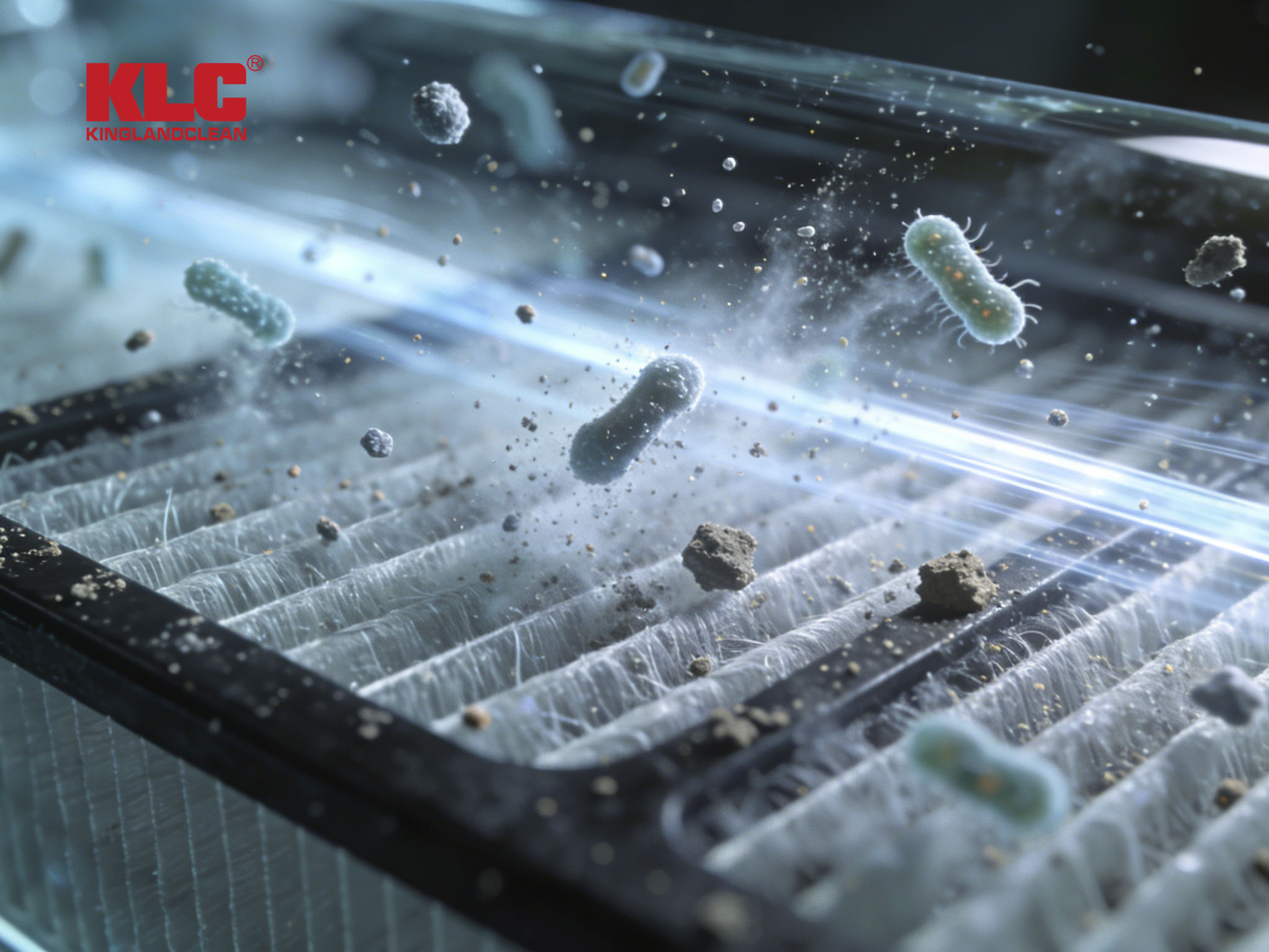
Primary filtration has the lowest efficiency (and also the lowest cost) and is used for pre-filtration, capturing larger particles (diameter above 3 μm, such as insects or plant debris) frequently present in the external air. It also serves as a pre-filter to extend the life of secondary filtration units. It is recommended to use a G4 filter.
B. Secondary Filtration (Intermediate Filter)
This filter has a higher cost and is generally installed downstream of the primary filter to capture smaller particles (above 0.3 μm) in order to protect coil and fan units, ducts, and personnel in the air handling system. It is recommended to use an F7/8 filter.
C. Tertiary Filtration (Final Filter)
This type of filter is installed at the discharge section of the air handling unit, downstream of the primary and secondary filters as well as the fan/coil, and can use high-efficiency or HEPA filters.
High-efficiency filters: They can capture released mold and other substances (which may grow or accumulate on the condensate (wet) cooling coils) as well as dust on belts and similar surfaces. These filters prevent these substances from moving in the ducts and coming into contact with personnel. It is recommended to use F7/8 filters.
HEPA filters: Used when the conditioned space requires a cleanliness level of Class C (100,000), and no terminal filter is used; or to protect terminal filters and extend the service life of downstream HEPA filters. These filters should be equipped with seamless sealing gaskets or silicone seals on the downstream side to create a positive seal, preventing air from bypassing around the filter. Permanent upstream and downstream protective screens should be considered to prevent physical damage to the filter media. Each HEPA filter should be replaceable without interrupting the operation of adjacent filters. H12 (99.5%) to H14 (99.995%, MPPS) filters are recommended.
D. Terminal Filtration Structure
HEPA filters are generally used as terminal filters in cases where the cleanliness level is above Class 100,000 or when particles generated in the duct may contaminate the supply air. Terminal filters can also be used for recirculated/exhaust air.
These filters should have silicone seals on the downstream side to ensure a positive seal, preventing air from bypassing the filter edges. Permanent downstream protective screens (media protection devices) should be installed to prevent physical damage to the filter media. Each HEPA filter in the filter bank should be replaceable without disrupting the operation of adjacent filters. H13 (99.95%) to H14 (99.995%, MPPS) filters are recommended.
High-efficiency air diffusers can serve as terminal filtration units and be directly installed in the cleanroom suspended ceiling, suitable for various cleanliness levels and maintenance structures.
The main features include:
1. The diffuser housing is made of high-quality cold-rolled steel plate with an electrostatic plastic coated surface;
2. Ensures the airflow velocity for injection, preventing turbulence;
3. Strong versatility, simple construction, and low investment;
4. Compact structure with reliable sealing performance; air inlet can be from the side or top, and flanges are available in square or round shapes.
High-efficiency air diffusers are aesthetically pleasing, low in investment, have a simple box structure, and allow easy replacement of HEPA filters, making them the best choice for terminal purification equipment in cleanrooms.
Laminar flow hood is an air purification device that provides a localized high clean environment. It is mainly composed of a box, a fan, a primary air filter, a damping layer, a lamp, etc., and the shell is sprayed. The product can be both suspended and ground supported, compact and easy to use. It can be used as a single or with multiple connections to form a strip of clean area. There are two types of clean laminar flow hoods: inside the fan and external fan, and there are two installation methods: suspended type and floor bracket type. The clean laminar flow hood is to pass the air through the fan through a certain air pressure through the high-efficiency air filter, and then the damping layer equalizes the pressure to send the clean air into the working area in a vertical laminar flow type of airflow, so as to ensure that the working area achieves the high cleanliness required by the process. Compared with clean rooms, clean laminar flow hoods have the advantages of low investment, quick results, low requirements for plant civil construction, easy installation, and power saving. Bag-in-bag-out filters are filter housings that use one side to capture hazardous or toxic, biological, radioactive, cytotoxin, or carcinogenic substances. Prevents hazardous airborne substances from escaping from exhaust or return ducts. It is generally located around the room (near the floor) where the material is generated, but it can also be located in the middle. The biggest feature of the bag in and out filter is that the installation, replacement, and detection of the filter are all carried out under the protection of PVC bags (or high-temperature bags), and the filter unit is completely free of contact with the outside air, thus ensuring the safety of personnel and the environment, making the replacement process convenient and fast. To be precise, it is a modular end-air supply unit with self-powered and filtration effect.
FFU (fan filter unit) is divided into two types in shape, one is cuboid and the upper part is slope-shaped; The upper part of the FFU (fan filter unit) is sloped and acts as a diversion, which is conducive to the flow and even distribution of airflow. Rectangular FFU (fan filter unit) generally rely on a different way to equalize the airflow. Structurally, it is divided into two types, one is the whole and the other is split.
FFU (fan filter unit) is widely used in the following situations:
1. Insufficient space for the ceiling of the clean room: In some occasions with high cleanliness requirements, the air supply static pressure box on the upper part of the ceiling of the clean room has a great role to balance the pressure on the cross-section of the clean room, but when the FFU (fan filter unit) is used, the ceiling of the clean room is divided into several modules, which can meet the pressure balance requirements of the air supply static pressure box on the upper part of the ceiling by adjusting each module (i.e., FFU (fan filter unit)), thus greatly reducing the height requirements of the static pressure box. In some retrofit projects, FFU (fan filter unit) effectively solves this problem when it is limited by floor height.
2. Insufficient static pressure in the clean room: In some renovation projects, due to the constraints of conditions, the air supply resistance is very large, and it is difficult to overcome the difficulty by relying on the air supply pressure of the air conditioning unit alone, which can be well solved due to the power of the FFU (fan filter unit).
3. Insufficient area of the air-conditioning room: In some renovation projects, due to the small area of the air-conditioning room, it is impossible to accommodate large air-conditioning units.This advantage is also applied to some situations with lower cleanliness requirements.



 IPv6 network supported