Cleanroom buyers must distinguish between facility compliance (GMP), quality management (ISO 9001), airborne cleanliness classification (ISO 14644), filter efficiency (EN 1822), and equipment safety (CE); no single “cleanroom certification” covers everything, and verifying each standard separately prevents procurement errors and regulatory failures.
1. ISO 9001: Quality Management System Certification
ISO 9001 is a generic quality management system (QMS) standard that evaluates a company’s internal administrative and manufacturing processes. * What it guarantees: It proves that the manufacturer has systematic processes in place for document control, customer satisfaction, design planning, raw material sourcing, and continuous improvement. It ensures that the manufacturer can consistently produce items to their specified standards. * What it does NOT guarantee: ISO 9001 does not specify the physical performance, leak resistance, or filtration efficiency of individual filters. A manufacturer can have an excellent ISO 9001 quality management system but still produce low-efficiency filters if their technical design or equipment is outdated.
2. GMP: Good Manufacturing Practice
GMP (Good Manufacturing Practice) is a regulatory standard that governs the manufacturing of pharmaceuticals, medical devices, biotechnology products, and food items. * What it covers: GMP applies strictly to the end-user’s production process and facility, not to the cleanroom equipment supplier’s factory. GMP is concerned with hygiene, cross-contamination prevention, batch records, validation, and sanitation. * The Supplier’s Role: A cleanroom equipment manufacturer cannot be “GMP-certified” because GMP does not issue certificates to equipment manufacturers. Instead, a cleanroom supplier must be an ISO 9001 GMP cleanroom supplier, meaning they design and build equipment (such as Pass Boxes, Air Showers, and FFUs) that allows the pharmaceutical buyer to comply with GMP regulations (e.g., using easy-to-clean SUS304 surfaces, non-porous seals, and high-efficiency filters).
3. ISO 14644: Cleanroom Airborne Cleanliness Classification
ISO 14644 is a set of international standards specifically written for cleanrooms and associated controlled environments. * What it covers: Specifically, ISO 14644-1 classifies cleanroom cleanliness based on the concentration of airborne particles per cubic meter of air, ranging from ISO Class 1 (cleanest) to ISO Class 9 (least clean). * Supplier vs. Facility: This standard applies to the assembled cleanroom environment in operation, not to individual equipment bought from a catalog. However, equipment like KLC’s Fan Filter Units (FFU) are engineered to meet specific ISO 14644 performance levels when installed in a modular cleanroom grid.
4. CE Marking: Product Safety Compliance
The CE mark is a mandatory conformity marking for products placed on the market within the European Economic Area (EEA). * What it covers: It evaluates mechanical safety, electrical safety, electromagnetic compatibility (EMC), and low-voltage limits for powered cleanroom hardware (such as Fan Filter Units, Air Showers, and laminar flow hoods). It does not evaluate filtration efficiency, but guarantees that the electrical components are safe and will not cause fires or electrical interference.
5. EN 1822 / ISO 29463: HEPA/ULPA Filter Testing Standards
EN 1822 is the definitive European standard for high-efficiency particulate air (HEPA) and ultra-low penetration air (ULPA) filters, now aligned with the global ISO 29463 standard. * What it covers: It certifies the performance of the filter itself. It requires testing the filter’s efficiency at its Most Penetrating Particle Size (MPPS) and guarantees that the filter meets the H13, H14, U15, or U16 rating. This is the single most critical technical certification for high-efficiency filters.
Data Comparison Table: Cleanroom Certifications and Standards
Certification / Standard
Primary Issuing / Auditing Body
Scope of Evaluation
Who Must Have It?
How to Verify Authenticity
ISO 9001
Accredited registrar (e.g., SGS, TUV, DQS) under IAF
Manufacturer’s internal administrative and production QMS
Direct physical efficiency of the HEPA/ULPA filter at MPPS
Search certificate number on IAF CertSearch or the registrar’s portal
GMP Guidelines
National food and drug administrations (e.g., FDA, NMPA)
Process compliance, hygiene, validation of the end product
The pharmaceutical or food processing facility operator
Verified via official FDA/NMPA audit reports and site inspections
ISO 14644-1
Qualified third-party cleanroom testing agency
Airborne particle concentration in the operating cleanroom
The physical cleanroom facility (operational status)
Review particle counter calibration and physical testing reports
CE Marking
Certified EU Notified Bodies or Self-Declaration
Electrical, electromagnetic, and mechanical machinery safety
Manufacturers of powered equipment (FFUs, Air Showers) exported to EU
Request the CE Declaration of Conformity (DoC) and test reports
EN 1822 / ISO 29463
Certified filtration testing laboratories
Direct physical efficiency of the HEPA/ULPA filter at MPPS
Every individual HEPA filter used in critical cleanrooms
Review the individual DOP/PAO leak-test report and serial number scan
How to Verify Cleanroom Manufacturer Certifications
To protect your facility from substandard equipment, use this systematic approach to verify supplier claims:
Check IAF CertSearch for ISO 9001: Do not accept a PDF certificate as absolute proof. Visit the International Accreditation Forum (IAF) database and enter the manufacturer’s name or certificate number to verify its active status, scope of registration, and expiry date.
Request Individual EN 1822 Scan Reports: A Tier 1 supplier will provide an individual, serialized test report for every single HEPA filter delivered, showing the exact pressure drop and efficiency measured during a DOP/PAO test scan. If a supplier only provides a “general catalog certificate” or a statistical batch report, do not accept the shipment for critical cleanrooms.
Verify CE Testing Scope: For Fan Filter Units (FFUs) and Air Showers, request the actual test reports supporting the CE certificate. Ensure the testing was done by an accredited testing house and includes the Machinery Directive (2006/42/EC) and Low Voltage Directive (2014/35/EU).
KLC Compliance Standards
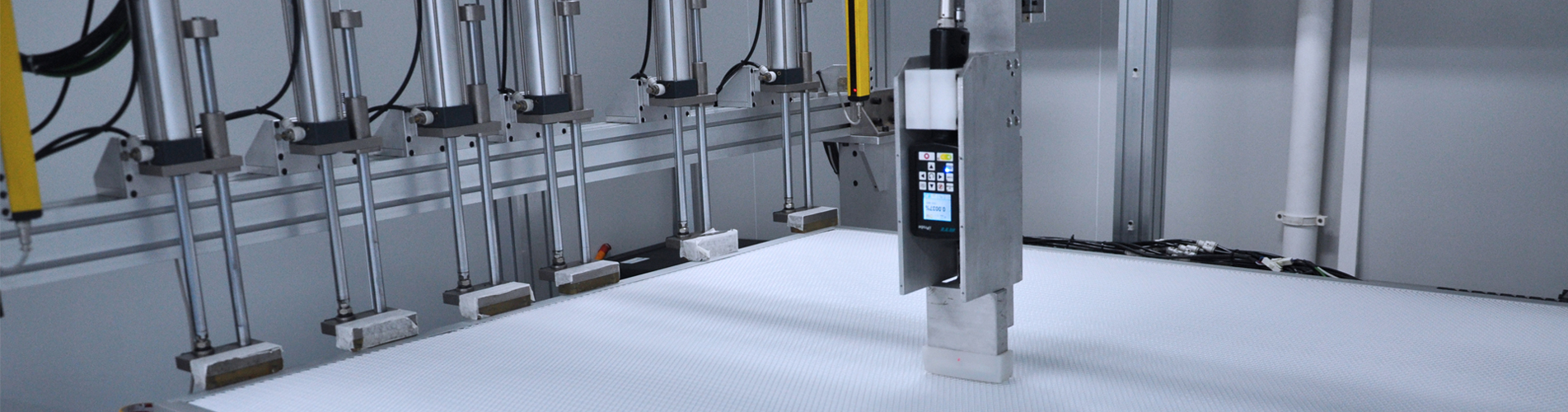
KLC (Guangzhou KLC Cleantech) is an established, fully certified ISO 9001 GMP cleanroom supplier. Operating a state-of-the-art facility in Guangzhou, China, KLC aligns all manufacturing processes with ISO 9001 quality management guidelines. KLC designs cleanroom equipment, including FFU, Pass Boxes, and Air Showers, specifically to meet global GMP and ISO 14644-1 cleanroom classifications. Additionally, every single HEPA filter produced by KLC is tested and scanned using advanced automatic testing rigs in strict accordance with the EN 1822 standard, with individual test reports provided to clients to support their internal facility validation processes.
FAQ: Cleanroom Certifications
Can a HEPA filter supplier be “GMP certified”?
No. GMP (Good Manufacturing Practice) is a regulatory standard that applies to the manufacturer of the final product (such as pharmaceuticals or medical devices), not to the components or suppliers of cleanroom equipment. A HEPA filter supplier can only be certified to ISO 9001, while their filters must comply with the EN 1822 standard. The supplier’s role is to provide compliant, high-quality hardware that enables the end-user’s facility to pass its GMP audits.
What is the difference between ISO 14644-1 and EN 1822?
ISO 14644-1 defines the classification of cleanrooms based on airborne particle concentrations in the room’s air. EN 1822, on the other hand, is a specific test standard for the air filters installed in those rooms. Simply put, ISO 14644-1 measures the cleanliness of the room as a whole, while EN 1822 measures the technical performance and particle separation efficiency of the HEPA/ULPA filter before it is installed.
How do I verify if an ISO 9001 certificate is still active and valid?
To verify an ISO 9001 certificate, locate the certificate number, the registrar’s name (e.g., SGS, TUV), and the accreditation body logo (e.g., UKAS, CNAS, ANAB). Next, search the manufacturer’s credentials on the International Accreditation Forum’s database (IAF CertSearch) or directly on the issuing registrar’s website. If the supplier’s name does not appear or if the status is “suspended” or “expired,” the certification is invalid.
What does the CE mark cover on an FFU (Fan Filter Unit)?
For a Fan Filter Unit (FFU), the CE mark certifies that the unit complies with European safety, health, and environmental protection requirements. This covers electromagnetic compatibility (ensuring the FFU does not interfere with other medical or cleanroom electronics), electrical low-voltage safety (preventing shocks and fire hazards), and mechanical safety of the fan blade assemblies. It does not certify the filtration efficiency of the built-in HEPA filter.
What is MPPS in EN 1822, and why is it critical for cleanroom certification?
MPPS stands for “Most Penetrating Particle Size,” which is the particle size (typically between 0.1 and 0.25 microns) that a filter has the hardest time capturing. EN 1822 requires testing filters at this specific MPPS. This is critical because if a HEPA filter is certified to capture 99.99% of particles at its MPPS, its efficiency for all other particle sizes (both larger and smaller) will be even higher, ensuring comprehensive cleanroom protection.
Does ISO 14644 apply to both laminar and turbulent cleanrooms?
Yes, ISO 14644-1 applies to all cleanrooms, regardless of their airflow pattern (laminar unidirectional, turbulent non-unidirectional, or mixed). The standard specifies particle concentration limits per cubic meter of air across nine classes. However, the physical placement and quantity of testing points during qualification will differ depending on the laminar or turbulent airflow design of the cleanroom.
What documentation should accompany an H14 HEPA filter delivery?
An H14 HEPA filter delivery should always be accompanied by a serialized, individual factory inspection report (DOP/PAO test certificate), an instruction manual, and certificates of material compliance. The individual test report must contain the filter’s serial number (matching the label on the filter frame), the measured airflow volume, the initial pressure drop, and the local and overall filtration efficiency at MPPS.
Can a non-certified manufacturer produce cleanroom-compliant equipment?
While it is technically possible for a manufacturer without ISO 9001 to build a cleanroom-compliant piece of hardware, it is highly risky for buyers. Without a certified quality management system, there is no guarantee of product consistency, material traceability, or testing integrity. Most cleanroom validation auditors will reject equipment that cannot be backed up by certified manufacturing records and verified testing documentation.
Conclusion
Navigating cleanroom certifications requires verifying separate standards for manufacturing quality, product safety, and filtration efficiency. When selecting hardware, ensure that your supplier’s certifications are valid and active on global registry systems. For assistance with cleanroom equipment compliance and to request certified technical documentation for your upcoming project, visit KLC International at https://www.klcintl.com/.
Since cleanroom facilities are designed with different levels of requirements depending on their usage, and some work environments require even higher cleanliness standards, FFU(Fan Filter Units) have thus been introduced. The emergence of FFU(Fan Filter Units) has effectively addressed this issue.Using FFU(Fan Filter Units) can effectively solve the problems present in cleanroom projects. The main points are as follows:
1.Space saving — Using FFU(Fan Filter Units)can save space and address the issue of limited maintenance space above the cleanroom ceiling.
High-standard cleanrooms often require Class 100 or even Class 10 laminar hoods to meet process requirements. In such cases, large supply air plenum boxes are installed above the cleanroom ceiling, with fans inside. These plenum boxes, along with supply and return air ducts, occupy significant space, reducing maintenance access and sometimes even affecting the use of fire escape routes.
When FFUs are used, the cleanroom ceiling can be divided into multiple modules, with each module being an FFU. By adjusting each module, the pressure balance requirements of the supply air plenum above the ceiling can be met, significantly reducing the height requirements of the plenum. Additionally, the need for large supply and return ducts can be eliminated, saving installation space. FFUs are particularly effective in renovation projects where ceiling height is limited. Moreover, FFUs come in various sizes and can be customized according to the actual dimensions of the cleanroom. Because of this, they occupy less vertical space within the supply air plenum, and essentially do not occupy space within the cleanroom itself, thereby further maximizing space savings.
2. FFU Flexibility—By utilizing the structural features of the FFU's independence, adjustments can be made at any time, compensating for the limited maneuverability of the cleanroom and thereby addressing the disadvantage of production processes that are not easily adjustable.
The maintenance structure of cleanroom facilities is generally made of metal panels, and once constructed, the layout cannot be freely altered. However, due to continuous updates in production processes, the original cleanroom layout may no longer meet the requirements of new processes, leading to frequent modifications in the cleanroom for product upgrades, which results in significant financial and material waste.By adjusting the number of FFUs, the cleanroom layout can be locally modified to accommodate process changes. Moreover, FFUs come with built-in power, air outlets, and lighting, which can save a substantial amount of investment. Achieving the same effect is nearly impossible for conventional integrated air supply purification systems.Because FFUs are self-powered, they are not limited by specific areas. In a large cleanroom, zoning control can be implemented as needed. Additionally, as semiconductor production processes evolve, the facility layout inevitably requires corresponding adjustments. The flexibility of FFUs makes such adjustments easy without necessitating additional investment.
3. Reducing Operational Burden — The FFU system is energy-saving, thereby addressing the drawbacks of central air supply, such as large air conditioning rooms and increased operating costs of air handling units.
If individual cleanrooms within a large-area cleanroom facility require a higher level of cleanliness, the air volume of a centrally supplied air conditioning unit must be large and the fan pressure high to overcome the resistance of ducts as well as the resistance of primary, medium, and high-efficiency filters, in order to meet the requirements. Moreover, in a central air supply system, any failure of an air conditioning unit will cause all cleanrooms associated with that unit to cease operation.Although the initial investment for using FFUs is higher than that for ducted ventilation, the system demonstrates outstanding energy-saving and maintenance-free characteristics during later operation, making FFUs more popular.
In air conditioning systems for cleanrooms and other high-cleanliness environments, fan filter units (FFUs) are one of the core devices for achieving air cleanliness control. FFUs ensure the purity and uniform distribution of indoor air through their efficient air filtration capabilities and stable airflow organization, and work together with dry coils (DCs) and other components to maintain the environmental conditions of cleanrooms.
High-efficiency air filtration and airflow organization
FFUs have built-in high-efficiency filters that can remove particles in the air, including dust, bacteria, and viruses, to ensure that the air delivered to the cleanroom meets high cleanliness standards.
At the same time, FFUs form stable vertical laminar or turbulent airflow organizations through the operation of their built-in fans to avoid local contamination. This stable airflow organization is essential for maintaining the cleanliness of cleanrooms, especially in the semiconductor manufacturing and biopharmaceutical fields where cleanliness requirements are extremely high.
Collaborative work and application scenarios
In dry coil systems, FFUs work together with dry coils (DCs) and other components (such as fresh air units MAUs). MAU is responsible for introducing and processing outdoor fresh air, removing particulate matter through primary and medium efficiency filtration, and processing the fresh air to the specified temperature and humidity.
The fresh air treated by MAU is mixed with part of the return air, filtered by FFU and sent to the clean room. After the indoor air is cooled or heated by the dry coil, it is circulated to the return air channel again and mixed with the supplementary fresh air to form a closed-loop air circulation system.
FFU runs continuously to maintain the number of air cycles and ensure the cleanliness of the indoor air; the dry coil adjusts the cold water flow or temperature according to the temperature sensor, and only processes the sensible heat load to avoid mutual interference in temperature and humidity control. This design with clear division of labor improves the overall performance and reliability of the system.
Among the many FFU products, KLC FFU is an excellent choice in the market with its excellent performance and flexible design. KLC FFU uses high-efficiency filters with KLC's exclusive technology, which can achieve high-efficiency air filtration and ensure high cleanliness of indoor air.
Its compact design is easy to install and maintain, and it has the characteristics of low noise and high energy efficiency, which can meet the requirements of different cleanliness levels.
KLC FFU also has flexible installation methods and intelligent control options, which can realize single-unit manual control or multi-unit group monitoring, and can adapt to the needs of clean room applications from small to large scale.
KLC FFU performs well in practical applications, especially in the fields of semiconductor manufacturing, biopharmaceuticals and precision electronic assembly, providing users with efficient and reliable air purification solutions. Its efficient filtering performance and stable airflow organization ability can effectively prevent condensed water from contaminating wafers, ensure the sterile environment of drug production, and ensure the accuracy and stability of the equipment.
KLC FFU's low noise operation and high energy efficiency design also make it perform well in clean rooms with strict environmental requirements, providing users with an ideal air filtration option.
As the core air filtration equipment in the dry coil system, FFU provides a reliable solution for high-cleanliness environments such as clean rooms through its efficient filtering capacity and stable airflow organization. Its collaborative work with dry coils and other components further optimizes the performance and reliability of the system.
In the fields of semiconductor manufacturing, biopharmaceuticals and precision electronic assembly, FFU has become a key equipment for maintaining a high-cleanliness environment to ensure the efficient and stable operation of the production process.



 IPv6 network supported