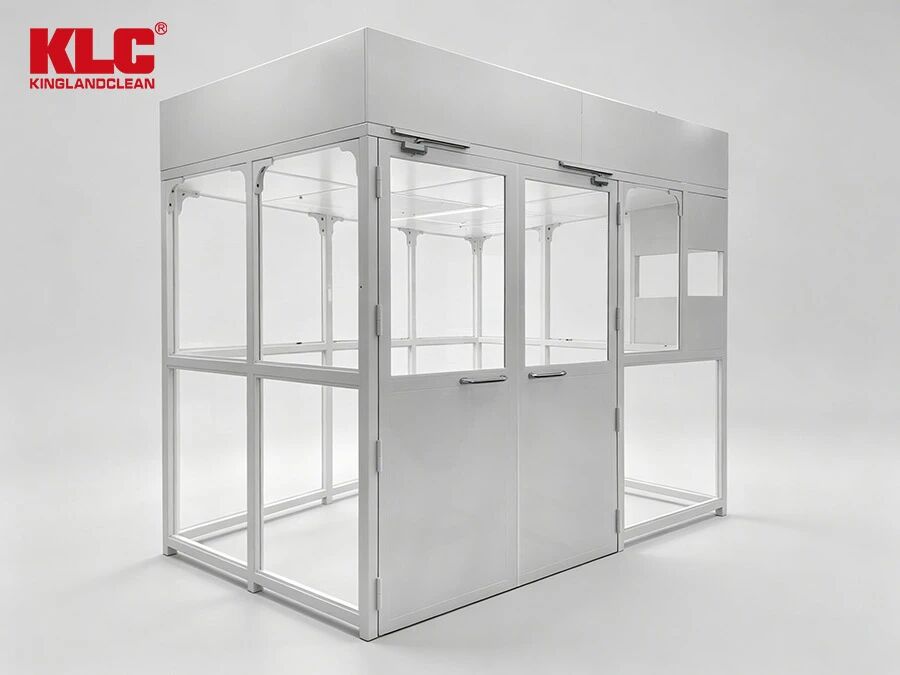
In modern industrial and laboratory environments, Clean Booth and Mobile LAF Trolley are becoming increasingly popular. These systems offer unparalleled flexibility and cost-effectiveness compared to traditional stationary cleanrooms. However, this flexibility also places special demands on the core component – the filter.
Today, let's take a closer look at how to choose a clean shed and Fan Filter Unit (FFU) for efficient mobile purification, especially why the "Lightweight" and "Low Pressure Drop" filters are emphasized.
1. Why do cleanrooms and mobile equipment need special filters?
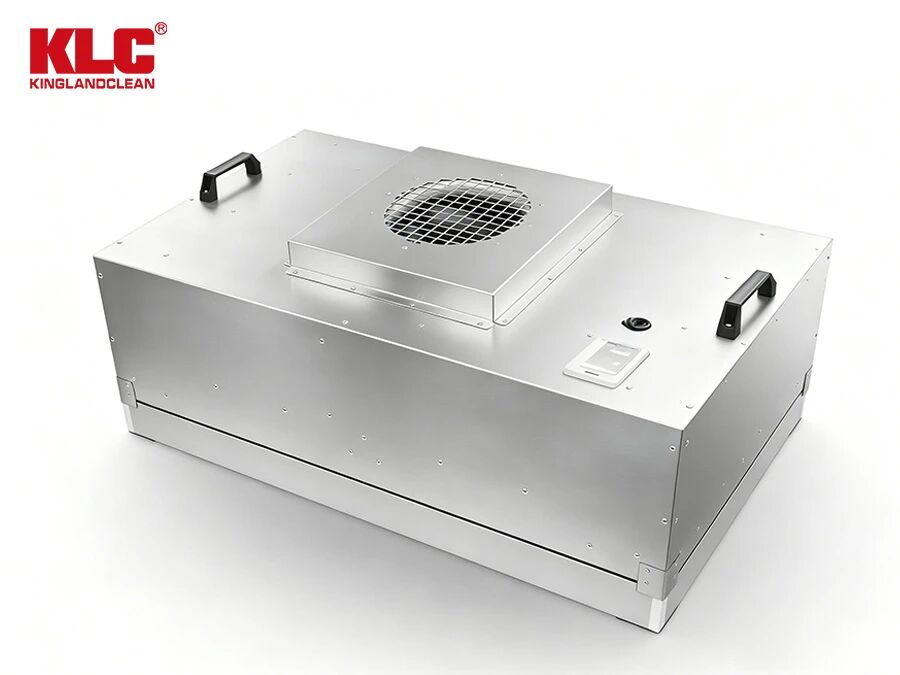
Laminar Air Flow devices often rely on Fan Filter Unit (FFU) to provide clean air. Unlike large central air conditioning systems (AHU), Fan Filter Unit (FFU) have limited power of fans built into them.
This brings up a core contradiction: limited turbine power vs. wind resistance to be overcome.
If the filter is high pressure drop, the fan will not be able to push enough airflow, resulting in the cleanhouse not achieving the expected cleanliness (e.g. Class 100). Therefore, when selecting a Fan Filter Unit (FFU) system, we must follow the principles of "light weight" and "low resistance".
2. Core selection strategy: change from "deep" to "shallow"
In traditional large cleanrooms, engineers often prefer filters with "Deep Pleat" design to increase dust holding. However, in Fan Filter Unit (FFU) and cleanshed applications, this design may not be feasible.
Strategy 1: Reject deep pleats and embrace low drag While Deep Pleat Hepa Filter excels in industrial dust removal, in Fan Filter Unit (FFU), we need to consider how to reduce wind resistance. For cleanshed and mobile LAF systems, a filter design with lower resistance should be preferred to ensure that the fan can easily maintain Laminar Air Flow.
Strategy 2: Balance size and weight Clean LAF are usually mounted on the ceiling or stands, while mobile LAF require frequent movement. This requires the filter to be lightweight. Excessive filters not only increase installation difficulty but can also burden the structure of the clean shed.
3. The Three Golden Rules for FFU Supporting Filters
To ensure that your clean booth or mobile purification equipment can operate efficiently, the following are filter selection rules summarized based on the characteristics of Fan Filter Unit (FFU):
Rule 1: The Lower the Resistance, the Better
When selecting a filter, the primary indicator to focus on is the "Initial Pressure Drop." For a Fan Filter Unit (FFU), the goal is to find a product with minimal resistance while ensuring filtration efficiency (such as H13, H14). This can effectively extend the fan's lifespan and reduce energy consumption.
Rule 2: Give Priority to Mini Pleat Technology
Although Deep Pleat filters have a large dust-holding capacity, Mini Pleat HEPA Filters, with their more compact structure and lower air resistance, are becoming the preferred choice for FFU systems. This design achieves a perfect balance between efficiency and low resistance within a limited space, making it ideal for compact clean booths.
Rule 3: Pay Attention to Airflow Uniformity
The core of Laminar Air Flow is to create a unidirectional flow environment without turbulence. Therefore, the supporting filter must perfectly match the Fan Filter Unit (FFU) diffuser plate to ensure uniform air velocity and avoid generating turbulence.
In summary, selecting a filter for clean booths and mobile purification equipment is not simply about purchasing a "high-efficiency filter." It is a precise calculation process based on aerodynamics. In your next project, whether designing a Clean Booth or purchasing a Mobile LAF, please remember: in the world of Fan Filter Unit (FFU), Low Pressure Drop and Lightweight are the only shortcuts to efficient cleanliness. Be sure to confirm the filter's resistance curve with your supplier to ensure it can harmonize with your Fan Filter Unit (FFU).



 IPv6 network supported