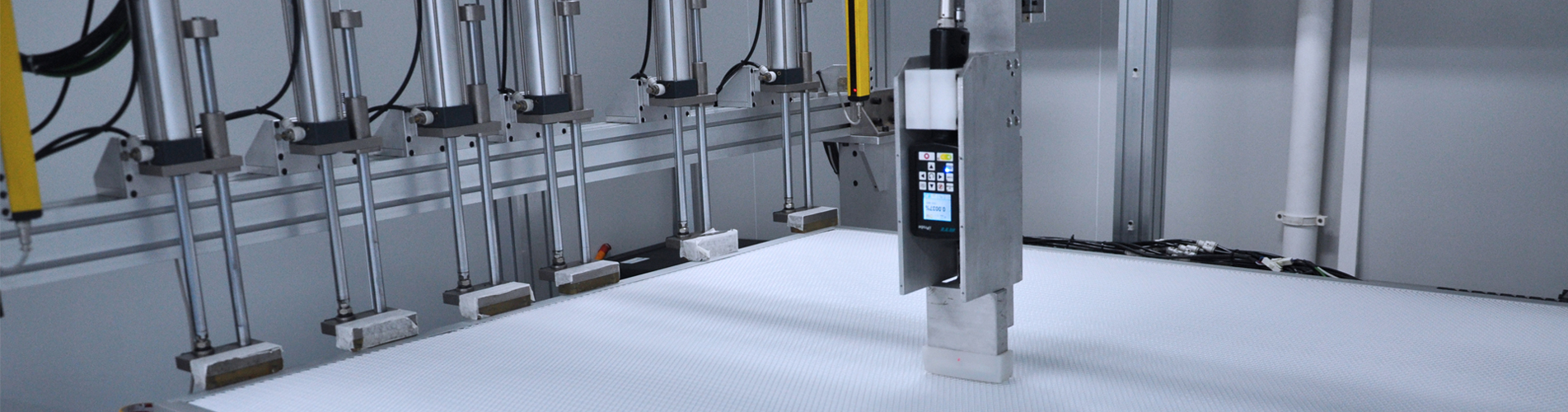
Beyond the macroscopic world we take for granted lies a microscopic realm that demands near-absolute purity. In this domain, a speck of dust far finer than a human hair is enough to ruin a product of immense value. The guardian of this realm is the cleanroom—a space where the concentration of airborne particles is strictly controlled. These facilities are designed and operated to minimize the introduction, generation, and retention of particles indoors, while precisely regulating parameters such as temperature, humidity, and pressure.
Definitions and Standards: More Than Just "Clean"
A cleanroom is far more than merely a "spotless room"; it is governed by a rigorous set of technical standards and operational definitions.
As-built: The facility is fully constructed and all utility systems are operational, but no production equipment, materials, or personnel are present.
In-operation: The facility is running under specified conditions, with designated personnel present and actively working.
These definitions serve as the cornerstone for cleanroom design, testing, and acceptance, ensuring that cleanliness assessments remain comparable across different stages.
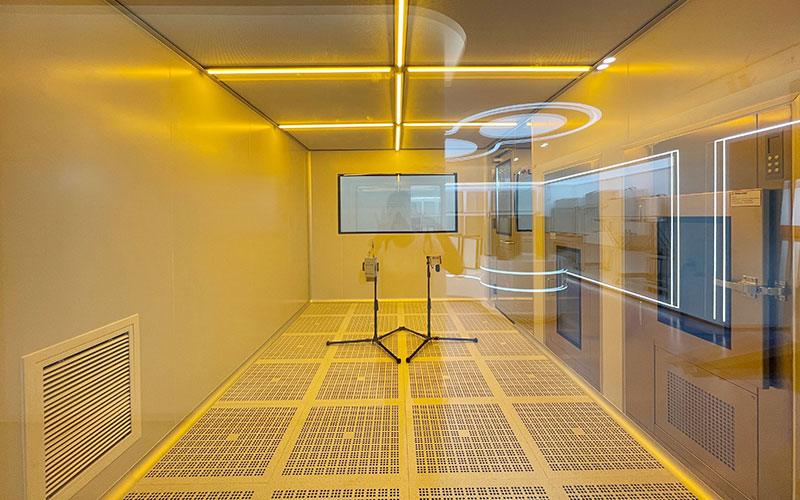
At the heart of a cleanroom lies complex system integration. A complete cleanroom typically comprises five major systems: the enclosure system (walls, ceilings, and floors), the HVAC system (supplying clean air and controlling temperature and humidity), the electrical system, the plumbing and drainage system, and the automatic control system. Airflow patterns are critical to the design, generally categorized into unidirectional flow (air moves at a uniform speed in a single direction, offering extremely high cleanliness) and non-unidirectional flow (air mixes to dilute particles, suitable for environments with slightly lower cleanliness requirements).
Cleanrooms serve as "invisible infrastructure" for numerous high-tech and consumer-facing industries, supporting a wide range of downstream applications and diverse needs.
Semiconductors and Electronic Information: This is the primary and most demanding application sector for high-end cleanrooms. As chip manufacturing processes advance to the nanometer scale, even the tiniest airborne particles can cause circuit short-circuits or a drastic drop in production yields. Cleanroom engineering typically accounts for 5–10% of the total capital expenditure in integrated circuit manufacturing. The boom in AI and high-performance computing is driving a new cycle of capacity expansion among global wafer fabs, directly fueling demand for high-grade cleanrooms.
Other sectors—such as advanced displays (e.g., OLED panels), new energy (e.g., photovoltaics and lithium batteries), and food and pharmaceutical manufacturing—also represent significant application areas for cleanrooms.
Industry Trends: AI-Driven Growth and Global Expansion
The cleanroom industry is currently in an upward cycle driven by both technological revolutions and the restructuring of global supply chains.
Technological Upgrades and Model Transformation: To address global competition and cost pressures, the industry is evolving toward greater intelligence, sustainability, and modularity. Modular cleanrooms are regarded as a key capability; by leveraging domestic supply chain and production strengths to prefabricate components in factories, companies can effectively reduce on-site labor costs and timeline uncertainties for overseas projects, thereby establishing a differentiated competitive advantage.
In summary, cleanrooms have evolved from mere "auxiliary facilities" into core infrastructure underpinning modern high-tech manufacturing. Amidst the waves of global technological competition and industrial transformation, their strategic value and market potential are becoming increasingly prominent.



 IPv6 network supported