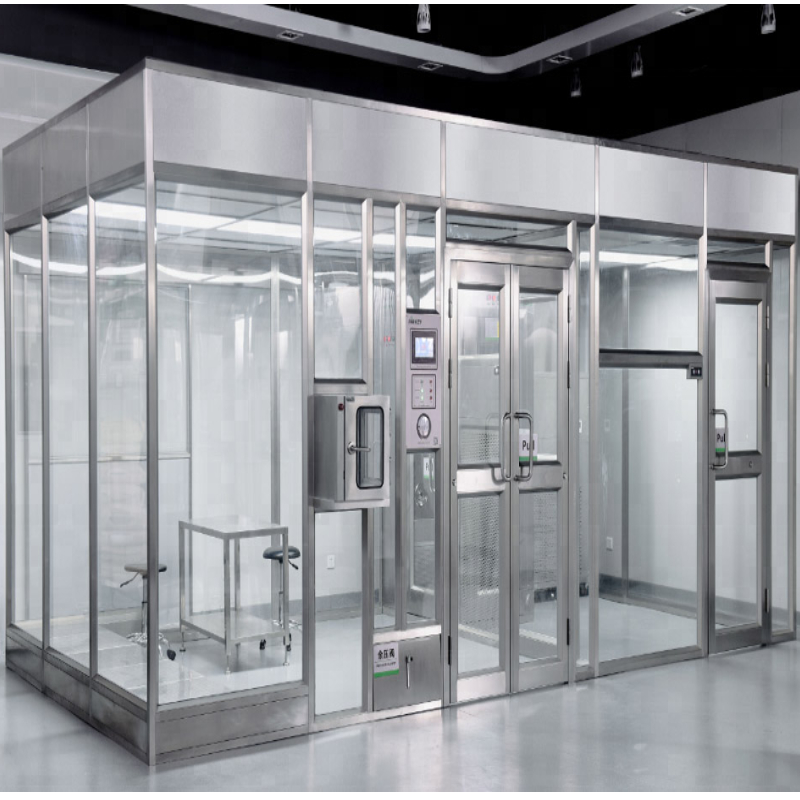
An AAALAC-compliant animal facility requires a carefully engineered pressure cascade, HEPA-grade terminal filtration, and zone-specific contamination barriers — the exact configuration depends on whether you are housing SPF (specific pathogen-free) or infectious animals.
This article is written for laboratory animal facility managers, biomedical research engineers, and procurement teams specifying cleanroom equipment for new or upgraded vivarium builds. It covers AAALAC air quality requirements, pressure zone design, IVC rack integration, equipment selection by room type, and odor/exhaust control strategies. Whether you are building a rodent barrier facility or an infectious disease research unit, the principles here will guide your filtration decisions.
AAALAC International (Association for Assessment and Accreditation of Laboratory Animal Care) does not prescribe specific filter grades or ACH values in absolute terms. Instead, it references the Guide for the Care and Use of Laboratory Animals (8th Edition, NRC 2011) as its primary standard, supplemented by ILAR Journal guidance.
Key air quality requirements from the Guide: - 10–15 air changes per hour for most animal rooms (fresh air, not recirculated only) - At least 10 ACH of 100% fresh air for rooms housing animals that generate significant bioaerosols - Temperature control: 18–26°C depending on species - Relative humidity: 30–70% - Directional airflow between zones to prevent cross-contamination
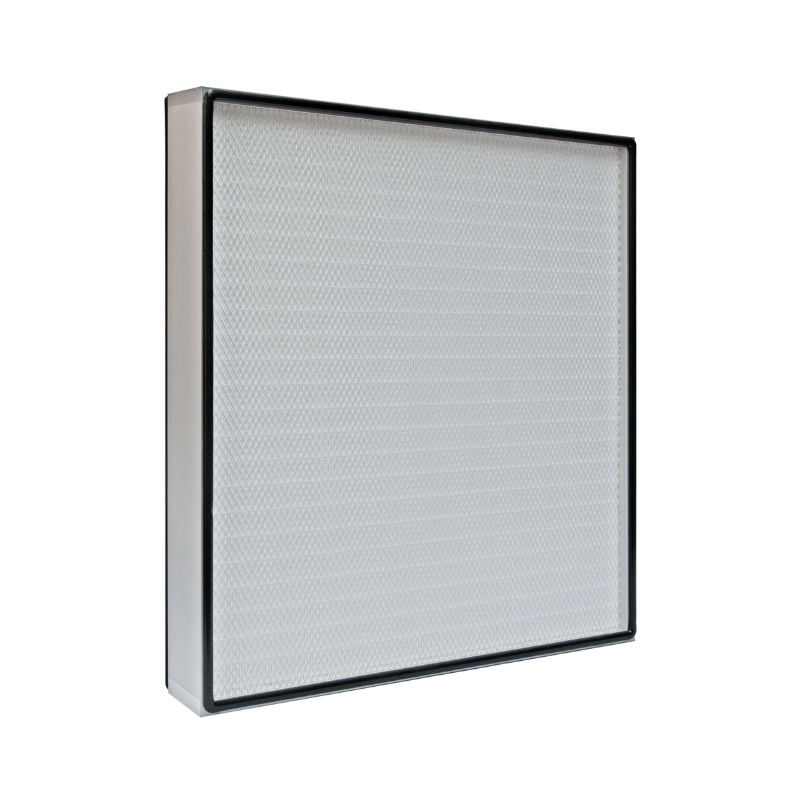
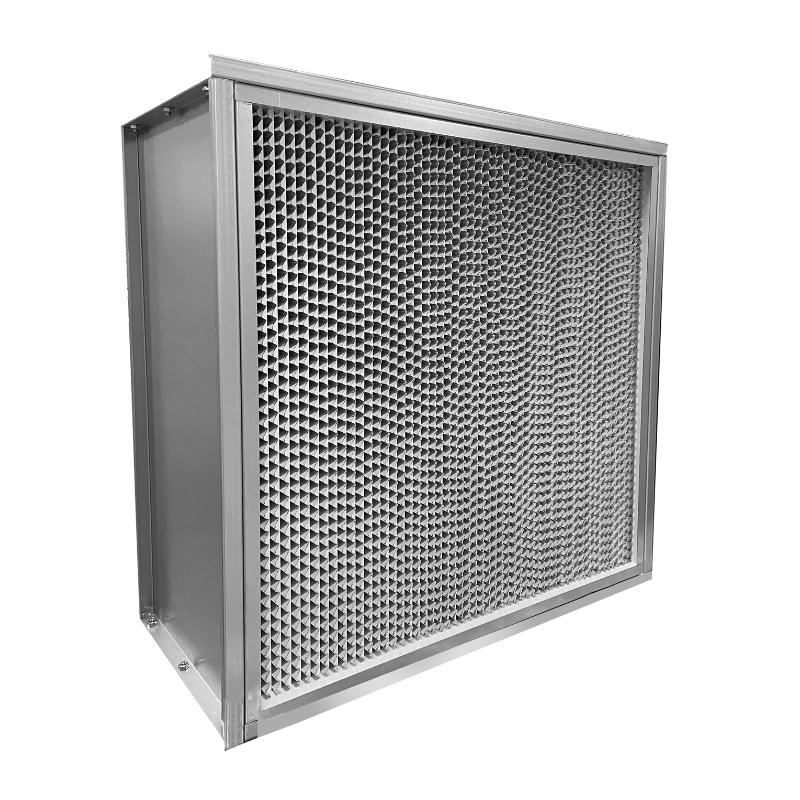
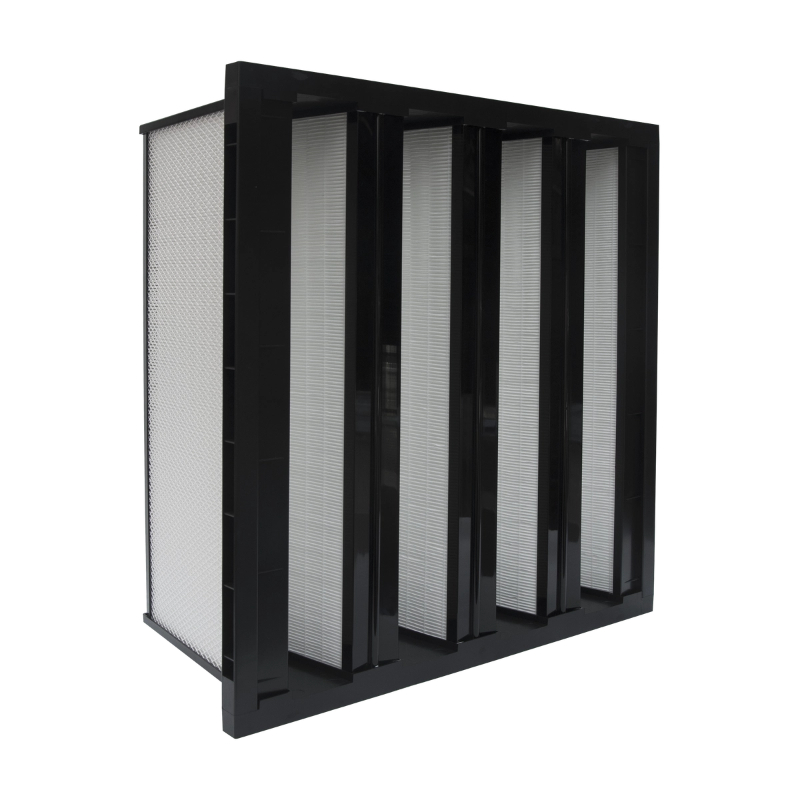
The Guide does not mandate ISO class levels, but best practice for SPF barrier facilities targets ISO 7–8 (equivalent to former Class 10,000–100,000) with H13 or H14 HEPA terminal filtration on both supply and exhaust in infectious animal areas.
Unlike pharmaceutical cleanrooms, which maintain positive pressure throughout, animal facilities use a bidirectional pressure cascade that depends on the biological risk profile of each zone.
Goal: protect animals from external contamination.
Corridor (positive, +15 Pa)
→ Animal Room (positive, +10 Pa vs. corridor)
→ Dirty Corridor / Cage Wash (neutral / slightly negative)
Supply air is HEPA-filtered (H13 minimum). Exhaust may be unfiltered or pre-filtered only, since the goal is keeping contamination out, not in.
Goal: contain pathogens, protect personnel and environment.
Clean Corridor (positive, +15 Pa)
→ Anteroom / Airlock (neutral, 0 Pa)
→ Infectious Animal Room (negative, -10 to -15 Pa)
→ Exhaust → HEPA-filtered exhaust before release
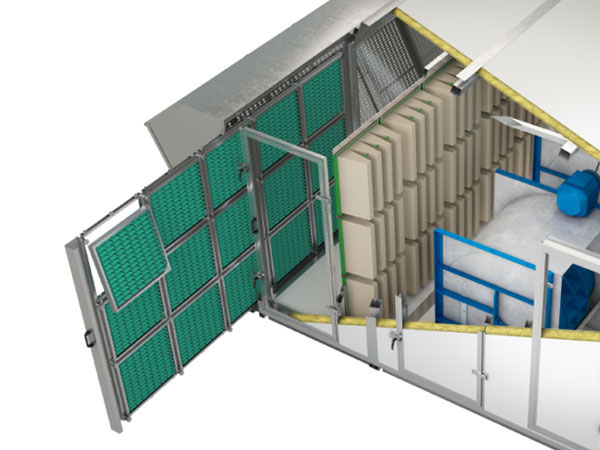
Both supply and exhaust must pass through HEPA filtration. Exhaust HEPA units must be bag-in/bag-out (BIBO) design to allow safe filter change without exposing maintenance staff to contaminated filters.
|
Zone Type |
Pressure vs. Adjacent |
Supply Filter |
Exhaust Filter |
ISO Class Target |
|
SPF animal room |
Positive (+10 Pa) |
H13 HEPA |
Pre-filter only |
ISO 7–8 |
|
ABSL-2 infectious room |
Negative (-10 to -15 Pa) |
H13/H14 HEPA |
H14 HEPA (BIBO) |
ISO 7 |
|
Cage wash / dirty corridor |
Slightly negative |
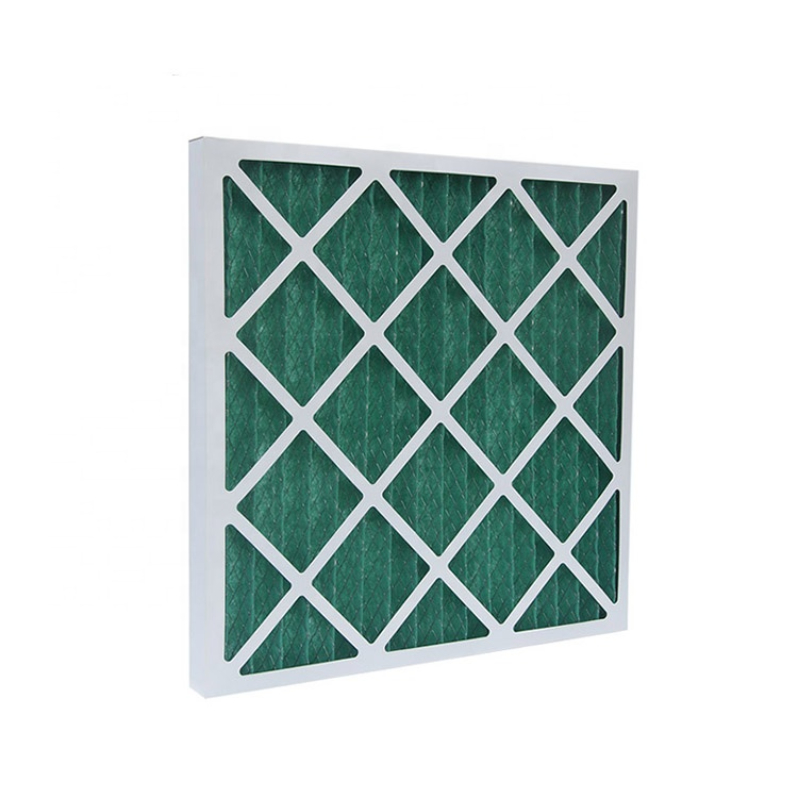
G4 + F7 |
Ducted exhaust |
— |
|
Surgery / procedure room |
Positive |
H14 HEPA |
H13 HEPA |
ISO 5–6 |
|
Clean corridor |
Positive reference |
F8 + H13 |
— |
ISO 8 |
Individually Ventilated Cage (IVC) racks supply HEPA-filtered air directly to each cage, creating a micro-environment ISO class of ISO 4–5 inside the cage regardless of room conditions. However, IVC systems do not eliminate the need for room-level HEPA filtration — they work together.
Why both are needed: - IVC exhaust air exits into the room before being captured by room exhaust — if room air is contaminated, IVC supply filters can be overwhelmed during cage changes - Cage change stations (open-top cage changing benches) require a HEPA-filtered laminar flow canopy above the work surface to protect animals during transfer - Personnel working around IVC racks are exposed to room air, not cage air — room HEPA quality protects them
Recommended equipment for IVC-based facilities:
|
Equipment |
Function |
Recommended Spec |
|
HEPA terminal supply units |
Room-level supply filtration |
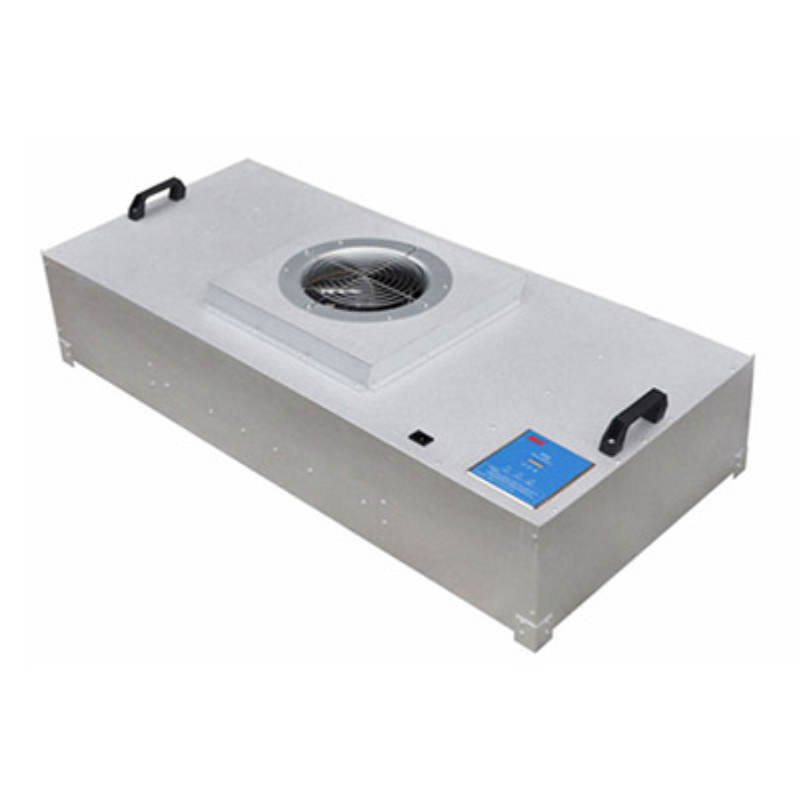
H13, ceiling-mounted FFU or filter box |
|
Cage change station |
Protect animals during cage transfer |
Vertical laminar flow, H14 HEPA, ISO 5 |
|
Biosafety cabinet (Class II A2) |
Animal procedures, sample processing |
Class II A2, 70% recirculated / 30% exhaust |
|
Dynamic pass box |
Transfer supplies into barrier |
HEPA-filtered, electronic interlock |
|
HEPA exhaust units (BIBO) |
Infectious room exhaust |
H14, bag-in/bag-out housing |
Animal rooms — particularly rodent facilities — generate significant ammonia (from urine) and bioaerosols. Standard HEPA filtration captures the bioaerosol component but does not address gaseous ammonia.
For odor control in exhaust systems: - Install activated carbon modules downstream of HEPA in exhaust ducting - Carbon media impregnated with potassium permanganate (KMnO₄) is particularly effective against ammonia and amines - Replace carbon media based on breakthrough monitoring (typically every 6–12 months depending on animal load)
For infectious aerosol containment: - Exhaust HEPA (H14 minimum) must be installed before any carbon module — HEPA captures the biological agent; carbon handles residual odor - BIBO housing allows filter replacement without breaking containment
For facilities evaluating Chinese-manufactured cleanroom equipment, KLC International supplies several products directly applicable to vivarium builds:
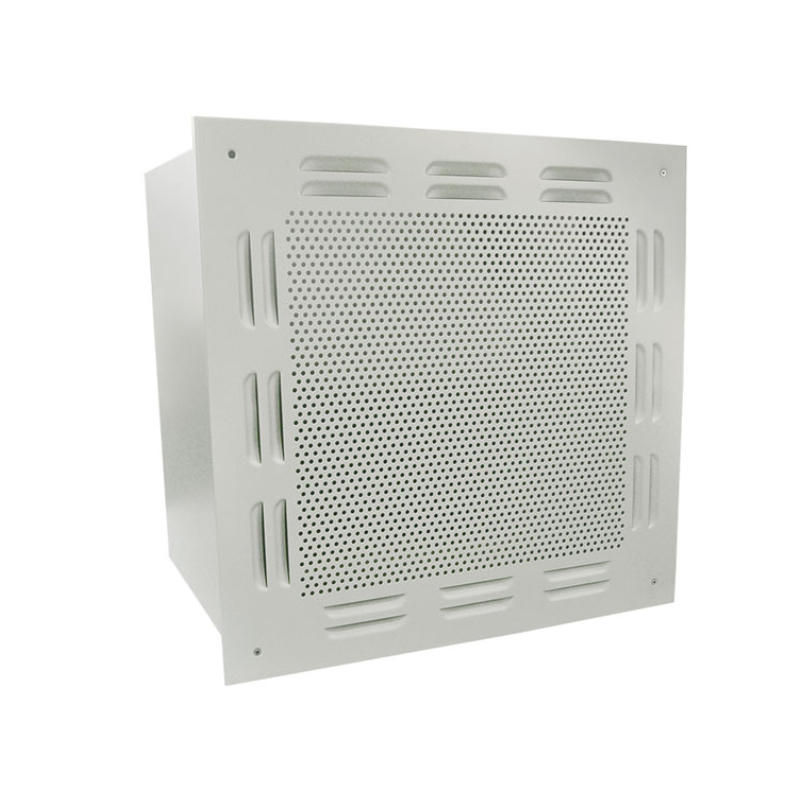
• HEPA Filter Box (ceiling-mounted, gel-seal, H13/H14): Used as terminal supply units in animal rooms and clean corridors
• Vertical Laminar Flow Clean Bench (H14, ISO 5): Suitable for open-cage change stations, animal surgery prep
• Biosafety Cabinet Class II A2: For sample processing and minor procedures involving ABSL-2 agents
• Dynamic Pass Box (HEPA-filtered, electronic interlock): For barrier facility supply transfer
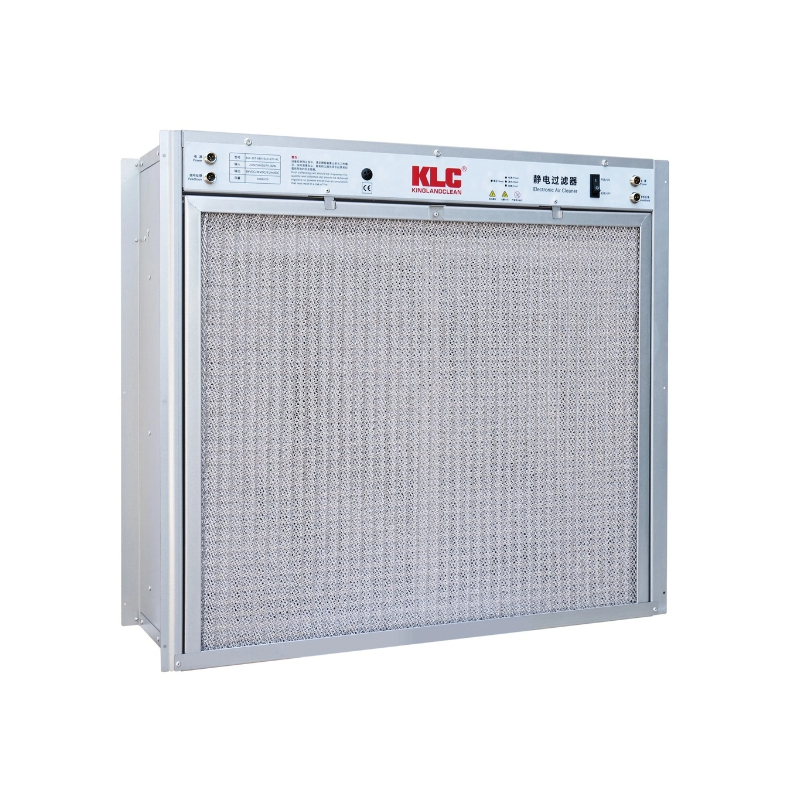
• Activated Carbon Filter modules: For exhaust odor control downstream of HEPA
All units are available in stainless steel (SS304/SS316L) construction suitable for vivarium disinfection protocols (VHP fumigation, formaldehyde decontamination).
Most SPF rodent facilities target ISO 7 (Class 10,000) in animal rooms and ISO 8 in corridors. Some high-value transgenic mouse colonies use ISO 6 rooms. The IVC rack creates an ISO 4–5 microenvironment inside each cage regardless of room class, which is why room-level ISO 7 is generally sufficient for the room itself.
Yes. ABSL-2 (Animal Biosafety Level 2) rooms must have directional airflow to negative pressure relative to the corridor, and exhaust air must pass through HEPA filtration before leaving the room. The HEPA housing should be BIBO (bag-in/bag-out) design to allow safe filter replacement without personnel exposure to contaminated filters.
BIBO housing allows a contaminated HEPA filter to be removed and bagged without the maintenance technician touching the filter media. A flexible plastic sleeve is attached to the housing; the technician pushes the dirty filter into the bag, seals it, and removes it safely. This design is mandatory for infectious animal exhaust systems and BSL-3 facilities.
No. IVC racks protect animals inside cages with HEPA-filtered micro-environments (ISO 4–5 inside cage), but room air quality still matters during cage changes, animal handling, and for personnel protection. Room-level HEPA filtration (H13 minimum) is still required, particularly for SPF barrier facilities.
The NRC Guide recommends 10–15 ACH of fresh (outside) air for most animal rooms. Infectious disease rooms housing ABSL-2 agents typically require 12–15 ACH of 100% outside air. Rooms using 100% recirculated HEPA-filtered air (common in some IVC-based designs) may be able to reduce outside air fraction with appropriate CO₂ and ammonia monitoring.
Activated carbon impregnated with potassium permanganate (KMnO₄) is the most effective media for ammonia and amine removal in animal facility exhaust. Plain activated carbon has limited ammonia capacity because ammonia is a polar molecule with relatively low affinity for non-polar carbon surfaces. KMnO₄-impregnated media chemically oxidizes ammonia, providing much higher capacity.
Airflow validation in animal rooms follows ISO 14644-3 and the NRC Guide. Key tests include: air velocity measurement at all supply diffusers, pressure differential measurement between zones (with calibrated magnehelic gauge or electronic transmitter), smoke visualization for directional airflow confirmation, and particle count at ISO class target. Re-validation is recommended annually and after any HVAC modification.
Yes, with caveats. Standard glass fiber HEPA media is VHP-compatible. Aluminum frames and standard sealants are generally stable. However, galvanized steel frames should be avoided — the zinc coating can react with VHP to form particulate. For VHP-decontaminated areas, specify SS304 frames and VHP-rated silicone sealants. Always confirm VHP compatibility with the filter manufacturer before decontamination procedures.
Animal facility air filtration requires more engineering nuance than a standard pharmaceutical cleanroom — the same physical space may need to serve as a containment barrier (negative pressure, BIBO exhaust) and a protection envelope (positive pressure IVC supply) simultaneously, depending on the animals housed.
The fundamental design principle: start with your biological risk classification, set your pressure cascade accordingly, then select terminal filtration to match. For SPF facilities, H13 supply HEPA in an ISO 7 room is the reliable baseline. For infectious animal work, add H14 BIBO exhaust and an anteroom pressure buffer.
For equipment specifications, technical documentation, or custom configurations for your vivarium project, visit KLC International — filter boxes, clean benches, biosafety cabinets, pass boxes, and activated carbon exhaust modules are all available in vivarium-compatible stainless steel construction.



 IPv6 network supported