Target keywords: custom air filtration systems, chemical filter for cleanroom, ISO certified HEPA filter
A custom air filtration system is justified when standard filter sizes, materials, efficiencies, pressure drops, seals, or gas-removal media cannot meet the process risk. A disciplined project moves from contaminant and airflow data to drawings, prototype validation, production controls, and site acceptance—not directly from a rough dimension to mass production.
Air-cleanliness projects succeed when equipment performance, the surrounding facility, and daily behavior are treated as one system. For buyers searching for custom air filtration systems, the useful question is not only what product to buy, but what result must be maintained after installation. Particle efficiency, airflow, pressure drop, leakage, material compatibility, access, energy, testing, and operator practice all influence the outcome.
KLC International approaches custom air filtration systems projects by first defining the application, contaminants, operating state, available pressure, and acceptance evidence. This requirement-led method helps avoid oversizing, underperforming equipment, and documentation gaps.
Requirements should quantify particles or gases, concentration, temperature, humidity, airflow, available pressure, service life, and compliance targets. This requirement belongs in the approved specification, with a responsible party and a pass/fail criterion. That keeps commissioning decisions objective when several suppliers are involved.
Engineering drawings freeze dimensions, frame, media, separators, gaskets or gel seals, access direction, and identification. Lifecycle planning should account for filter loading, energy, access, spares, and downtime. These factors often change the preferred option even when two products have similar initial performance.
Prototype testing confirms efficiency, resistance, structural strength, leakage, chemical capacity, and compatibility before release. Changes to this element may affect the qualified state of custom air filtration systems. Route substitutions and adjustments through documented review before returning the system to routine use.
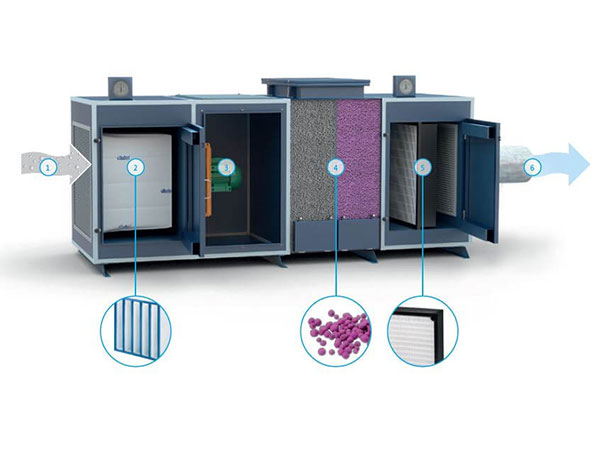
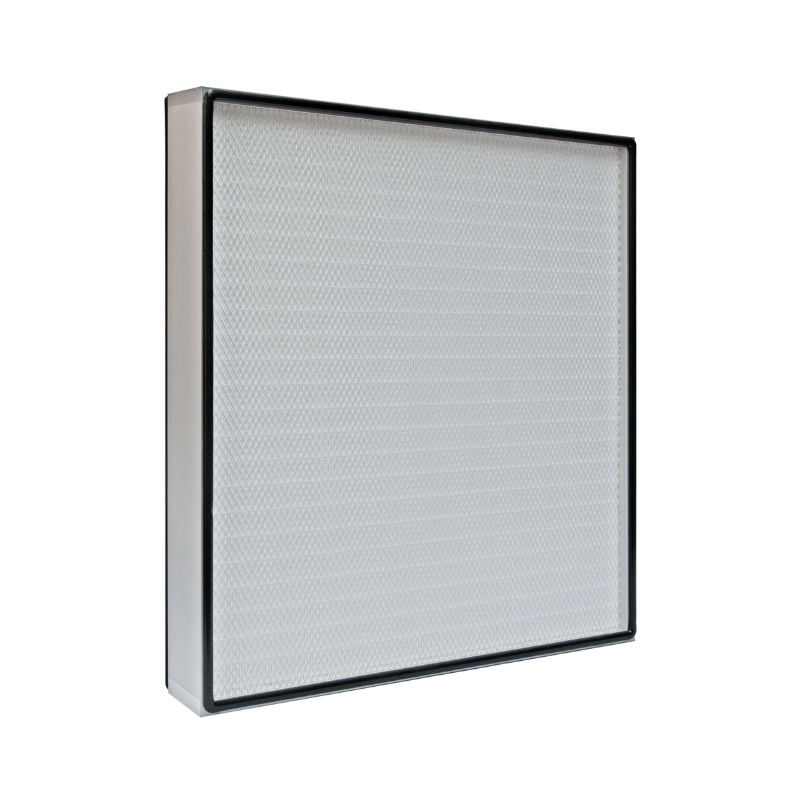
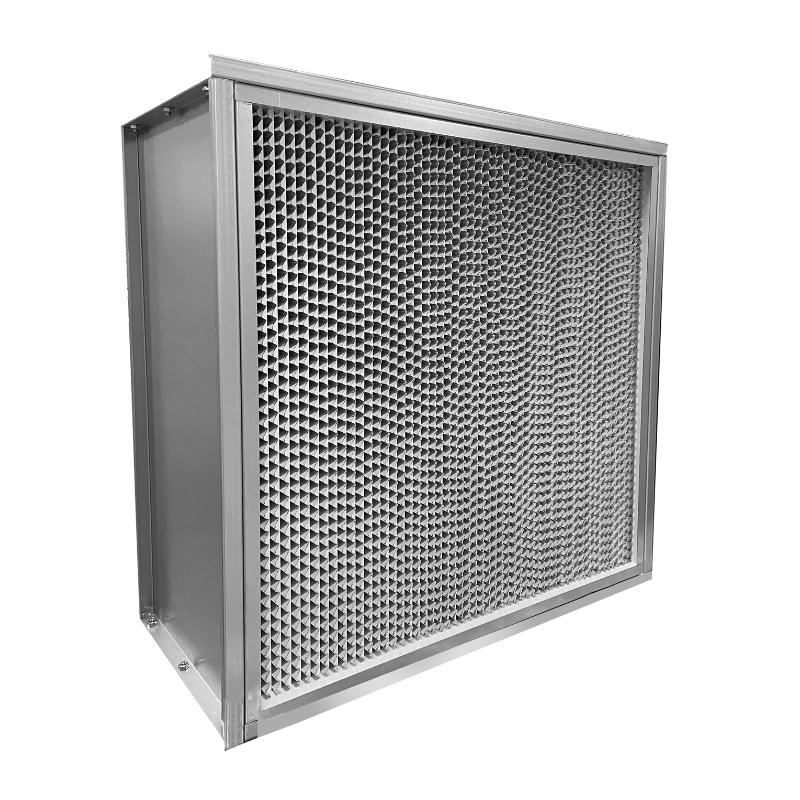
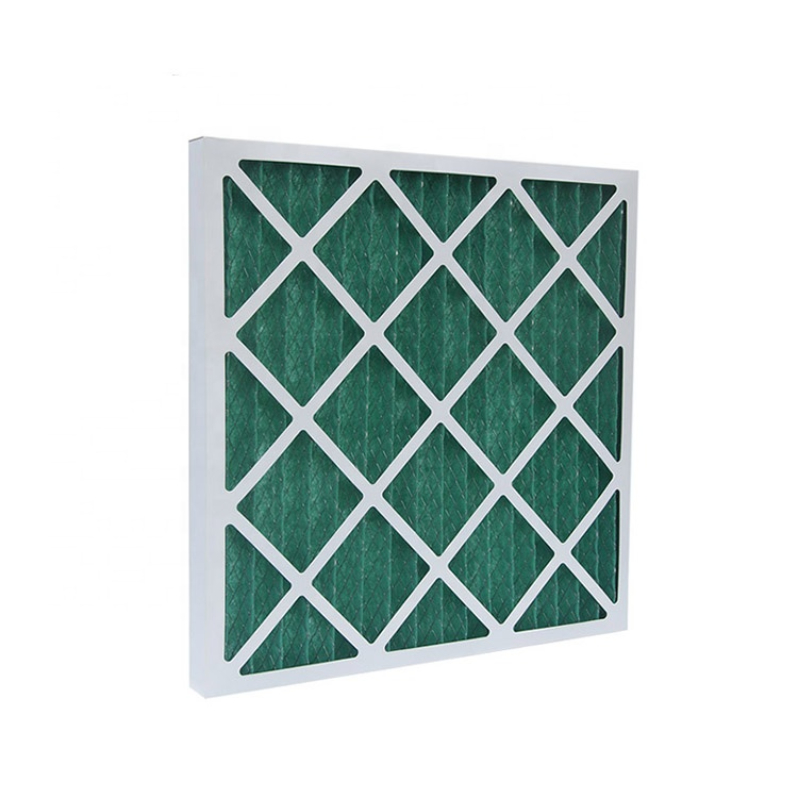
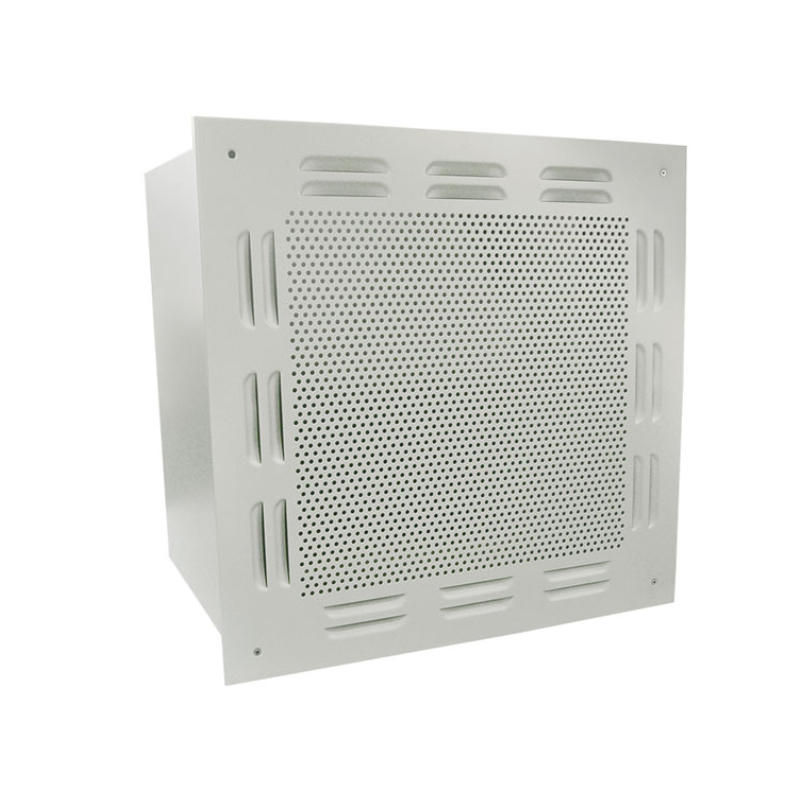
HEPA products can vary in footprint, depth, media pack, frame, face guard, seal, efficiency, and scan-test documentation. Changes to this element may affect the qualified state of custom air filtration systems. Route substitutions and adjustments through documented review before returning the system to routine use.
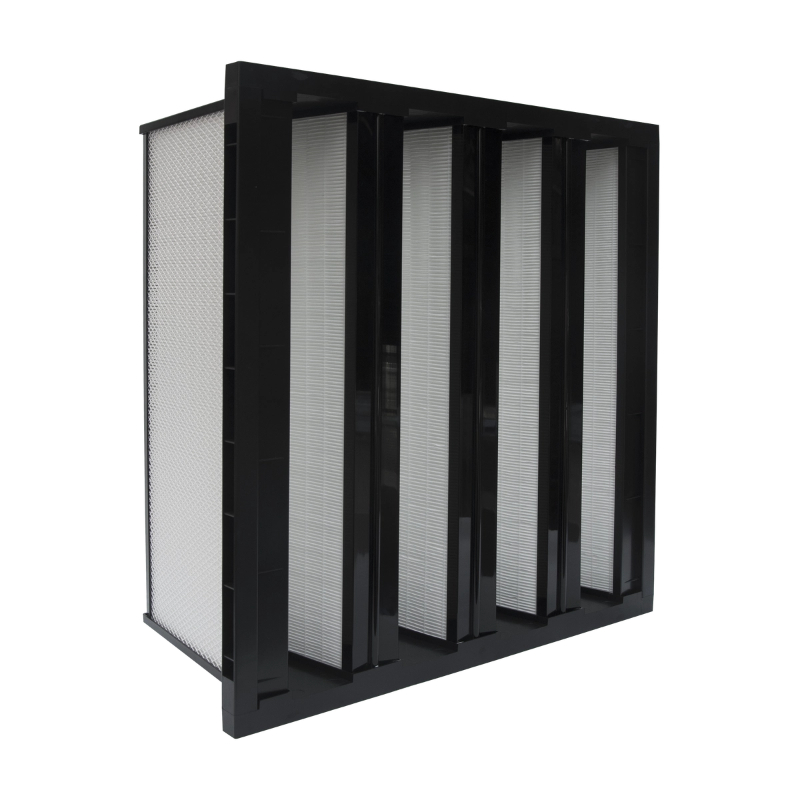
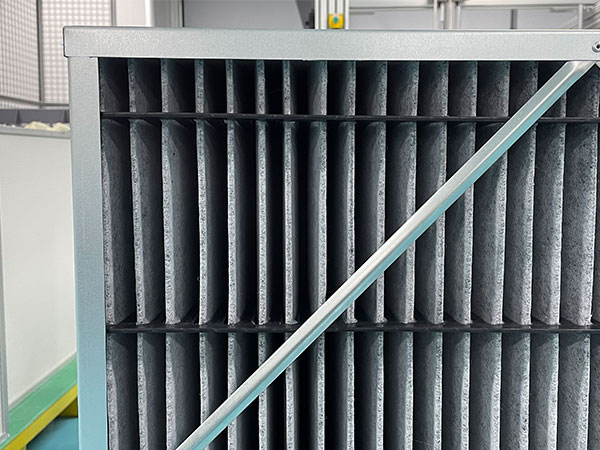
Chemical filters can use activated carbon, impregnated media, ion exchange, or blends targeting acids, bases, VOCs, or AMC. Designers should also confirm how it will be inspected, cleaned, and restored after service. Easy maintenance is part of sustained contamination control, not an optional convenience.
Corrosive environments may need stainless steel, coated metal, plastics, special adhesives, and low-outgassing components. This requirement belongs in the approved specification, with a responsible party and a pass/fail criterion. That keeps commissioning decisions objective when several suppliers are involved.
A gas filter is selected by contaminant identity and challenge concentration, not by odor alone. For procurement, this point should become a stated value or acceptance test. Recording the operating condition alongside the result also makes later troubleshooting more reliable.
Residence time, media mass, humidity, dust prefiltration, and breakthrough criteria determine useful capacity. The practical implication is that equipment, room airflow, and operator movement must be reviewed together. A strong component cannot compensate for bypass leakage or an uncontrolled procedure.
Sampling ports or downstream sensors help users replace media before process damage occurs. Changes to this element may affect the qualified state of custom air filtration systems. Route substitutions and adjustments through documented review before returning the system to routine use.
|
Challenge |
Typical approach |
Critical proof |
|
Particles |
HEPA/ULPA media |
Efficiency, leakage, pressure drop |
|
Acid gases |
Impregnated carbon/alumina |
Capacity, breakthrough |
|
VOCs |
Activated carbon |
Adsorption capacity |
|
Corrosive mixed air |
Staged particle + gas media |
Compatibility and lifecycle |
The table is a planning aid, not a substitute for a site-specific assessment. Ratings must be compared at the same airflow and test basis, and final performance must be verified after installation. KLC can align drawings, materials, filters, motors, controls, and documentation with the agreed operating point.
A useful request for quotation should include:
Provide contaminant data and operating ranges.
Set maximum clean and final pressure drop.
Approve drawings and material declarations.
Test a prototype with defined acceptance criteria.
Control revisions, labeling, packaging, and incoming inspection.
Ask KLC International to identify assumptions and exclusions in the proposal. A clear quotation should distinguish factory tests from site tests, supplied components from third-party work, and nominal ratings from guaranteed values.
Inspect equipment on arrival for packaging damage, correct identification, dimensions, seals, filters, instruments, and documents. During installation, control construction dust and protect sensitive media. Commissioning should verify airflow direction and volume, differential pressure, alarms, interlocks, electrical safety, noise where relevant, and the specified cleanliness or capture performance.
After handover, use condition-based maintenance supported by scheduled inspections. Trend differential pressure and airflow, investigate abnormal changes, protect spare filters, and document replacements. Any change to media, motor speed, room layout, door operation, process equipment, or cleaning chemistry should trigger a risk review. KLC service teams can help define spares and a verification plan suited to the application.
A dependable proposal separates claims from evidence. Start by checking that drawings match the requested dimensions, airflow direction, service access, utilities, and installation interfaces. Then review performance reports for the tested model, test method, operating point, instrument status, acceptance limit, and traceable result. A corporate quality certificate may support confidence in the supplier’s processes, but it does not replace product-level data or installed-system qualification.
Also confirm how deviations and design changes will be handled. Media, adhesives, motors, sensors, frame materials, seals, and production sites can all influence performance. For critical projects, require advance change notification, serial or batch traceability, agreed inspection records, and a defined nonconformance process. Shipment protection should be part of the technical scope because crushed pleats, damaged gel, distorted frames, or moisture exposure can invalidate an otherwise compliant filter.
The commercial comparison should use total delivered value: equipment, freight, duties, installation, energy, consumables, validation, downtime, warranty response, and expected service life. This produces a more defensible decision than comparing purchase price alone and gives operations teams a realistic maintenance budget.
The most common errors are selecting by headline efficiency alone, ignoring system pressure, treating a factory certificate as proof of site performance, and leaving maintenance access until the end of design. Another mistake is assuming that more airflow or a higher filter class is always safer. Excessive airflow can create turbulence, raise energy use, and disturb processes; excessive resistance can reduce delivered flow. A balanced design is both cleaner and more reliable.
KLC International recommends documenting the design basis and acceptance criteria before ordering. That single step makes supplier comparisons fairer and gives commissioning teams a clear target.
When standard products cannot meet fit, performance, material, sealing, documentation, or chemical-removal requirements.
Many sizes are possible, but media pleating, frame strength, test equipment, shipping, and installation impose practical limits.
Ask which organization, standard, scope, and certificate are involved; a quality-system certificate is not the same as product test data.
No; a separate gas-phase medium is needed for most VOCs.
By chemical species, concentration, humidity, temperature, residence time, and breakthrough requirement.
It is strongly recommended for new geometry, media, materials, or critical applications.
Approved drawing, materials, batch identification, inspection data, test reports, certificates, and installation guidance as applicable.
It depends on requirement clarity, materials, tooling, test scope, sample iterations, and regulatory review.
Planning a project involving custom air filtration systems? Share the application, dimensions, airflow, target performance, operating environment, destination market, and required test documents with KLC International. The KLC team can review the specification, propose a practical configuration, and prepare a quotation that covers equipment, filters, controls, and verification needs.
Request a technical review or quotation from KLC International for Custom Air Filtration Systems.
Technical note: Final selection and compliance should be confirmed against the current standards, regulations, process risk assessment, and site conditions applicable to the project.



 IPv6 network supported