Procuring HEPA filters and cleanroom equipment from Chinese manufacturers requires rigorous technical vetting; buyers must ask critical questions about EN 1822 testing, individual filter scanning, ISO certification, custom sizing capabilities, and export compliance to distinguish Tier 1 quality suppliers from low-cost brokers.
This comprehensive procurement guide outlines ten essential questions that international buyers should ask when evaluating a Chinese HEPA filter and cleanroom equipment supplier. It is designed for global sourcing directors, cleanroom project managers, QA auditors, and supply chain managers seeking to establish secure, high-quality manufacturing partnerships.
Vetting Chinese HEPA and Cleanroom Manufacturers: 10 Critical Questions
Selecting a manufacturing partner in China offers significant cost advantages, but without a rigorous technical screening process, international buyers risk receiving non-compliant products, experiencing long delays, or encountering communication barriers. To ensure your supplier operates a professional, audited facility, you should ask these ten critical questions:
1. Which efficiency standard do you test your filters to?
• Why it matters: A general claim of “99.99% efficiency” is technically meaningless without specifying the testing standard and the target particle size.
• What a good answer looks like: “We test all HEPA filters strictly to the European standard EN 1822 or the global standard ISO 29463, specifically evaluating efficiency at the Most Penetrating Particle Size (MPPS).”
• Red Flag: “We test using our own factory standard, which is equivalent to 99.99%.”
2. Can you provide a DOP/PAO test report for each individual filter?
• Why it matters: In high-grade cleanrooms, a single pinhole leak in a filter can compromise the entire facility. Statistical batch testing is insufficient; each filter must be scanned.
• What a good answer looks like: “Yes, we perform 100% automatic leak-scanning (DOP/PAO testing) on every single H13 and H14 filter on our testing line. Every filter is shipped with a serialized test report showing its unique serial number, face velocity, initial resistance, and scanned efficiency.”
• Red Flag: “We only provide batch reports” or “We charge extra to test individual filters.”
3. Is your ISO 9001 quality management system certificate current, and can you provide the certificate number?
• Why it matters: Valid certificates ensure the factory has a consistent quality control process. Sourcing from non-certified brokers leads to high product defect rates.
• What a good answer looks like: “Yes, our quality management system is certified to ISO 9001. Our certificate number is current, and we will provide the active registrar link and certificate copy for your compliance audit.”
• Red Flag: “We are working on getting certified soon” or providing an expired certificate.
4. Do you offer sample testing or factory acceptance testing (FAT) before the bulk order?
• Why it matters: Vetting physical product quality beforehand prevents container-load returns.
• What a good answer looks like: “Yes, we welcome sample orders for lab testing. For larger cleanroom equipment orders, we support remote video Factory Acceptance Testing (FAT) or third-party physical inspections before dispatch.”
• Red Flag: “We do not do samples; you must order a full container.”
5. What are your capabilities for manufacturing non-standard (custom) filter sizes?
• Why it matters: Retrofitting existing air handling units (AHUs) or cleanrooms often requires non-standard filter dimensions down to the millimeter.
• What a good answer looks like: “We have fully flexible, automated folding and assembly lines. We can manufacture custom frame depths, widths, and heights according to your exact CAD drawings, maintaining the same EN 1822 certification standards.”
• Red Flag: “We only manufacture the standard dimensions listed in our catalog.”
6. What is your standard lead time, and what contractual penalties do you accept for delays?
• Why it matters: Cleanroom construction projects have strict timelines. A delayed filter shipment can delay the entire project completion, costing thousands of dollars per day.
• What a good answer looks like: “Our standard lead time for HEPA filters is 10 to 15 working days. We provide clear, contractually backed production schedules and are willing to discuss reasonable penalty clauses for unexcused delays.”
• Red Flag: Vague lead times like “around a month” with a refusal to commit to a date in writing.
7. What payment terms do you accept?
• Why it matters: Reputable, large-scale manufacturers do not require high-risk payment terms for established buyers.
• What a good answer looks like: “For initial orders, we accept standard industry terms such as a 30% T/T deposit with the 70% balance payable against the Bill of Lading (B/L) copy, or an irrevocable Letter of Credit (L/C) at sight.”
• Red Flag: Sourcing agent or factory demanding 100% T/T upfront before production starts.
8. Do you have extensive export experience to my country, and can you provide proof of compliance?
• Why it matters: Different countries have unique customs, importing, and safety regulations (e.g., CE for Europe, UL for North America).
• What a good answer looks like: “Yes, we export globally. Our powered cleanroom equipment is CE-marked and meets all local electrical voltage and frequency requirements. We can provide clean Bill of Lading records for your region.”
• Red Flag: “We have not shipped to your country before, but we are sure it will be fine.”
9. What after-sales technical support and replacement parts do you guarantee?
• Why it matters: Cleanroom equipment like Air Showers and Fan Filter Units (FFUs) require maintenance, wiring diagrams, and compatible replacement filters.
• What a good answer looks like: “We provide detailed English installation manuals, electrical wiring schematics, and a guaranteed 12-month warranty. We maintain a stock of standard replacement parts (motors, controllers, seals) for rapid air shipment.”
• Red Flag: “We do not provide English documentation; our responsibility ends once the container leaves China.”
10. Can you provide reference customers or case studies in my specific industry?
• Why it matters: Cleanroom requirements differ wildly between microelectronics, pharmaceuticals, and food processing. A good manufacturer should understand your industry’s specific compliance pain points.
• What a good answer looks like: “Yes, we have supplied filtration systems to international pharmaceutical plants and semiconductor cleanrooms. We can share anonymized case studies showing how we met their cleanliness requirements.”
• Red Flag: “Our client list is strictly confidential, and we have no case studies to share.”
Data Comparison Table: Supplier Vetting Matrix
Evaluation Criteria
What a Good Answer Looks Like (Tier 1 Supplier)
Red Flag / Warning Sign (Low-Cost Broker)
Testing Standards
EN 1822 or ISO 29463 evaluated at MPPS
Mentions unverified internal factory standards only
Leak-Scanning
100% individual filter scanning with individual reports
Only batch-level testing; charges extra for scan reports
ISO Certification
Active ISO 9001 with verifiable registry number
Expired, non-verifiable, or absent certification
Custom Sizing
Full CAD custom capability down to millimeter specifications
Strict adherence to catalog-standard sizes only
Lead-Time Commitment
Contractually backed delivery dates with penalty clauses
Vague, shifting dates with no written commitments
Payment Terms
Standard 30% deposit / 70% balance against B/L, or L/C
Demands 100% cash upfront before production begins
Export Compliance
CE certificates, custom country-specific voltages
Lack of certificates, no export history, incorrect voltages
After-Sales Support
English manuals, wiring schematics, stocked replacement parts
No documentation, no warranty, lack of spare parts support
How KLC Answers the 10 Questions
As a leading Chinese HEPA filter and cleanroom equipment supplier with over 28 years of industry experience, KLC International (Guangzhou KLC Cleantech) sets the standard for international procurement compliance:
EN 1822 Standard: KLC tests and certifies all high-efficiency filters using the EN 1822 / ISO 29463 standards, strictly measuring performance at MPPS.
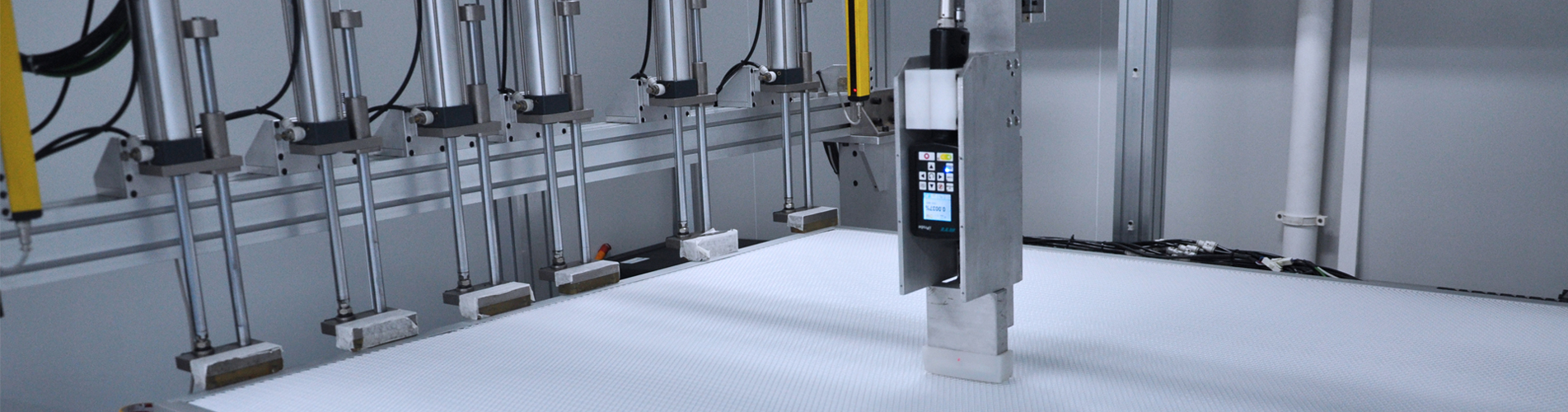
100% Individual Testing: KLC operates advanced automatic testing rigs that perform 100% DOP/PAO leak-scanning. Every single HEPA filter is shipped with its own individual, serialized test report.
Verifiable ISO 9001: KLC’s state-of-the-art manufacturing plant in Guangzhou is fully certified and verified on the IAF CertSearch database.
Sample Vetting & FAT: KLC welcomes trial orders for physical inspection and provides full digital FAT support for custom cleanroom machinery.
Custom Manufacturing: With advanced, flexible manufacturing lines, KLC specializes in engineering custom sizes, frame options, and gel-seal profiles to fit any existing cleanroom grid or AHU.
Reliable Lead Times: Backed by a large-scale, automated production facility, KLC guarantees short, highly predictable lead times and commits to firm contract dates.
Secure Payment: KLC offers standard, low-risk international payment terms including T/T and L/C.
Global Export Experience: KLC cleanroom equipment is CE certified and engineered with region-appropriate voltages (e.g., 110V/60Hz, 220V/50Hz, 380V/50Hz) for seamless integration globally.
Comprehensive Support: All KLC products are shipped with detailed English documentation, circuit diagrams, and are backed by a robust 12-month warranty with stocked spare parts.
Industry References: KLC has successfully served global clients across the biotechnology, semiconductor, pharmaceutical, and automotive sectors, with numerous active case studies available for review.
FAQ: Buying Cleanroom Equipment from China
Why is a generic “99.99% efficiency” claim a red flag in cleanroom procurement?
A general “99.99% efficiency” claim without a specified standard is a red flag because it fails to define the target particle size. Filters can easily capture 99.99% of large 5.0-micron particles but fail miserably when exposed to sub-micron particles. Professional suppliers will always state their efficiency relative to the Most Penetrating Particle Size (MPPS) as defined by the EN 1822 standard (e.g., 99.995% at MPPS for H14).
What is the difference between testing 100% of filters vs. statistical batch testing?
Statistical batch testing means the factory only tests one filter out of every 50 or 100 produced. While this is sufficient for pre-filters, it is highly dangerous for HEPA filters. If an untested filter has a microscopic pinhole leak in its media or sealant, it will leak bypass air, immediately contaminating the cleanroom. 100% scanning means every single filter is individually tested and validated before packing.
How do I verify a Chinese supplier’s export history and customs credentials?
To verify a supplier’s export history, you can request copies of anonymized Bills of Lading (B/L) from recent shipments to your region, or check third-party global trade databases (such as ImportGenius or Panjiva). These databases record customs manifests and can prove whether a manufacturer has actively and successfully exported goods to international markets.
Why are T/T and L/C the industry standard payment terms for HEPA filters?
Telegraphic Transfer (T/T) with a 30% deposit is standard because it provides the factory with the working capital to purchase raw materials, while the 70% balance upon B/L copy protects the buyer’s funds until the goods are shipped. For very large transactions, a Letter of Credit (L/C) protects both parties by ensuring funds are only released by the bank once shipping documents matching all contract terms are presented.
What are the common issues with custom-sized HEPA filters from unvetted suppliers?
Common issues include dimensional deviations (even a 2mm error will prevent the filter from sealing in a ceiling grid), uneven pleat distribution, media tearing from manual folding, and frame warping. Unvetted suppliers often lack the precise automated cutting and pleating machinery required to maintain structural tolerances on custom-dimension orders.
What documentation should be included in a cleanroom equipment shipping container?
Every shipping container should include the packing list, commercial invoice, Certificate of Origin (for customs), the individual EN 1822 filter test reports, the CE Declaration of Conformity (for powered equipment), and comprehensive English installation and electrical manuals.
How do top Chinese manufacturers handle damage during international sea freight?
Top manufacturers pack their HEPA filters in heavy-duty, double-walled corrugated cartons with internal foam corner protectors, often secured on wooden pallets with plastic shrink-wrap. They carry comprehensive transit insurance (CIF terms) and will rapidly expedite replacement filters via air freight if any damage occurs during shipping.
Can I visit a Chinese filter factory or perform a virtual video audit?
Yes, any professional Tier 1 manufacturer will gladly welcome on-site factory visits or facilitate virtual video audits. During a video audit, you can ask to see their raw material storage, the automated pleating machines, the EN 1822 automatic scanning testing rigs, and their clean packaging rooms to verify their operational quality in real-time.
Conclusion
Procuring from China can significantly reduce cleanroom capital expenditures, but only if you partner with a technically compliant, transparent manufacturer. Vetting your supplier with these ten core questions ensures that you receive high-efficiency, certified products that comply with global cleanroom guidelines. For assistance with your upcoming cleanroom project and to receive a detailed compliance consultation, contact KLC International at https://www.klcintl.com/.



 IPv6 network supported