Procuring HEPA filters and cleanroom equipment from Chinese manufacturers requires rigorous technical vetting; buyers must ask critical questions about EN 1822 testing, individual filter scanning, ISO certification, custom sizing capabilities, and export compliance to distinguish Tier 1 quality suppliers from low-cost brokers.
This comprehensive procurement guide outlines ten essential questions that international buyers should ask when evaluating a Chinese HEPA filter and cleanroom equipment supplier. It is designed for global sourcing directors, cleanroom project managers, QA auditors, and supply chain managers seeking to establish secure, high-quality manufacturing partnerships.
Vetting Chinese HEPA and Cleanroom Manufacturers: 10 Critical Questions
Selecting a manufacturing partner in China offers significant cost advantages, but without a rigorous technical screening process, international buyers risk receiving non-compliant products, experiencing long delays, or encountering communication barriers. To ensure your supplier operates a professional, audited facility, you should ask these ten critical questions:
1. Which efficiency standard do you test your filters to?
• Why it matters: A general claim of “99.99% efficiency” is technically meaningless without specifying the testing standard and the target particle size.
• What a good answer looks like: “We test all HEPA filters strictly to the European standard EN 1822 or the global standard ISO 29463, specifically evaluating efficiency at the Most Penetrating Particle Size (MPPS).”
• Red Flag: “We test using our own factory standard, which is equivalent to 99.99%.”
2. Can you provide a DOP/PAO test report for each individual filter?
• Why it matters: In high-grade cleanrooms, a single pinhole leak in a filter can compromise the entire facility. Statistical batch testing is insufficient; each filter must be scanned.
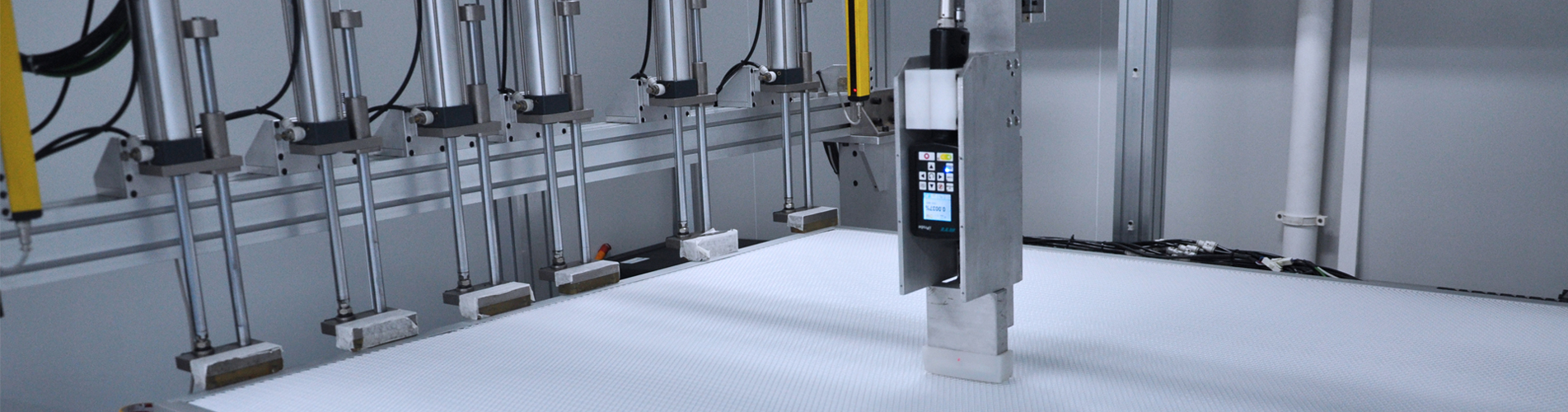
• What a good answer looks like: “Yes, we perform 100% automatic leak-scanning (DOP/PAO testing) on every single H13 and H14 filter on our testing line. Every filter is shipped with a serialized test report showing its unique serial number, face velocity, initial resistance, and scanned efficiency.”
• Red Flag: “We only provide batch reports” or “We charge extra to test individual filters.”
3. Is your ISO 9001 quality management system certificate current, and can you provide the certificate number?
• Why it matters: Valid certificates ensure the factory has a consistent quality control process. Sourcing from non-certified brokers leads to high product defect rates.
• What a good answer looks like: “Yes, our quality management system is certified to ISO 9001. Our certificate number is current, and we will provide the active registrar link and certificate copy for your compliance audit.”
• Red Flag: “We are working on getting certified soon” or providing an expired certificate.
4. Do you offer sample testing or factory acceptance testing (FAT) before the bulk order?
• Why it matters: Vetting physical product quality beforehand prevents container-load returns.
• What a good answer looks like: “Yes, we welcome sample orders for lab testing. For larger cleanroom equipment orders, we support remote video Factory Acceptance Testing (FAT) or third-party physical inspections before dispatch.”
• Red Flag: “We do not do samples; you must order a full container.”
5. What are your capabilities for manufacturing non-standard (custom) filter sizes?
• Why it matters: Retrofitting existing air handling units (AHUs) or cleanrooms often requires non-standard filter dimensions down to the millimeter.
• What a good answer looks like: “We have fully flexible, automated folding and assembly lines. We can manufacture custom frame depths, widths, and heights according to your exact CAD drawings, maintaining the same EN 1822 certification standards.”
• Red Flag: “We only manufacture the standard dimensions listed in our catalog.”
6. What is your standard lead time, and what contractual penalties do you accept for delays?
• Why it matters: Cleanroom construction projects have strict timelines. A delayed filter shipment can delay the entire project completion, costing thousands of dollars per day.
• What a good answer looks like: “Our standard lead time for HEPA filters is 10 to 15 working days. We provide clear, contractually backed production schedules and are willing to discuss reasonable penalty clauses for unexcused delays.”
• Red Flag: Vague lead times like “around a month” with a refusal to commit to a date in writing.
7. What payment terms do you accept?
• Why it matters: Reputable, large-scale manufacturers do not require high-risk payment terms for established buyers.
• What a good answer looks like: “For initial orders, we accept standard industry terms such as a 30% T/T deposit with the 70% balance payable against the Bill of Lading (B/L) copy, or an irrevocable Letter of Credit (L/C) at sight.”
• Red Flag: Sourcing agent or factory demanding 100% T/T upfront before production starts.
8. Do you have extensive export experience to my country, and can you provide proof of compliance?
• Why it matters: Different countries have unique customs, importing, and safety regulations (e.g., CE for Europe, UL for North America).
• What a good answer looks like: “Yes, we export globally. Our powered cleanroom equipment is CE-marked and meets all local electrical voltage and frequency requirements. We can provide clean Bill of Lading records for your region.”
• Red Flag: “We have not shipped to your country before, but we are sure it will be fine.”
9. What after-sales technical support and replacement parts do you guarantee?
• Why it matters: Cleanroom equipment like Air Showers and Fan Filter Units (FFUs) require maintenance, wiring diagrams, and compatible replacement filters.
• What a good answer looks like: “We provide detailed English installation manuals, electrical wiring schematics, and a guaranteed 12-month warranty. We maintain a stock of standard replacement parts (motors, controllers, seals) for rapid air shipment.”
• Red Flag: “We do not provide English documentation; our responsibility ends once the container leaves China.”
10. Can you provide reference customers or case studies in my specific industry?
• Why it matters: Cleanroom requirements differ wildly between microelectronics, pharmaceuticals, and food processing. A good manufacturer should understand your industry’s specific compliance pain points.
• What a good answer looks like: “Yes, we have supplied filtration systems to international pharmaceutical plants and semiconductor cleanrooms. We can share anonymized case studies showing how we met their cleanliness requirements.”
• Red Flag: “Our client list is strictly confidential, and we have no case studies to share.”
Data Comparison Table: Supplier Vetting Matrix
Evaluation Criteria
What a Good Answer Looks Like (Tier 1 Supplier)
Red Flag / Warning Sign (Low-Cost Broker)
Testing Standards
EN 1822 or ISO 29463 evaluated at MPPS
Mentions unverified internal factory standards only
Leak-Scanning
100% individual filter scanning with individual reports
Only batch-level testing; charges extra for scan reports
ISO Certification
Active ISO 9001 with verifiable registry number
Expired, non-verifiable, or absent certification
Custom Sizing
Full CAD custom capability down to millimeter specifications
Strict adherence to catalog-standard sizes only
Lead-Time Commitment
Contractually backed delivery dates with penalty clauses
Vague, shifting dates with no written commitments
Payment Terms
Standard 30% deposit / 70% balance against B/L, or L/C
Demands 100% cash upfront before production begins
Export Compliance
CE certificates, custom country-specific voltages
Lack of certificates, no export history, incorrect voltages
After-Sales Support
English manuals, wiring schematics, stocked replacement parts
No documentation, no warranty, lack of spare parts support
How KLC Answers the 10 Questions
As a leading Chinese HEPA filter and cleanroom equipment supplier with over 28 years of industry experience, KLC International (Guangzhou KLC Cleantech) sets the standard for international procurement compliance:
EN 1822 Standard: KLC tests and certifies all high-efficiency filters using the EN 1822 / ISO 29463 standards, strictly measuring performance at MPPS.
100% Individual Testing: KLC operates advanced automatic testing rigs that perform 100% DOP/PAO leak-scanning. Every single HEPA filter is shipped with its own individual, serialized test report.
Verifiable ISO 9001: KLC’s state-of-the-art manufacturing plant in Guangzhou is fully certified and verified on the IAF CertSearch database.
Sample Vetting & FAT: KLC welcomes trial orders for physical inspection and provides full digital FAT support for custom cleanroom machinery.
Custom Manufacturing: With advanced, flexible manufacturing lines, KLC specializes in engineering custom sizes, frame options, and gel-seal profiles to fit any existing cleanroom grid or AHU.
Reliable Lead Times: Backed by a large-scale, automated production facility, KLC guarantees short, highly predictable lead times and commits to firm contract dates.
Secure Payment: KLC offers standard, low-risk international payment terms including T/T and L/C.
Global Export Experience: KLC cleanroom equipment is CE certified and engineered with region-appropriate voltages (e.g., 110V/60Hz, 220V/50Hz, 380V/50Hz) for seamless integration globally.
Comprehensive Support: All KLC products are shipped with detailed English documentation, circuit diagrams, and are backed by a robust 12-month warranty with stocked spare parts.
Industry References: KLC has successfully served global clients across the biotechnology, semiconductor, pharmaceutical, and automotive sectors, with numerous active case studies available for review.
FAQ: Buying Cleanroom Equipment from China
Why is a generic “99.99% efficiency” claim a red flag in cleanroom procurement?
A general “99.99% efficiency” claim without a specified standard is a red flag because it fails to define the target particle size. Filters can easily capture 99.99% of large 5.0-micron particles but fail miserably when exposed to sub-micron particles. Professional suppliers will always state their efficiency relative to the Most Penetrating Particle Size (MPPS) as defined by the EN 1822 standard (e.g., 99.995% at MPPS for H14).
What is the difference between testing 100% of filters vs. statistical batch testing?
Statistical batch testing means the factory only tests one filter out of every 50 or 100 produced. While this is sufficient for pre-filters, it is highly dangerous for HEPA filters. If an untested filter has a microscopic pinhole leak in its media or sealant, it will leak bypass air, immediately contaminating the cleanroom. 100% scanning means every single filter is individually tested and validated before packing.
How do I verify a Chinese supplier’s export history and customs credentials?
To verify a supplier’s export history, you can request copies of anonymized Bills of Lading (B/L) from recent shipments to your region, or check third-party global trade databases (such as ImportGenius or Panjiva). These databases record customs manifests and can prove whether a manufacturer has actively and successfully exported goods to international markets.
Why are T/T and L/C the industry standard payment terms for HEPA filters?
Telegraphic Transfer (T/T) with a 30% deposit is standard because it provides the factory with the working capital to purchase raw materials, while the 70% balance upon B/L copy protects the buyer’s funds until the goods are shipped. For very large transactions, a Letter of Credit (L/C) protects both parties by ensuring funds are only released by the bank once shipping documents matching all contract terms are presented.
What are the common issues with custom-sized HEPA filters from unvetted suppliers?
Common issues include dimensional deviations (even a 2mm error will prevent the filter from sealing in a ceiling grid), uneven pleat distribution, media tearing from manual folding, and frame warping. Unvetted suppliers often lack the precise automated cutting and pleating machinery required to maintain structural tolerances on custom-dimension orders.
What documentation should be included in a cleanroom equipment shipping container?
Every shipping container should include the packing list, commercial invoice, Certificate of Origin (for customs), the individual EN 1822 filter test reports, the CE Declaration of Conformity (for powered equipment), and comprehensive English installation and electrical manuals.
How do top Chinese manufacturers handle damage during international sea freight?
Top manufacturers pack their HEPA filters in heavy-duty, double-walled corrugated cartons with internal foam corner protectors, often secured on wooden pallets with plastic shrink-wrap. They carry comprehensive transit insurance (CIF terms) and will rapidly expedite replacement filters via air freight if any damage occurs during shipping.
Can I visit a Chinese filter factory or perform a virtual video audit?
Yes, any professional Tier 1 manufacturer will gladly welcome on-site factory visits or facilitate virtual video audits. During a video audit, you can ask to see their raw material storage, the automated pleating machines, the EN 1822 automatic scanning testing rigs, and their clean packaging rooms to verify their operational quality in real-time.
Conclusion
Procuring from China can significantly reduce cleanroom capital expenditures, but only if you partner with a technically compliant, transparent manufacturer. Vetting your supplier with these ten core questions ensures that you receive high-efficiency, certified products that comply with global cleanroom guidelines. For assistance with your upcoming cleanroom project and to receive a detailed compliance consultation, contact KLC International at https://www.klcintl.com/.
Hook: If your annual HEPA filter replacement budget is hitting six figures, you might be using high-efficiency disposable media in an environment where a washable Electrostatic Precipitator (ESP) could deliver a 3-year ROI and 90% less landfill waste.
Industry Pain Point: In heavy industrial applications—such as CNC machining, commercial kitchens, or welding shops—the air is thick with oil mist, grease, and smoke. Using HEPA filters as the primary filtration method in these environments is a recipe for financial ruin. Oily particles saturate the glass fiber media of a HEPA filter within weeks, causing pressure drops to spike and forcing the HVAC system to work overtime. This leads to frequent, expensive replacements and a massive environmental footprint.
Technical Insight: The ESP Principle Unlike HEPA filters, which “catch” particles in a dense mesh (mechanical filtration), an ESP uses the power of ionization and magnetism. 1. Ionization: Air passes through a high-voltage corona discharge (ionizer) that gives particles a strong positive charge. 2. Collection: These charged particles are then attracted to grounded collector plates (the “honeycomb” or “plate” section). 3. Cleaning: Because the “filter” is just a series of metal plates, it can be washed with water and detergent and reused indefinitely.
The air resistance (pressure drop) of an ESP remains consistently low, regardless of how much oil it has captured, which is a massive energy-saving advantage over mechanical filters.
10-Year Total Cost of Ownership (TCO) Comparison
Cost Factor
Disposable HEPA System
KLC Washable ESP System
Initial Purchase
Low to Medium
Medium to High
Annual Maintenance
High (Frequent media replacement)
Low (Periodic washing labor)
Energy Consumption
High (Varies with pressure drop)
Very Low (Constant low resistance)
Waste Disposal
High (Non-recyclable media)
Zero (Washable plates)
Efficiency (0.3μm)
99.97% - 99.99%
95% - 98% (Scalable with modules)
Real Application: A CNC manufacturing plant in the Pearl River Delta was replacing their HEPA pre-filters every 3 months due to oil mist saturation. By installing an industrial-grade ESP unit upstream, they captured 95% of the oil mist before it reached the final HEPA filters. The HEPA filter life was extended from 12 months to nearly 4 years, and the ESP plates are simply cleaned during a standard weekend maintenance shift. The plant saw a 15% reduction in their electricity bill and achieved an ROI on the ESP unit in just 14 months.
KLC Mention: KLC’s industrial electrostatic precipitators are designed with high-strength aluminum alloy plates and intelligent high-voltage power modules. We’ve helped facilities across the globe transition from “disposable thinking” to “durable infrastructure,” significantly reducing both their operational costs and their environmental impact.
In air conditioning systems for high-purity environments such as cleanrooms, fan-filter units (FFU) are one of the core devices for achieving air cleanliness control. Through their efficient air filtration and stable airflow distribution, FFU ensure the purity and uniform distribution of indoor air. They work collaboratively with dry coil units (DC) and other components to maintain cleanroom environmental conditions.
High-Efficiency Air Filtration and Airflow Distribution
FFU, with their built-in HEPA filters, remove airborne particles, including dust, bacteria, and viruses, ensuring that the air delivered to the cleanroom meets high cleanliness standards.
FFU also utilize their built-in fans to create stable vertical laminar or turbulent airflow, preventing localized contamination. This stable airflow is crucial for maintaining cleanroom cleanliness, especially in the semiconductor manufacturing and biopharmaceutical industries, where cleanliness requirements are extremely high.
Cooperation and Application Scenarios
In dry coil systems, FFU work collaboratively with dry coil units (DC) and other components, such as the main air handling units (MAU). The MAU is responsible for introducing and processing outdoor fresh air, removing particulate matter through primary and secondary filtration, and conditioning the fresh air to the specified temperature and humidity.
The fresh air treated by the MAU is mixed with a portion of the return air, filtered by the FFU, and then delivered to the cleanroom. The indoor air is cooled or heated by the dry coil before being recirculated to the return air duct and mixed with the fresh air, forming a closed-loop air circulation system.
The FFU operates continuously to maintain air circulation frequency and ensure indoor air cleanliness. The dry coil adjusts the chilled water flow or temperature based on temperature sensors, handling only the sensible heat load and avoiding interference with temperature and humidity control. This clear division of labor improves overall system performance and reliability.
Among the many FFU products available, the KLC FFU is an excellent choice on the market for its superior performance and flexible design. Utilizing KLC's proprietary high-efficiency filters, the KLC FFU achieves highly efficient air filtration, ensuring high indoor air cleanliness.
Its compact design makes it easy to install and maintain, while also offering low noise levels and high energy efficiency, meeting the requirements of various cleanliness levels. The KLC FFU also offers flexible installation options and intelligent control options, enabling single-unit manual control or group monitoring of multiple units, adapting to cleanroom applications ranging from small to large-scale.
The KLC FFU has demonstrated outstanding performance in practical applications, particularly in fields such as semiconductor manufacturing, biopharmaceuticals, and precision electronic assembly, providing users with efficient and reliable air purification solutions. Its efficient filtration performance and stable airflow distribution effectively prevent condensation from contaminating wafers, ensuring a sterile environment in pharmaceutical production while also safeguarding the accuracy and stability of the equipment.
The KLC FFU's low noise operation and energy-efficient design also excel in cleanrooms with stringent environmental requirements, making it an ideal air filtration option.
As the core air filtration device in dry coil systems, the FFU provides a reliable solution for high-purity environments such as cleanrooms through its efficient filtration capacity and stable airflow distribution. Its synergistic operation with the dry coil and other components further optimizes system performance and reliability.
In fields such as semiconductor manufacturing, biopharmaceuticals, and precision electronic assembly, the FFU has become a critical piece of equipment for maintaining high-purity environments, ensuring efficient and stable production processes.



 IPv6 network supported