In pharmaceutical sterilization ovens, coating paint lines, and tunnel ovens, ordinary high-efficiency filters cannot withstand high-temperature environments and must use specialized High Heat-Resistance Filters. To address common customer questions regarding the essential differences between 250℃ and 350℃ products, KLC provides the following professional selection analysis.
Temperature Resistance Levels and Material Structure
Aluminum foil or paperboard is used as separators to form deep air channels within the filter paper. This traditional structure gives the product high structural strength and dust-holding capacity. KLC Separator Filter products perform reliably in high air volume and high dust concentration environments, with excellent high-temperature and high-humidity resistance. They are particularly suitable for installation in the high-efficiency section of large central air handling units (AHUs) or in industrial dust collection scenarios with strict mechanical strength requirements.
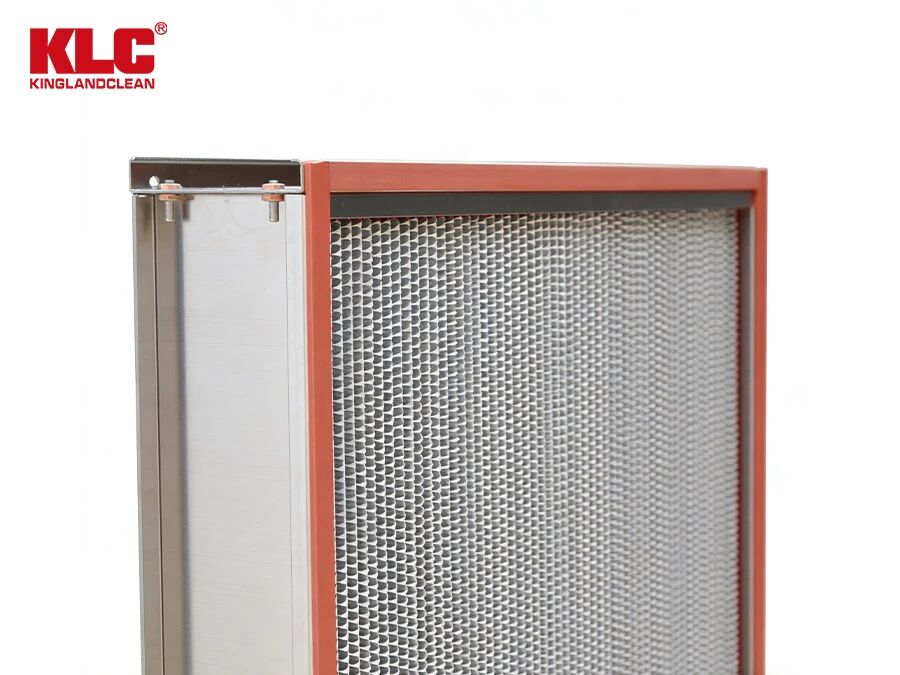
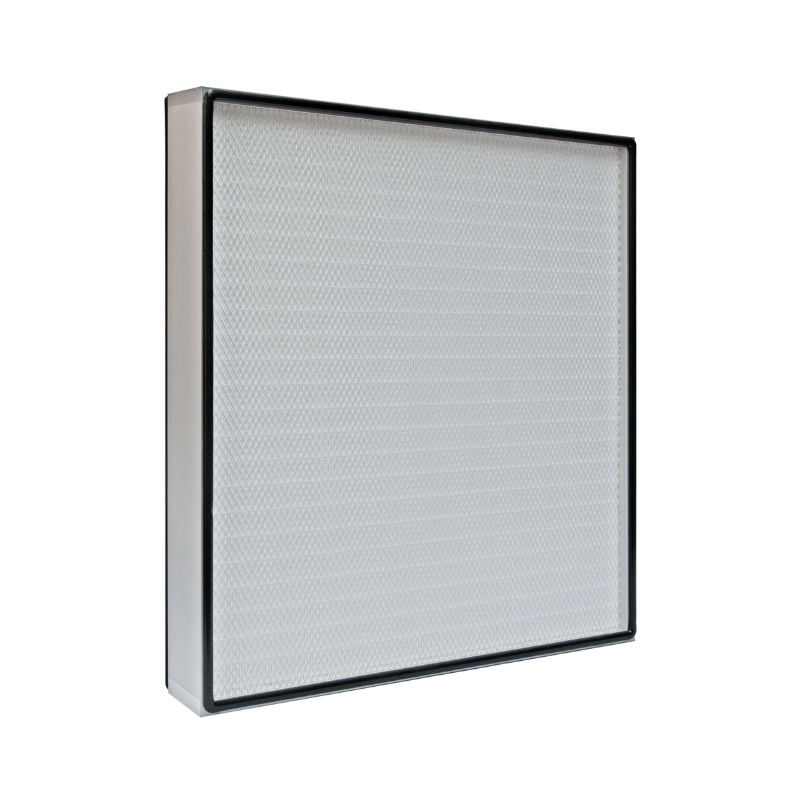
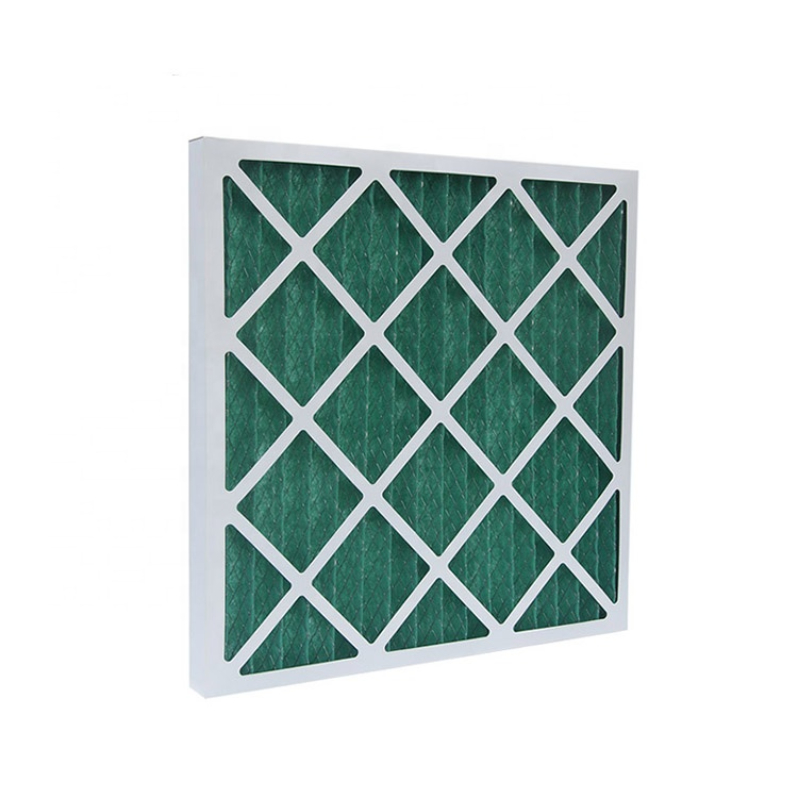
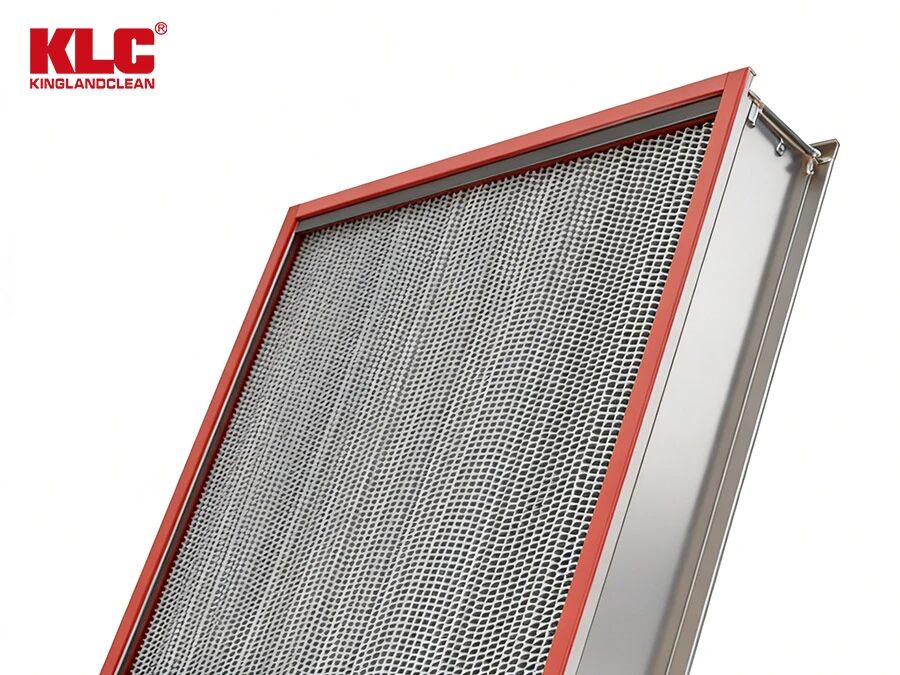
▲ KLC High Heat-Resistance Filter (250℃)
Differences in Application Scenarios
The KLC 250℃ grade is mainly used in dry heat sterilization cabinets in the biopharmaceutical industry, tunnel ovens, and high-temperature purification sections of food processing. The KLC 350℃ grade is more often applied in automotive coating line drying rooms, high-temperature curing ovens in the electronics industry, and other process stages requiring stringent temperature resistance limits.
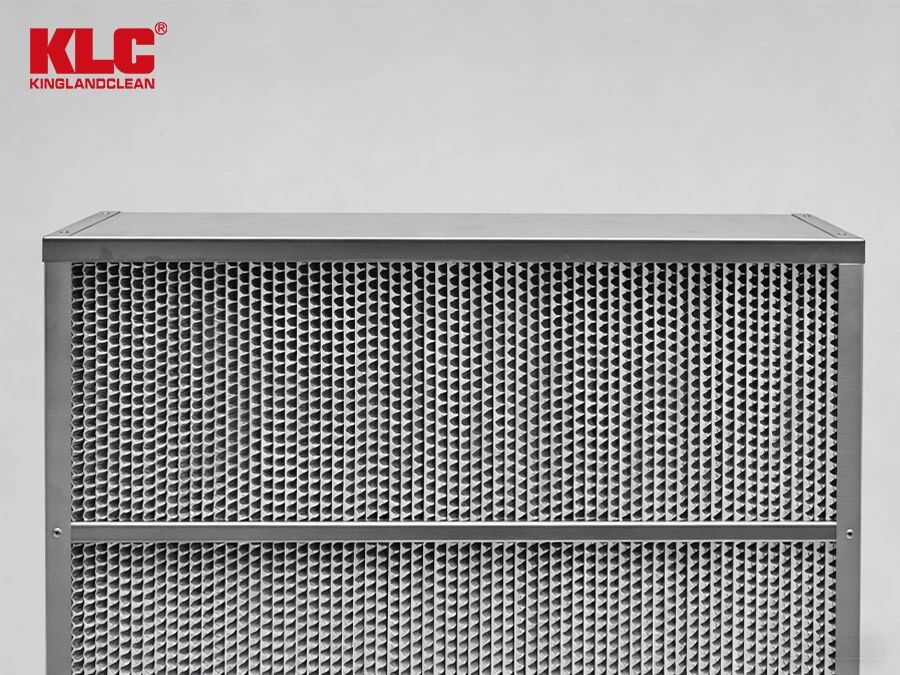
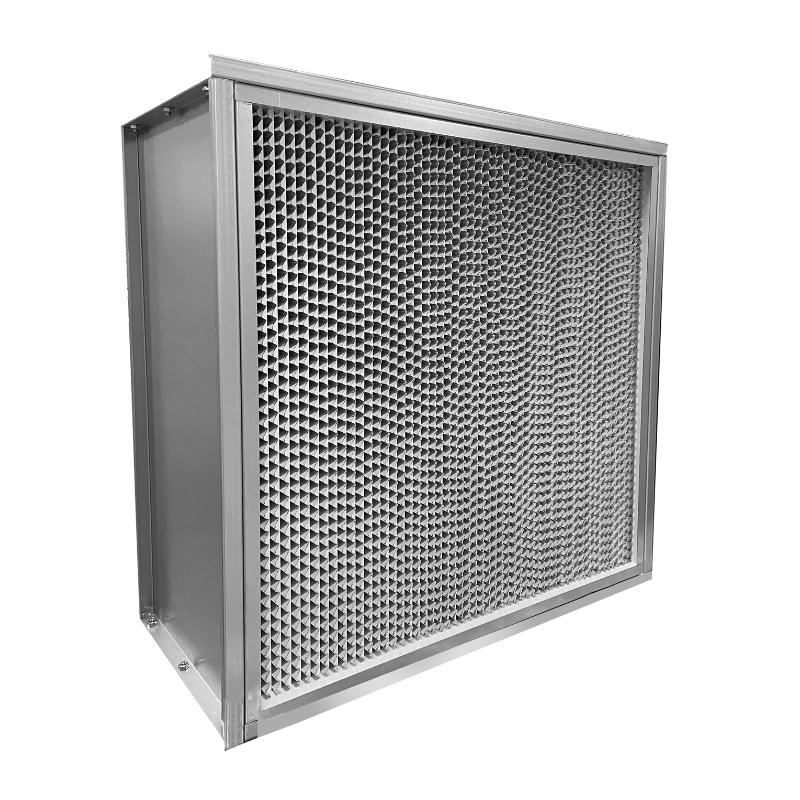
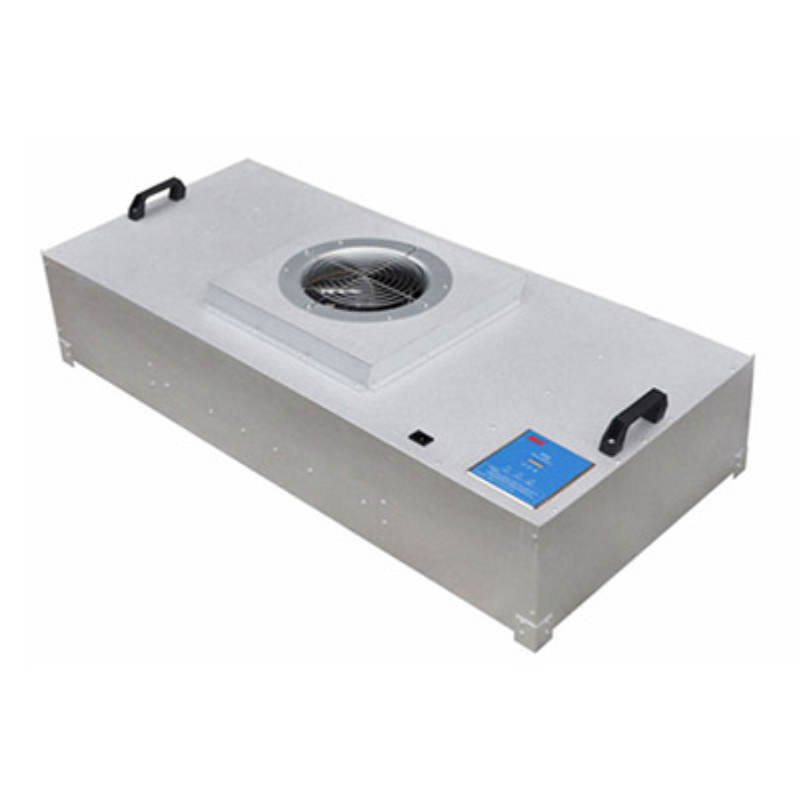
▲ KLC High Heat-Resistance Filter (350℃)
Key Parameters for Selection
When selecting KLC products, in addition to air volume and efficiency, attention should be paid to: heating rate, which should not exceed 5℃ per minute to prevent thermal expansion from causing filter element cracking; volatility, with coating industry applications requiring KLC 'silicone-free' or 'low-volatility' grade products to avoid affecting paint quality; and initial resistance, considering resistance changes caused by increased air viscosity at high temperatures, with sufficient margin reserved.
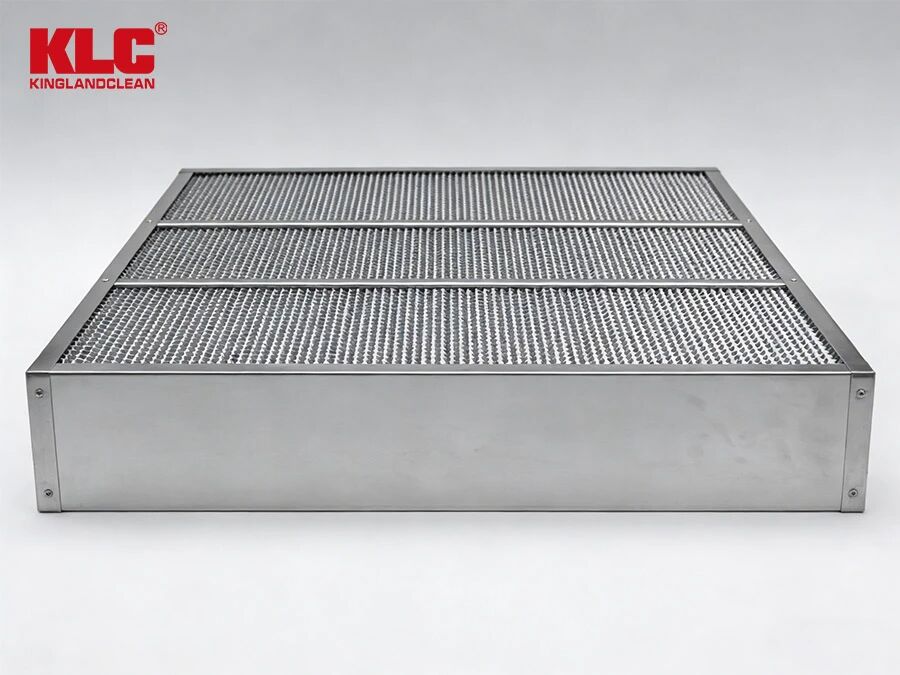
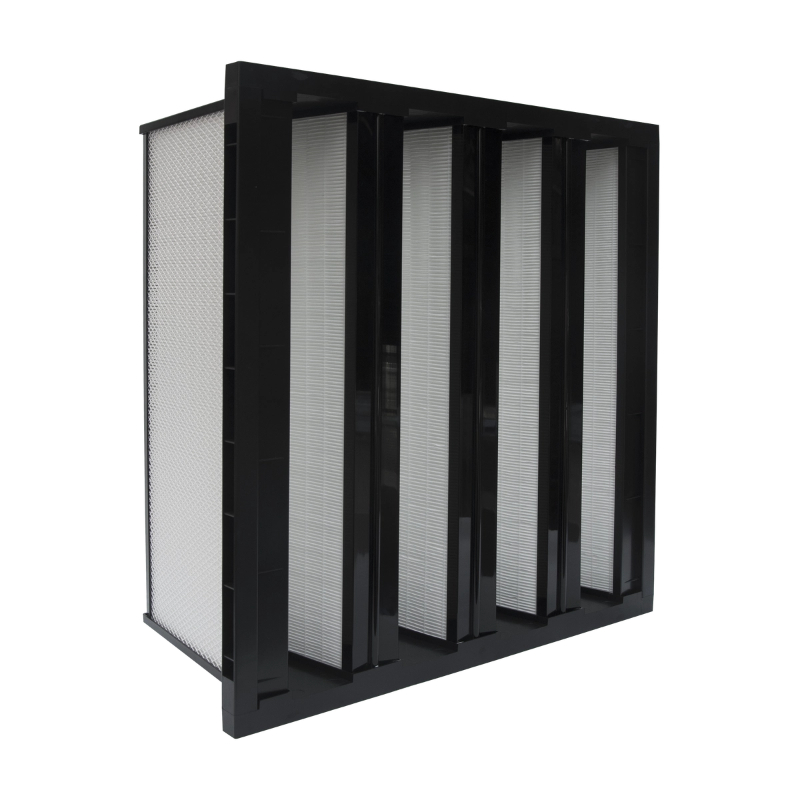
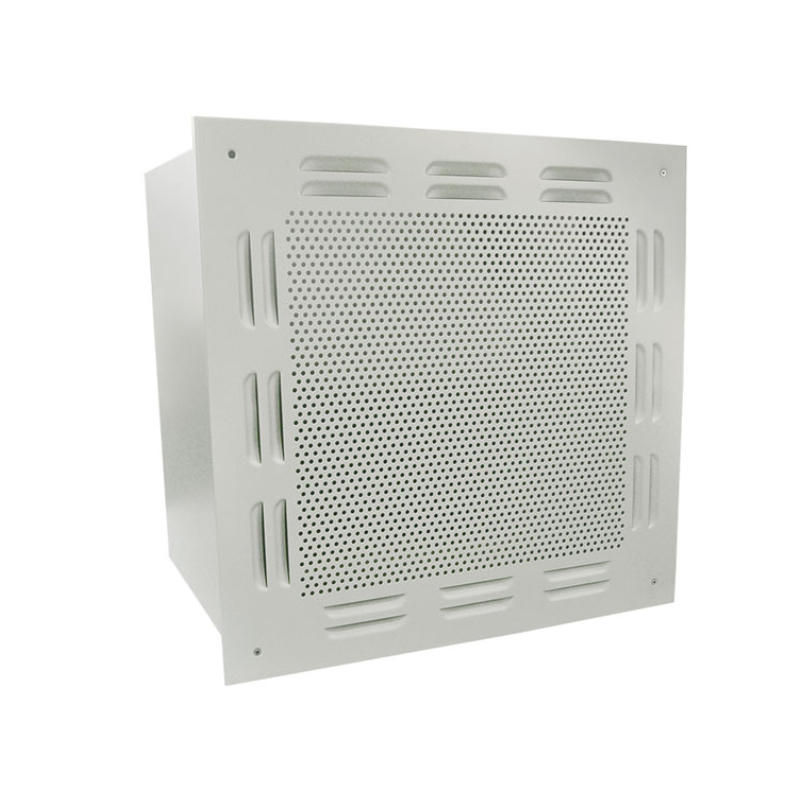
▲ KLC High Heat-Resistance Filter (350℃)
After operating at high temperatures, the KLC High Heat-Resistance Filter must not be removed immediately. The system must first cool to room temperature and internal and external pressures must be balanced to ensure the safety of personnel and equipment. Facing complex high-temperature conditions, KLC leverages years of material research and development experience to ensure that every product meets industrial standards in both temperature stability and sealing performance.



 IPv6 network supported