The choice between an air shower and a pass box depends on the contamination source: air showers decontaminate personnel moving into cleanrooms, while pass boxes transfer materials. To comply with EU GMP Annex 1 and ISO standards, high-grade facilities must implement both systems concurrently.
This article covers the operational distinctions, regulatory requirements under EU GMP Annex 1, 10 real-world B2B scenarios, a text-based decision flowchart, and a detailed total cost of ownership (TCO) analysis. Cleanroom design architects, HVAC consultants, quality assurance (QA) directors, and procurement leads should read this guide.
In any cleanroom, two primary vectors introduce particulates: human operators and physical materials (raw ingredients, tooling, and packaging). Understanding how to isolate these vectors is the foundation of effective contamination control design.
• The Human Vector (Air Shower): Humans are dynamic, highly active particle generators. Every minute, a cleanroom operator sheds tens of thousands of skin cells, hair fragments, and cosmetic particulates. Even when fully clad in specialized cleanroom suits, friction causes garments to shed synthetic fibers. The Air Shower is specifically engineered to mitigate this human vector. By subjecting operators to high-velocity, HEPA-filtered air streams (25 m/s), it strips loose fibers and dust from the suit surfaces before they step into the clean zone.
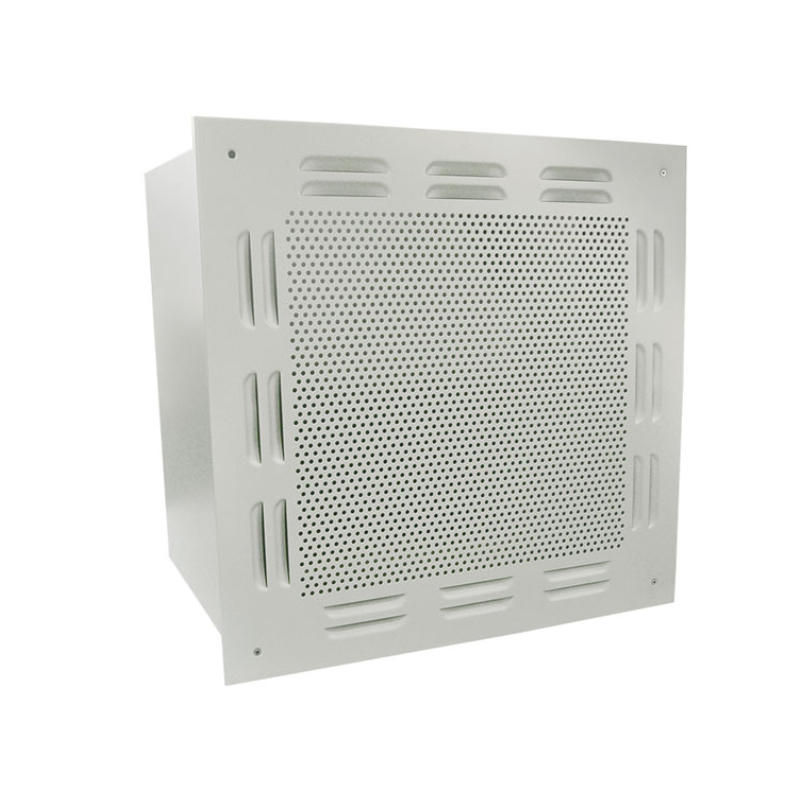
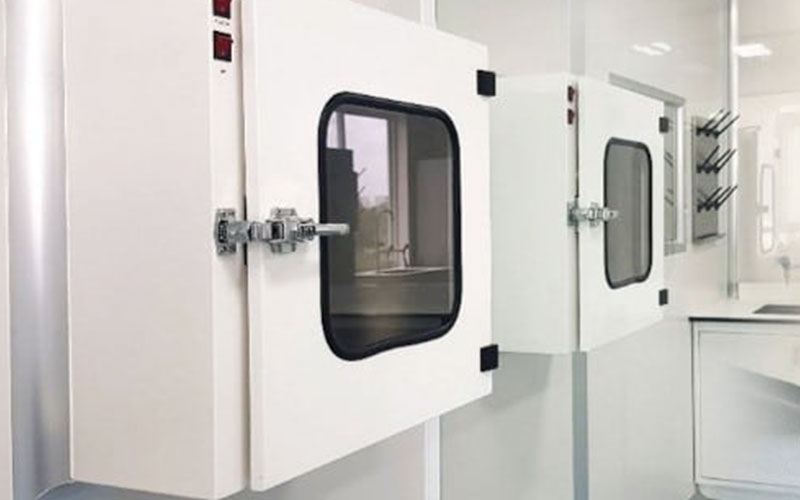
• The Material Vector (Pass Box): Materials do not actively shed skin or hair, but their packaging, pallets, and surfaces collect high concentrations of environmental dust during warehousing and transport. Furthermore, carrying materials through personnel doors is a severe operational risk. It causes personnel doors to remain open for extended periods, disrupting pressure cascades and allowing untreated air to bypass the airlock. The Pass Box addresses this by providing a small, interlocked transfer chamber. It allows materials to be moved between rooms of different cleanliness classes without opening the main personnel doors, preserving pressure differentials and isolating the material-borne dust.
These two systems are highly specialized and solve completely different engineering problems; they are complementary, never interchangeable.
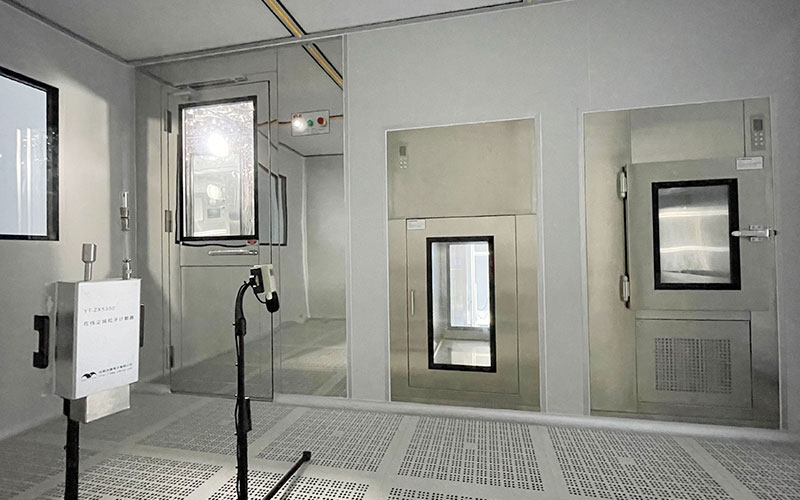
For pharmaceutical, sterile medical device, and advanced biotechnology manufacturers, compliance with EU GMP Annex 1 (Manufacture of Sterile Medicinal Products) is legally binding. The revised Annex 1 introduces strict requirements for personnel and material airlocks:
Section 4.10 & 4.11 (Airlocks): Mandates that the entry of personnel and materials into clean areas should be through separate airlocks. It explicitly states that airlocks must have interlocked doors to prevent the simultaneous opening of both doors, preserving the pressure cascade.
Section 4.12 (Material Transfer): Outlines that material pass-throughs and transfer hatches must be designed and used to prevent contamination of the higher-grade cleanroom. For transfer into Grade A or Grade B cleanrooms, Annex 1 strongly recommends Dynamic Pass Boxes equipped with active HEPA filtration, unidirectional airflow, and automated sanitization cycles.
Personnel Gowning (Section 7): Suggests that physical cleaning and particulate stripping (such as that provided by air showers) are critical supporting components of the gowning validation process.
B2B facility designers must balance compliance, contamination risk, and budgets when selecting a configuration.
|
Engineering Parameter |
Option 1: Pass Box Only |
Option 2: Air Shower Only |
Option 3: Both Air Shower & Pass Box |
|
Primary Target |
Materials / Tools only |
Personnel only |
Both Personnel & Materials |
|
Typical Capital Cost |
Low ($1,500 – $4,000) |
Moderate ($4,500 – $10,000) |
High ($6,000 – $15,000+ combined) |
|
Annual Maintenance Cost |
Very Low (<$200) |
Moderate ($300 – $800) |
Moderate-High ($500 – $1,000) |
|
Cleanroom Pressure Stability |
Excellent (minimal door leakage) |
Poor (if materials pass through doors) |
Perfect (complete pressure isolation) |
|
Human Contamination Risk |
High (gowns are not pre-swept) |
Low (gowns are swept at 25 m/s) |
Negligible (maximum security) |
|
Material Contamination Risk |
Low (isolated material transfer) |
High (materials carried through doors) |
Negligible (maximum security) |
|
Recommended Cleanroom Grade |
ISO Class 8 (turbulent rooms only) |
Non-critical process areas |
ISO Class 5–7 / GMP Grade A–C |
Utilize the engineering decision matrix below to identify the exact equipment required for your project.
Aseptic Pharmaceutical Fill/Finish Line (GMP Grade A/B): Both Air Shower & Dynamic Pass Box. Operators must pass through a 304 stainless steel air shower with dual-door interlocking. Materials must enter via a dynamic, H14 HEPA-filtered pass box featuring integrated VHP (vaporized hydrogen peroxide) sterilization ports.
Semiconductor Lithography Bay (ISO Class 3/5): Both Air Shower & Dynamic Pass Box. High-velocity air showers with integrated ionizing bars are mandatory to neutralize static on bunny suits. Wafers must pass through an ESD-shielded, dynamic pass box with ultra-low vibration fans.
Dry Food Packaging Line (ISO Class 8): Air Shower & Static Pass Box. Air shower removes flour or sugar dust from operators. Cardboard packaging rolls are transferred via a standard static pass box with built-in UV-C lamps to destroy yeast and mold spores.
Animal Biosafety Laboratory (BSL-3): Both Air Shower (Decontamination) & Gas-Tight Pass Box. Air shower acts as an emergency decontamination barrier. Materials must pass through a specialized, hermetically sealed pass box equipped with autoclave sterilization or biocide misting.
Hospital Compounding Pharmacy (USP 797/800): Both Air Shower & Negative Pressure Dynamic Pass Box. To prevent exposure to hazardous oncology drugs, operators utilize a localized air shower, while materials pass through a dynamic pass box designed with negative pressure containment.
Flat-Panel Display Assembly (ISO Class 6): Both Air Shower & dynamic Pass Box. Heavy personnel traffic requires multi-person air shower tunnels. Glass substrates are transferred via specialized roller-conveyor dynamic pass boxes.
University Materials R&D Lab (ISO Class 7): Both Air Shower & Static Pass Box. A cost-effective, standard SUS 304 air shower for researchers, paired with a standard static pass-through cabinet for chemical and substrate transfers.
Medical Device Injection Molding (ISO Class 8): Pass Box & Standard Air Shower. Standard air shower handles staff transitions. Mold inserts and raw plastic resins enter through a floor-mounted pass box to accommodate pallet jack loads.
Aerospace Precision Machining (ISO Class 7): Cargo Air Shower & Standard Air Shower. Large, heavy aluminum structural components require a double-door Cargo Air Shower with heavy-duty floor rails. Operators utilize a separate, dedicated personnel air shower.
Cosmetics Formulation Plant (ISO Class 8): Air Shower & Static Pass Box. Air shower controls mold and airborne yeast from staff clothing. Ingredients and jars enter via a stainless steel static pass box equipped with high-intensity UV-C lamps.
B2B buyers must evaluate cleanroom equipment beyond the initial purchase price. The table below analyzes the typical 5-year lifecycle costs of KLC-engineered air showers and pass boxes.
• Capital Expenditure (CapEx): A high-quality KLC air shower costs between $4,500 and $8,000, while a static pass box ranges from $1,200 to $2,500. A dynamic HEPA-filtered pass box averages $3,000 to $5,500.
• Energy Consumption: KLC air showers utilize high-efficiency motors that run only during the 15-second blowing cycle, resulting in minimal electricity costs (approx. $50–$100/year). Dynamic pass boxes utilize low-wattage continuous EC fans, costing around $80–$150/year in electricity.
• Filter Replacements: Air showers require pre-filter cleaning/replacement every 2 months ($20) and HEPA replacement every 3 years ($300). Dynamic pass boxes require HEPA replacement every 2 to 3 years ($200). Static pass boxes have no air filters, requiring only UV lamp replacements every 12 months ($50).
• Validation and Recertification: Annual PAO integrity testing and air velocity calibration cost approximately $150 per unit.
No. While a pass box features UV-C lamps or dynamic HEPA filtration, it is a small, enclosed chamber designed solely for inanimate material transfer. Cleanroom garments must be decontaminated while being worn by a person, which requires the high-volume, high-velocity, multi-directional air jet pattern of an air shower. Attempting to decontaminate garments inside a pass box is physically impossible and violates both GMP and ISO entry protocols.
Yes. EU GMP Annex 1 strictly mandates that any airlock or transfer hatch serving a cleanroom must have an interlocking system to prevent both doors from being opened at the same time. This is a critical requirement to maintain the air pressure cascade between different cleanroom grades and to prevent untreated ambient air from rushing directly into the clean zone.
A static pass box is a non-ventilated chamber used to transfer materials between two rooms of similar cleanliness classes. It relies entirely on physical isolation and UV-C lamps. A dynamic pass box features an integrated fan and a HEPA filter that continuously circulates clean laminar air inside the chamber. It acts as an active airlock, purging 99.99% of airborne particulates and maintaining positive pressure, which is required for transfers into Grade A or Grade B zones.
While not strictly mandated by ISO 14644-1, installing an air shower in an ISO Class 8 cleanroom is highly recommended for facilities with high personnel traffic. It serves as a psychological barrier that reinforces cleanroom protocols, while physically removing the heaviest clothing fibers and lint before entry, which drastically reduces the dust load on your ceiling HEPA filters and extends their service life.
A HEPA-filtered (dynamic) pass box maintains pressure differentials through a balanced airflow design and airtight door gaskets. When closed, silicone gaskets seal the chamber. The internal fan draws air through a pre-filter, pushes it through an H14 HEPA filter into the chamber, and exhausts it through adjustable dampers. This creates an internal positive pressure barrier that matches or exceeds the higher-grade room’s pressure, preventing cross-room air migration during transfers.
Omitting an air shower in an ISO Class 5 or Class 6 cleanroom leads to rapid particulate buildup on work surfaces and products. Without the physical air sweep, operators carry hair, skin cells, and clothing fibers directly into the clean zone. This dramatically increases product reject rates, contaminates sensitive electronic wafers or sterile pharmaceuticals, and forces the primary HVAC system to work harder, leading to rapid clogging and premature replacement of expensive ceiling HEPA filters.
The choice depends on the size of the items being transferred. A standard air shower is designed for individual personnel entry. A cargo shower features a wider double-door entry (often with automated sliding doors or PVC strip curtains) and a flush, reinforced floor without a bottom threshold. This design allows heavy pallet jacks, large equipment carts, and bulky materials to be rolled directly through the high-velocity air-blowing chamber.
Key maintenance includes: weekly wipe-downs of the stainless steel interior with 70% IPA; monthly inspection of the door interlocking mechanism to ensure both doors cannot open simultaneously; semi-annual measurement of the laminar airflow velocity (which should be around 0.45 m/s); and annual PAO aerosol testing of the HEPA filter to verify there are no media leaks or gasket bypasses.
KLC minimizes TCO through high-efficiency engineering. Our air showers feature intelligent photoelectric sensors that run the high-power fans only when an operator is detected, saving electricity. We utilize high-reliability EC fan motors in our dynamic pass boxes, which consume up to 50% less power than standard AC motors. Additionally, our dual-stage filtration systems utilize low-cost, washable pre-filters to maximize the service life of our premium H14 HEPA filters.
Yes. KLC’s advanced PLC controllers are equipped with Modbus or dry-contact terminals that allow our air showers and pass boxes to connect directly to your facility’s central Building Management System (BMS). This enables real-time monitoring of filter pressure drops, door open/closed status, interlock alarms, and fan operations directly from your central control room.
A robust cleanroom contamination control strategy must address both personnel-borne and material-borne particulates. By implementing KLC’s high-velocity air showers for operators and dynamic HEPA-filtered pass boxes for material transfer, your facility can guarantee full compliance with EU GMP Annex 1 and ISO standards.
Contact KLC International to customize your contamination control equipment suite today at KLC International.



 IPv6 network supported