Keywords: cleanroom HVAC filtration stages, three stage air filtration cleanroom, primary medium terminal filter HVAC
A cleanroom HVAC system must utilize a progressive three-stage filtration design—comprising primary, medium, and terminal filters—to prevent premature clogging of expensive terminal HEPA/ULPA filters, safeguard critical heat-exchange coils, and achieve steady, energy-efficient airborne contamination control that meets ISO 14644 standards.
This blog post explores the physical mechanics and financial benefits of progressive multi-stage filtration in cleanroom air handling systems. It features a detailed cost comparison of two-stage versus three-stage filtration and outlines sector-specific configurations. This article is written for mechanical engineers, cleanroom facility managers, and B2B industrial operations directors.
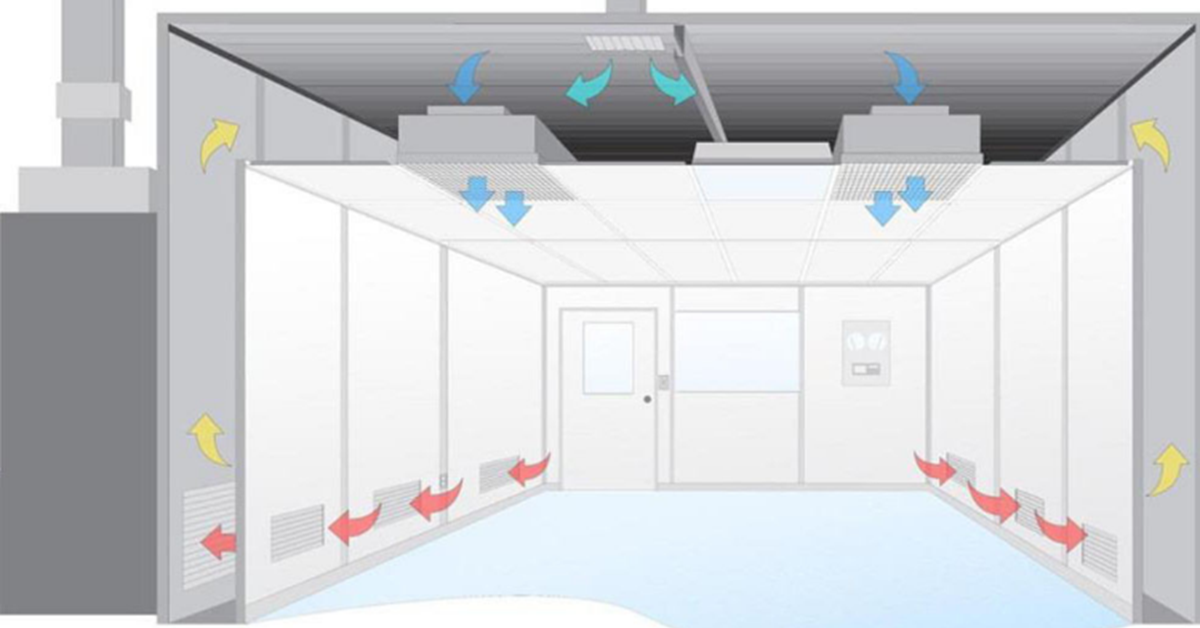
Air purification in cleanrooms is not a single-pass event; it is a highly engineered, progressive reduction process. Attempting to filter raw ambient air down to cleanroom levels using a single HEPA filter is mathematically and structurally impossible without causing immediate system failure. Instead, cleanroom HVAC systems utilize a cascade approach, where each filtration stage is designed to capture a specific range of particulate sizes.
[ Outdoor Air (OA) ] + [ Recirculated Air (RA) ]
│
▼
┌───────────┐ ┌──────────┐ ┌───────────┐ ┌───────────────┐
│ Primary │ │ Heating │ │ Medium │ │ Terminal HEPA │
│ Filter ├─────►│ /Cooling ├─────►│ Filter ├─────►│ Filter Units │
│ (G3-G4) │ │ Coils │ │ (F7-F9) │ │ (H13-H14) │
└───────────┘ └──────────┘ └───────────┘ └───────┬───────┘
│
▼
[ Cleanroom Zone ]
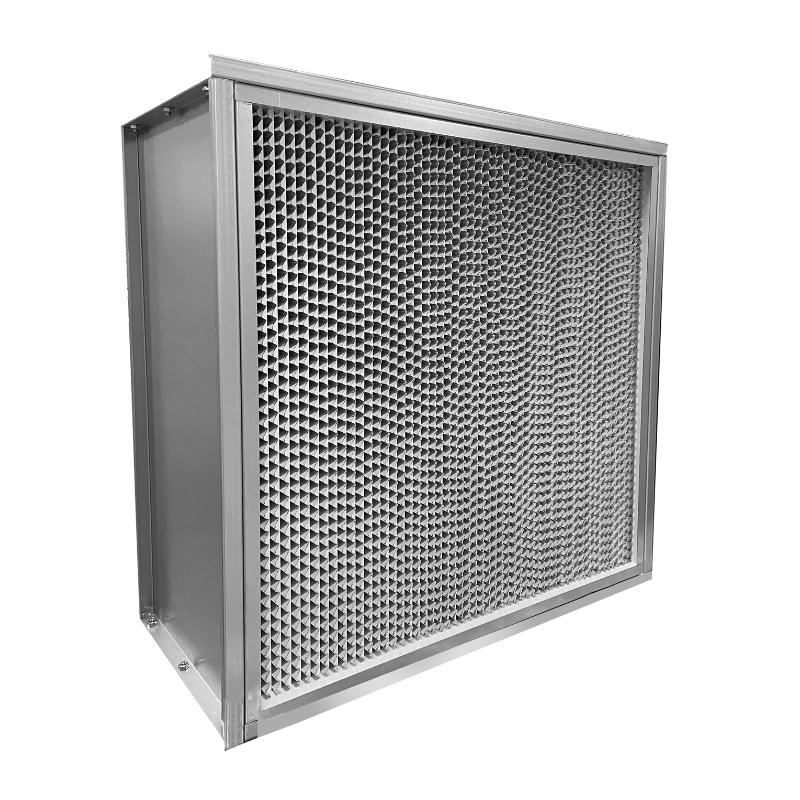
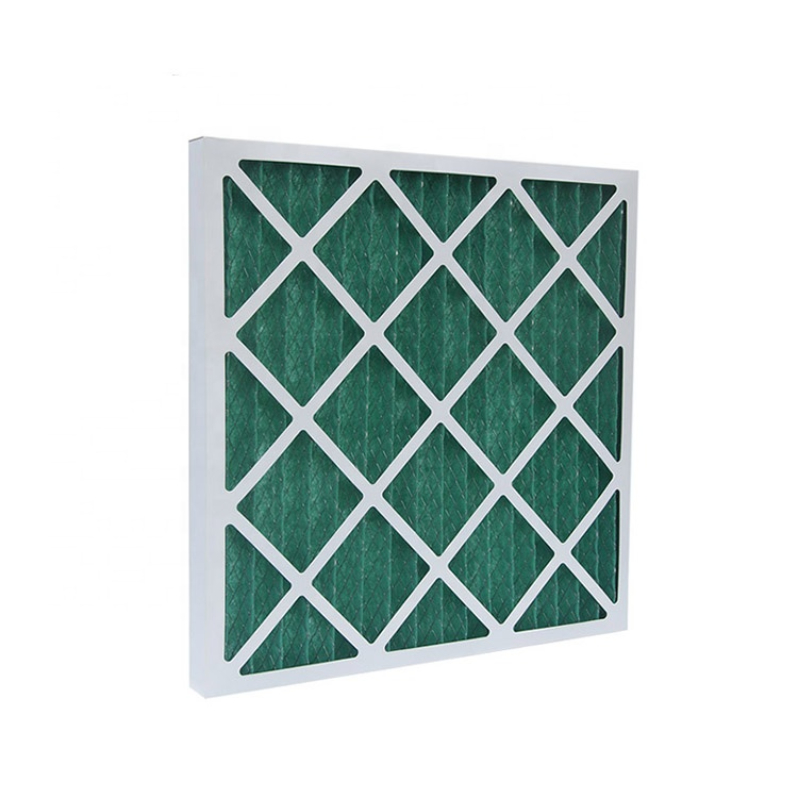
Located at the fresh air intake or the mixing plenum of the Air Handling Unit (AHU), primary filters are the first line of defense. Utilizing coarse, high-loft synthetic or metal mesh media, these filters target large particulate matter (≥10 μm), including leaves, pollen, insects, hair, and coarse atmospheric sand. * Primary Engineering Purpose: To prevent dust build-up on the downstream heating and cooling coils, and to protect the fan blower motor from physical fouling.
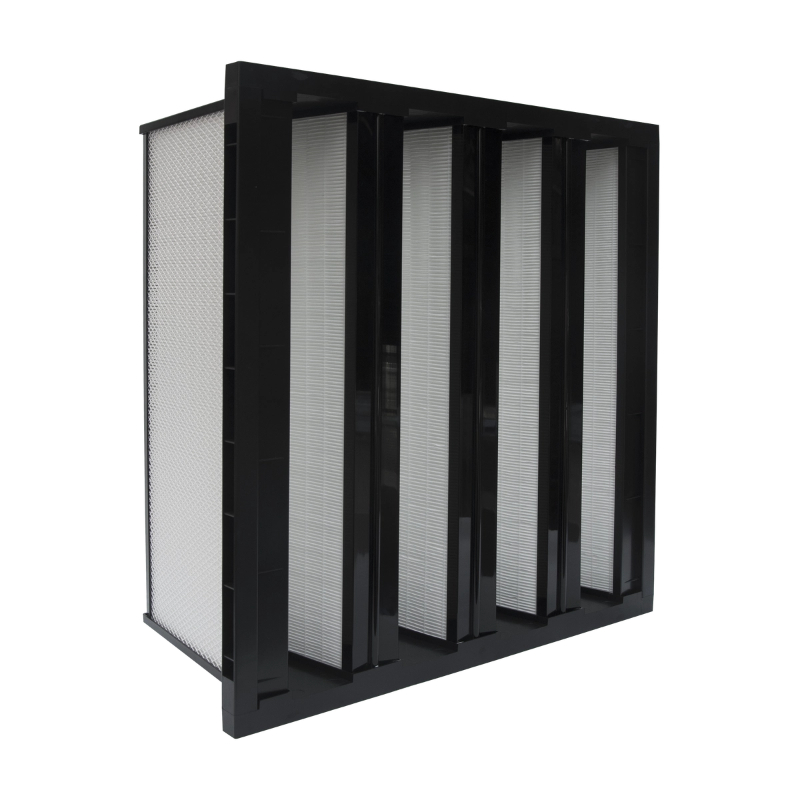
Positioned downstream of the fan blower and thermal coils, medium filters handle sub-micron and mid-range particles (1.0 μm to 5.0 μm). These are typically rigid pocket or compact V-bank filters. * Primary Engineering Purpose: To capture the vast majority of fine atmospheric dust that easily penetrates G4 pre-filters. By intercepting these fine particulates, the medium filter prevents them from reaching the delicate, high-density glass fiber matrix of the terminal HEPA filters.
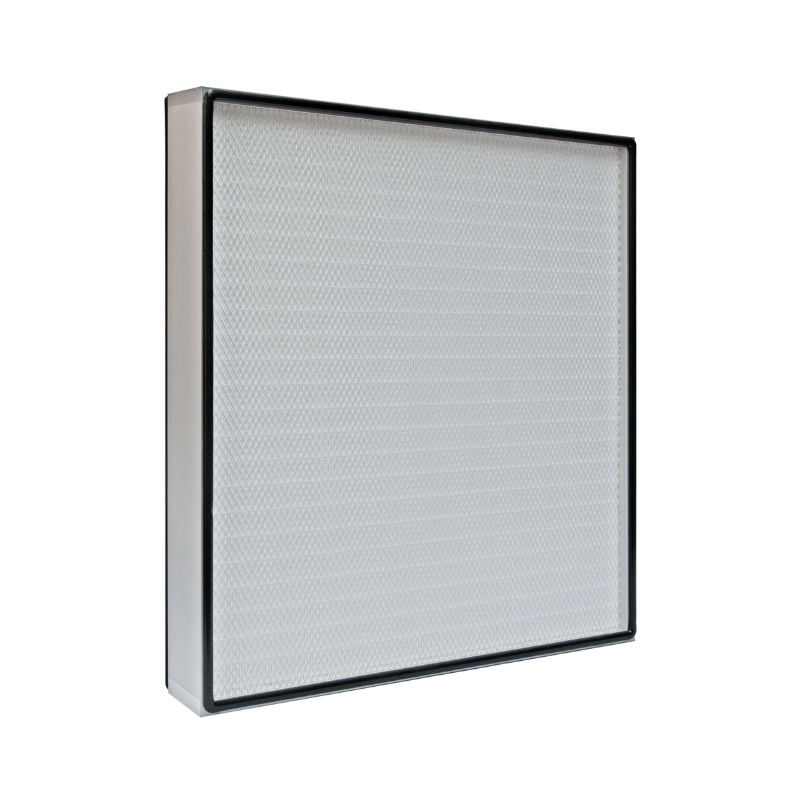
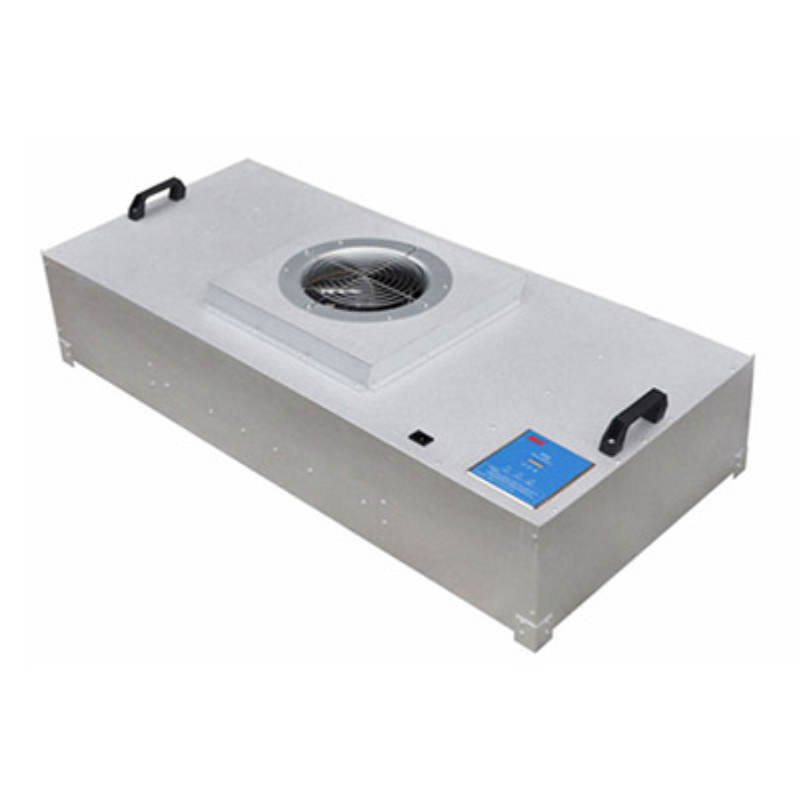
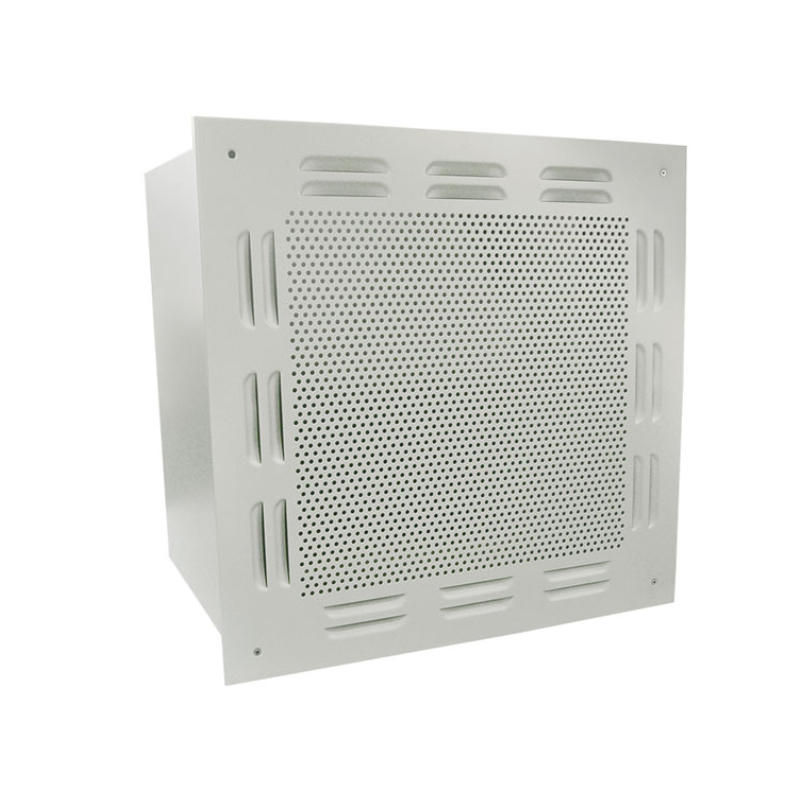
Mounted at the absolute end of the supply ductwork, directly in the cleanroom ceiling terminal housings or Fan Filter Units (FFUs). These filters utilize ultra-dense micro-glass fiber media to capture at least 99.97% (H13) or 99.995% (H14) of particles down to 0.3 μm. * Primary Engineering Purpose: To serve as the final physical barrier against bacteria, viruses, and ultra-fine dust, establishing the ultimate particulate cleanliness level of the indoor space.
• Cleanroom Area: 200 m², served by an AHU delivering 15,000 m³/h of supply air.
• Terminal HEPA Array: 15 terminal HEPA filters (H14 Grade, 1220 × 610 × 150 mm).
– HEPA Filter Purchase Cost: $280 USD per unit.
– HEPA Replacement Cost (Labor, PAO Certification, Downtime): $220 USD per unit.
– Total Cost per HEPA Replacement Event: $500 USD.
• Medium Filter Array (If Installed): 6 V-bank filters (F8 Grade, 610 × 610 × 292 mm).
– Medium Filter Purchase Cost: $85 USD per unit.
– Total Cost per Medium Filter Replacement: $120 USD.
• Primary Filter Array: 6 pleated panels (G4 Grade). Total Cost per replacement: $25 USD per unit.
• HEPA Lifespan: 5 Years — F8 filter catches 90% of fine dust.
– HEPA Replacement Cost over 5 Years: 15 units × $500 × 1 replacement = $7,500
• Medium Filter Lifespan: 1 Year.
– Medium Filter Cost over 5 Years: 6 units × $120 × 4 replacements = $2,880
• Primary Filter Lifespan: 3 Months.
– Primary Filter Cost over 5 Years: 6 units × $25 × 20 replacements = $3,000
• Total 5-Year Maintenance Cost: $13,380 USD
Without the F8 medium filter, fine dust flows directly onto the H14 HEPA filter, causing rapid clogging. * HEPA Lifespan: Drops to 10 Months. * HEPA Replacement Cost over 5 Years: 15 units × $500 × 6 replacements = $45,000 * Primary Filter Cost over 5 Years: $3,000 * Total 5-Year Maintenance Cost: $48,000 USD
Skipping the medium filter results in a net loss of $34,620 USD over five years for a small 200 m² cleanroom.
|
Industry |
Stage 1 |
Stage 2 |
Stage 3 |
Rationale |
|
Pharmaceutical GMP A–D |
G4 Pleated Panel |
F8 Rigid V-Bank |
H14 HEPA (gel seal) |
Eliminates microbial carriers, sterile compliance |
|
Semiconductor ISO 3–6 |
G4 Pleated Panel |
F9 Compact V-Bank |
U15 ULPA FFU |
Sub-micron filtration, prevents wafer defects |
|
Food/Beverage ISO 8 |
G4 Pleated Panel |
F7 Bag Filter |
H13 HEPA |
Removes mold spores, extends product shelf life |
|
Healthcare/Surgical ISO 7 |
G4 Panel |
F8 V-Bank |
H14 HEPA Diffuser |
Pathogen exclusion, prevents surgical site infections |
|
Filtration Stage |
Filter Grade |
Primary Target Particulate |
Typical Efficiency |
Installation Location |
Replacement Frequency |
Relative Cost |
|
Primary (Stage 1) |
G3–G4 |
Coarse dust, insects, hair (≥10 μm) |
80–90% |
Fresh air intake / Return air inlet |
2–3 Months |
Very Low (~$15–$25) |
|
Medium (Stage 2) |
F7–F9 |
Fine dust, soot, carbon (1.0–5.0 μm) |
65–90% |
Downstream of blower, inside AHU |
12–18 Months |
Medium (~$60–$120) |
|
Terminal (Stage 3) |
H13–H14 |
Bacteria, viruses, sub-micron (0.3 μm) |
99.97–99.995% |
Cleanroom ceiling, FFU, or duct end |
3–5 Years |
High (~$200–$450) |
Placing HEPA filters inside the central AHU cabinet exposes the long downstream supply ductwork to potential contamination. Any minor leak, joint failure, or seal degradation in the positive-pressure supply duct would draw unfiltered ambient air into the stream, introducing contaminants directly into the cleanroom. Mounting HEPA filters terminally ensures that any duct leaks are filtered out before the air enters the clean zone.
A G4 filter should be replaced when its pressure drop reaches its designated terminal limit (usually 150 Pa) or when visual inspection reveals heavy surface loading, fiber bowing, or mold growth. In humid climates, organic dust captured on the pre-filter can harbor mold spores, which may release odors and volatile organic compounds into the HVAC stream if left unchecked.
In cleanrooms where a high percentage of air is recirculated, the overall particulate load on the primary and medium filters is significantly reduced compared to 100% fresh-air systems. Because the recirculated air has already been filtered, the primary and medium filters experience slower dust accumulation, which can extend their service life by 50% to 100%.
While physically possible, this represents an over-engineered and financially inefficient design. An H13 filter has high airflow resistance (approx. 180–220 Pa), which would require substantial fan energy. A high-efficiency F9 V-bank filter provides excellent protection for terminal H14 HEPA filters at a fraction of the pressure drop (95 Pa) and cost.
DOP or PAO testing is an in-situ integrity test used to detect pinhole leaks in the HEPA media, frame sealant, or mounting gaskets. It should be conducted immediately after installation, after any filter replacement, and at least once or twice a year during routine cleanroom validation.
Counterintuitively, a well-designed three-stage system often consumes less energy over its lifecycle. While adding an F8 medium filter adds a small initial pressure drop (approx. 90 Pa), it prevents the terminal HEPA filter’s resistance from climbing rapidly. Running a clogged HEPA filter at high static pressures draws far more fan energy than running three clean, staged filters.
High humidity (above 85% RH) can cause synthetic medium filters to lose their electrostatic charge, leading to a sudden drop in efficiency. Moisture can also cause captured organic dust to expand, increasing airflow resistance and encouraging microbial growth. Using high-quality glass-fiber media with water-resistant binders prevents these performance drops.
No, pocket filters are designed for mid-efficiency, pre-terminal filtration and lack the high particulate retention required for terminal applications. Additionally, their flexible construction causes pocket movement under changing airflows, which can release captured dust. Terminal filtration requires rigid HEPA filters to ensure stable, high-efficiency particle capture.
A correctly designed three-stage filtration cascade is not a cost but an investment — one that pays for itself many times over by extending terminal HEPA filter life from 10 months to 5 years. For cleanroom HVAC design consultation, filter specifications, and one-stop supply of G4, F7–F9, and H13/H14 filtration products, visit KLC International.



 IPv6 network supported