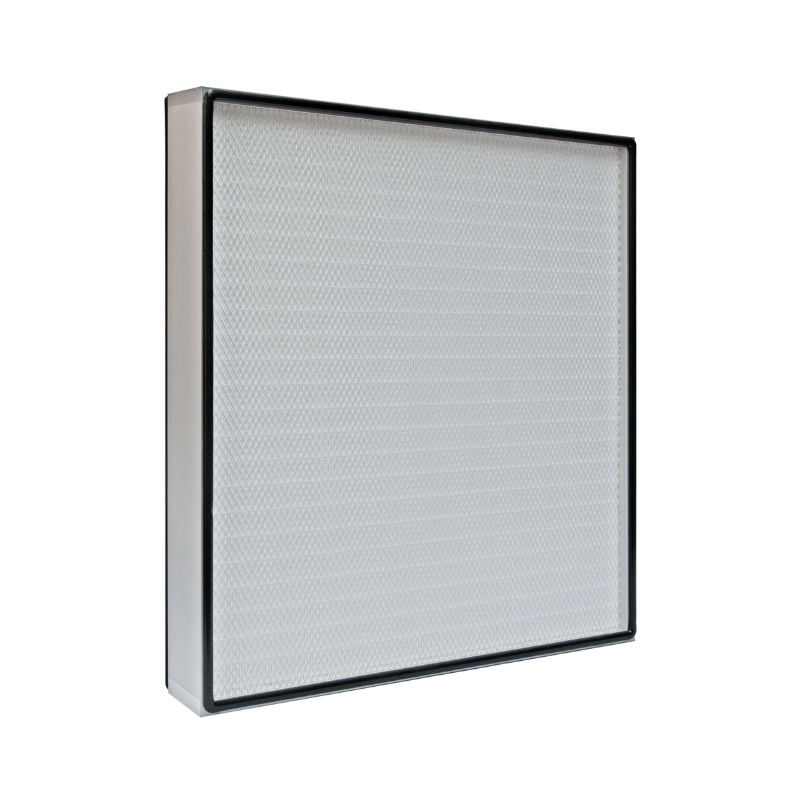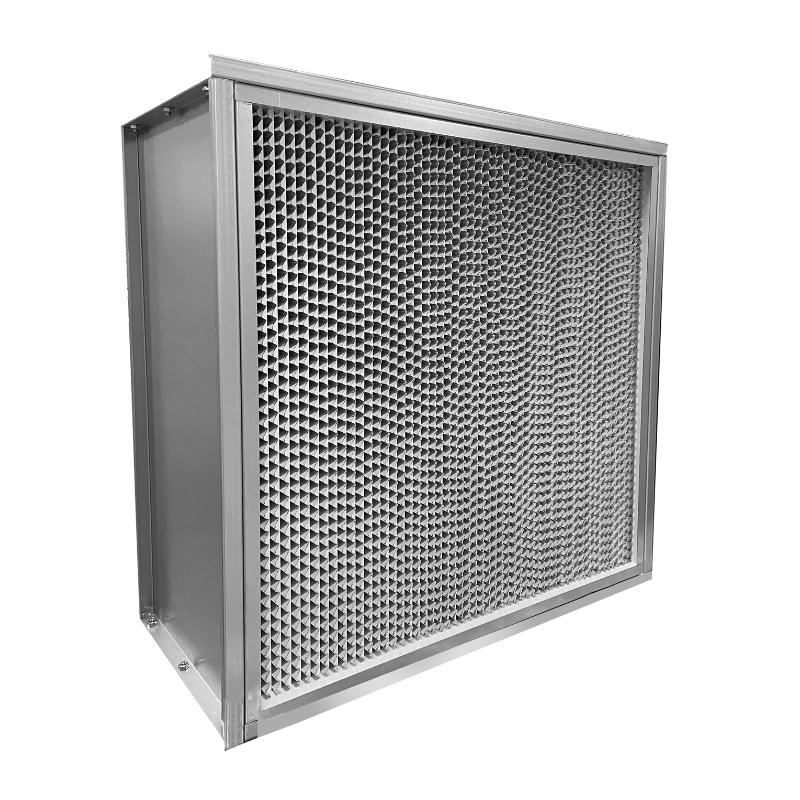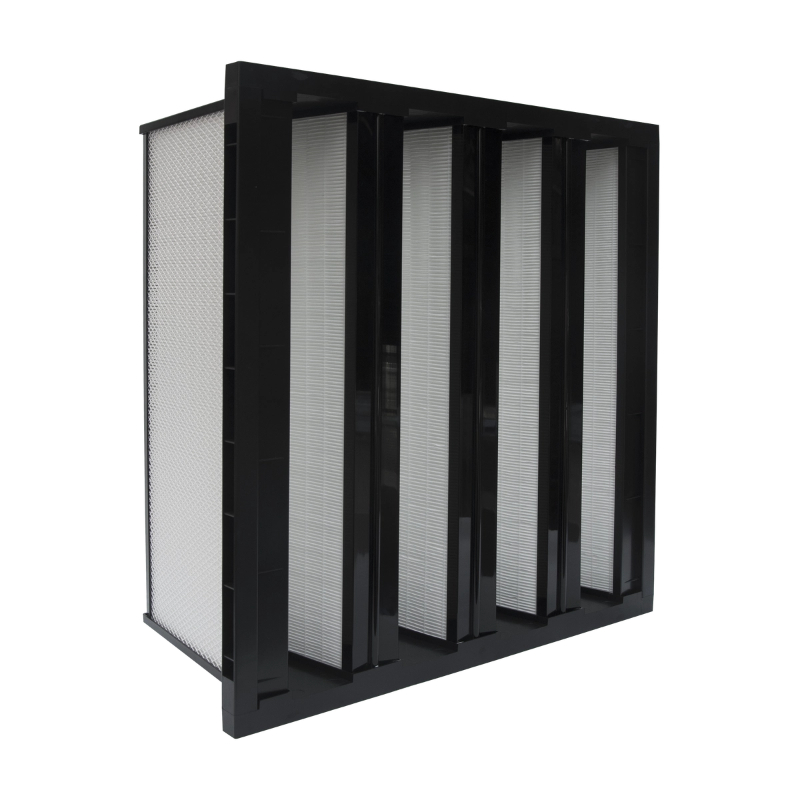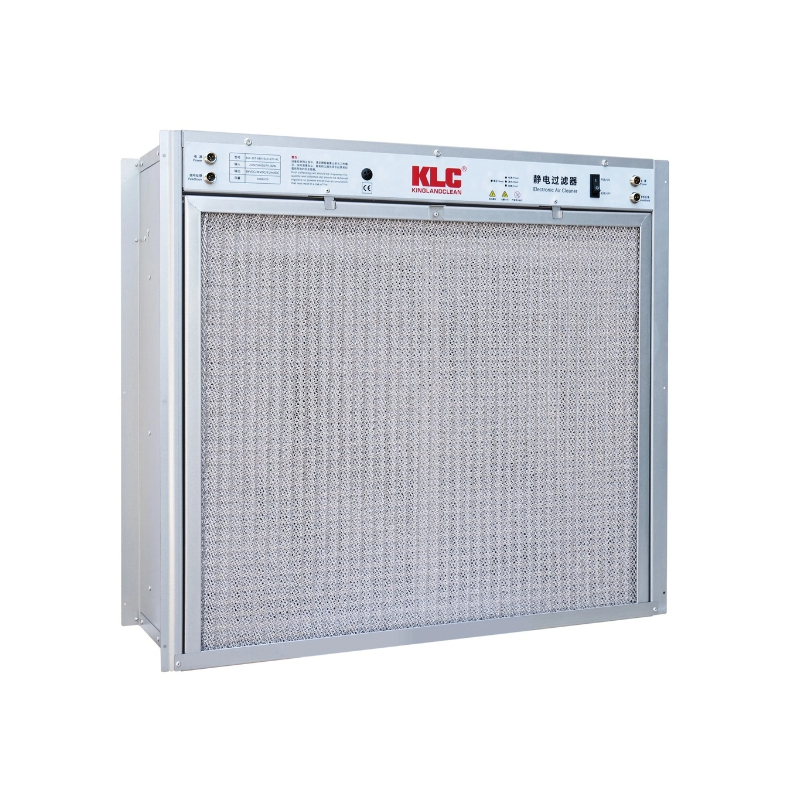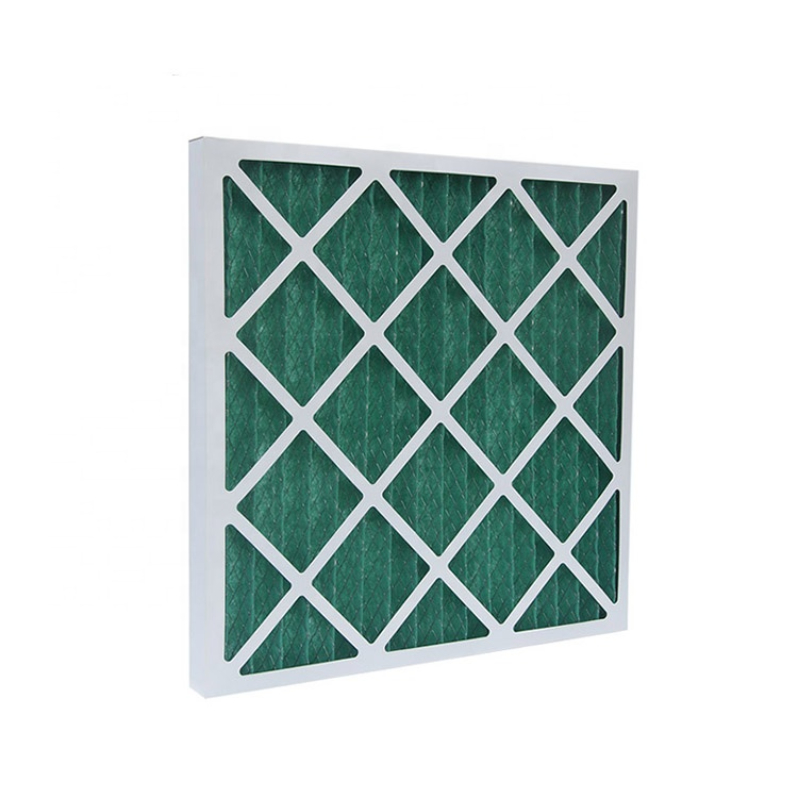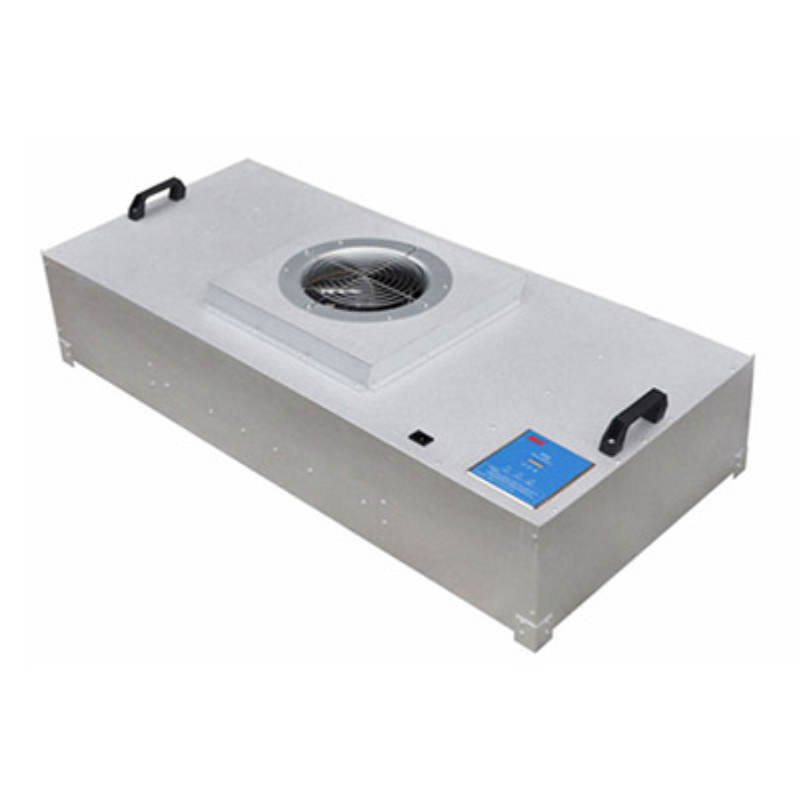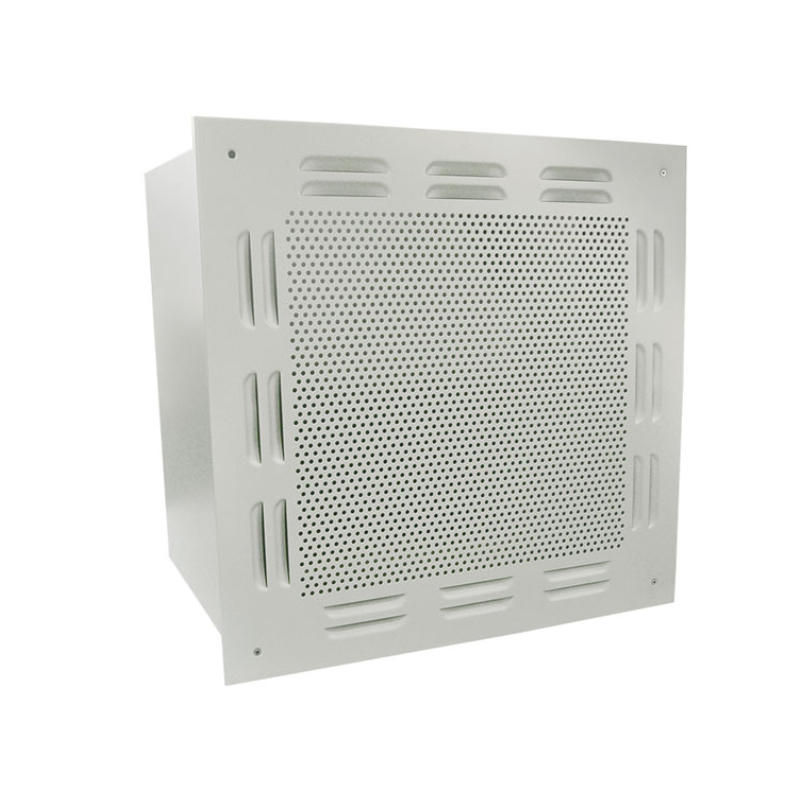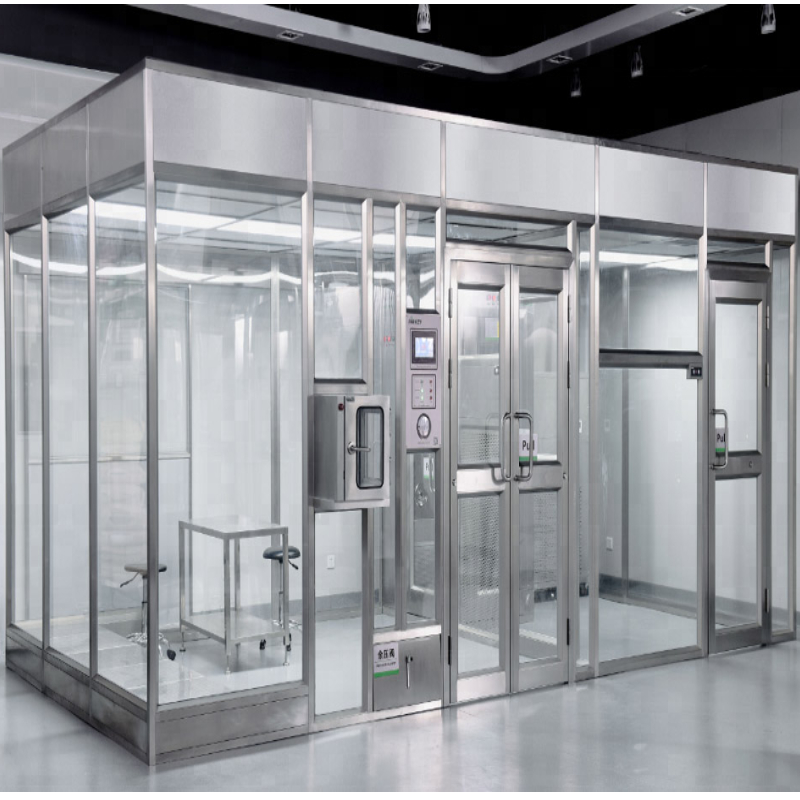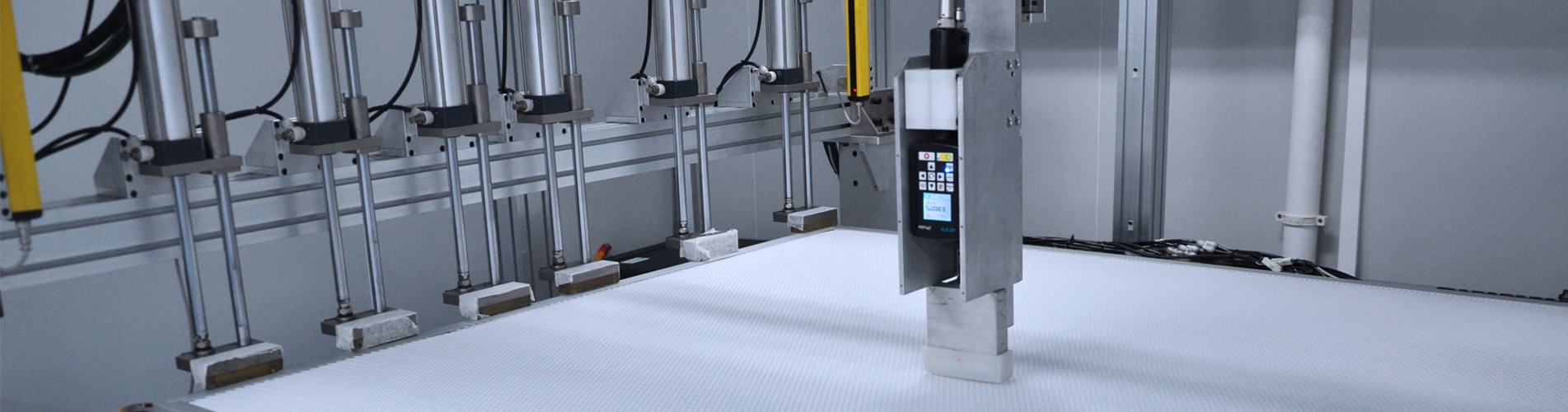
Cleanroom facilities have different cleanliness level requirements depending on their intended use, such as Class 100, Class 1000, Class 10000, Class 100,000, Class 300,000, or even higher cleanliness levels. The FFU (Fan Filter Unit) was developed to address these varying requirements. The emergence of FFU(Fan Filter Unit) has effectively solved this problem.
Using FFU(Fan Filter Unit) can effectively solve problems in cleanroom engineering.
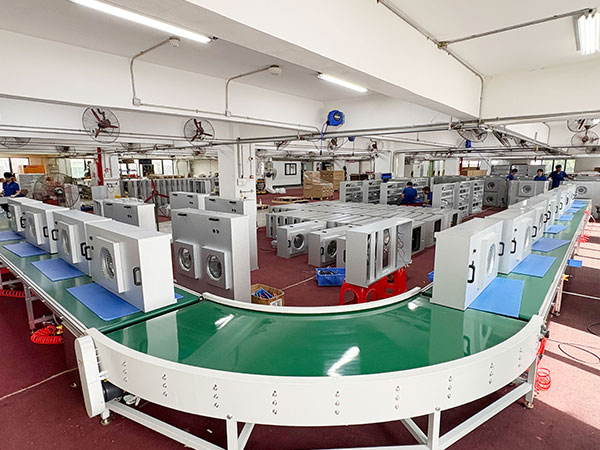
The main advantages are:
1. Space Saving – Using FFU(Fan Filter Unit) saves space and solves the problem of limited maintenance space above the cleanroom ceiling.
High-level cleanrooms require Class 100 or even Class 10 laminar flow hoods to meet process requirements. This necessitates large supply air plenums above the cleanroom ceiling, containing ventilation fans. These plenums, along with supply and return air ducts, occupy a significant amount of space, resulting in limited maintenance access and sometimes even obstructing fire escape routes.
When using FFU(Fan Filter Unit), the cleanroom ceiling is divided into several modules, each module being an FFU(Fan Filter Unit). This allows for adjustment of each module to meet the pressure balance requirements of the supply air plenum above the ceiling, significantly reducing the required height of the plenum. It also eliminates the need for large supply and return air ducts, thus saving installation space. This is particularly beneficial in renovation projects where ceiling height is limited. FFU(Fan Filter Unit) come in various sizes and can be customized to the actual size of the cleanroom. Because they occupy less height within the supply air plenum and essentially no space within the cleanroom itself, they offer significant space savings.
2. FFU Flexibility – The independent structure of FFU(Fan Filter Unit) allows for easy adjustment, compensating for the lack of flexibility in cleanroom design and addressing the limitations of fixed production processes.
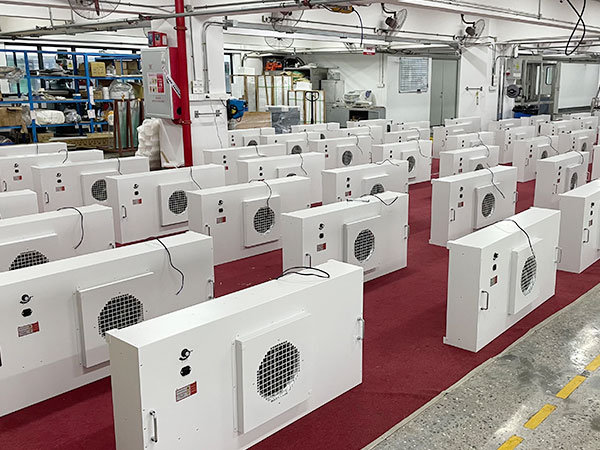
Cleanroom facilities are generally constructed with metal panels, and once built, the layout cannot be easily changed. However, due to continuous updates in production processes, the original cleanroom layout may no longer meet the needs of new processes, leading to frequent modifications and significant waste of resources and money due to product changes. By increasing or decreasing the number of FFUs, the cleanliness layout of the room can be adjusted locally to meet changes in the process. Since FFUs have their own power, air outlets, and lighting, significant investment can be saved. This is almost impossible to achieve with typical centralized air supply purification systems.
Because FFUs are self-powered, they are not limited by area. In a large cleanroom, they can be controlled in zones as needed. Furthermore, as semiconductor manufacturing processes change, the factory layout will inevitably require corresponding adjustments. The flexibility of FFUs makes these adjustments easy and avoids secondary investment.
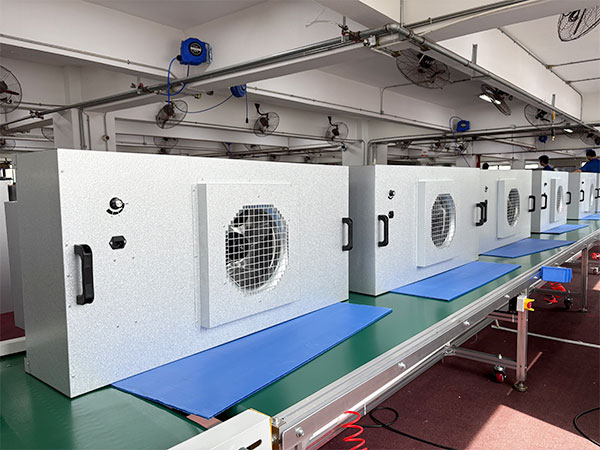
3. Reduced operating burden – The FFU (Fan Filter Unit) system is energy-efficient, thus overcoming the disadvantages of centralized air supply systems, such as large air conditioning rooms and high operating costs of air conditioning units.
If individual cleanrooms in a large cleanroom facility require a higher level of cleanliness, a centralized air conditioning unit would require a larger airflow and higher fan pressure to overcome the resistance of the ductwork, pre-filters, medium-efficiency filters, and high-efficiency filters to meet the requirements. Moreover, in a centralized air supply system, if an air conditioning unit malfunctions, all cleanrooms served by that unit will cease operation.



 IPv6 network supported