Semiconductor Cleanrooms (primarily FFU model)
I. Cleanliness Requirements and Airflow Control Methods
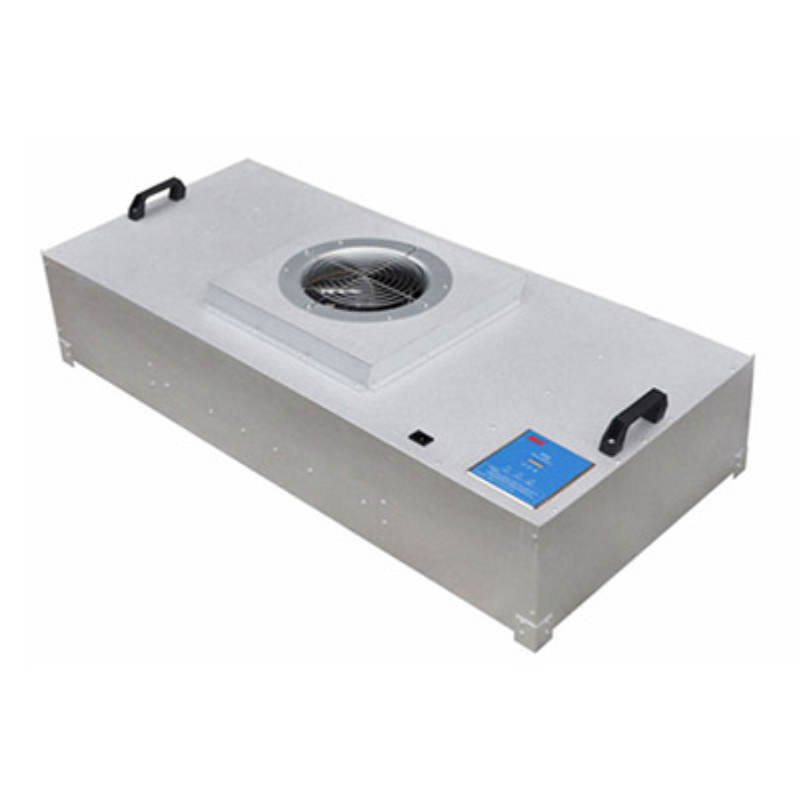
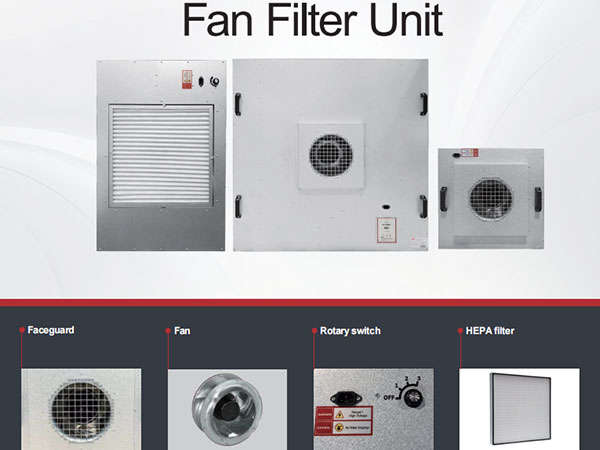
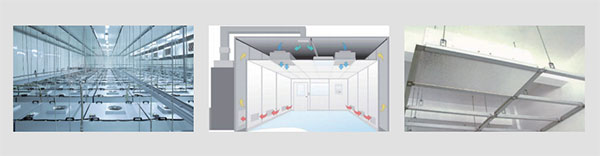
High Local Cleanliness Requirements: Processes such as photolithography and etching in semiconductor manufacturing require maintaining Class 100 (ISO 5) or even higher cleanliness levels around the equipment. FFU(Fan Filter Unit)can create a stable unidirectional airflow (0.25~0.35 m/s) in critical areas through modular layout, directly covering the equipment operating surface.
Flexibility: FFU(Fan Filter Unit) allow for quick adjustment of local clean areas, adapting to equipment updates or production line changes without modifying the entire air supply system.
Thermal Load Management: Semiconductor equipment generates significant heat. The decentralized air supply of FFU(Fan Filter Unit)optimizes local heat dissipation, avoiding airflow disturbances caused by temperature increases in centralized air supply systems.
II. Energy Consumption and Cost Differences
Energy-Saving Advantages: FFU(Fan Filter Unit)use DC/EC motors with efficiency reaching 75%~80%, and support on-demand speed adjustment, resulting in lower energy consumption per unit of airflow compared to centralized systems.
Low Maintenance Costs: The modular design simplifies filter replacement and troubleshooting, reducing downtime.
III. Industry Characteristics and Technological Adaptation
Process Dynamics: Frequent production line upgrades and equipment iterations require cleanrooms to adapt quickly. The modular characteristics of FFU (such as adding or removing units and adjusting the layout) are superior to fixed systems.
Micro-Contamination Control: Semiconductors are sensitive to 0.1 μm particles. The ULPA filters in FFU (filtration efficiency ≥99.999%) can specifically protect critical areas.



 IPv6 network supported